Explore homeschool watercolor curriculum for kids and teens, from free open-ended prompts to comprehensive Watercolors 101 instruction.
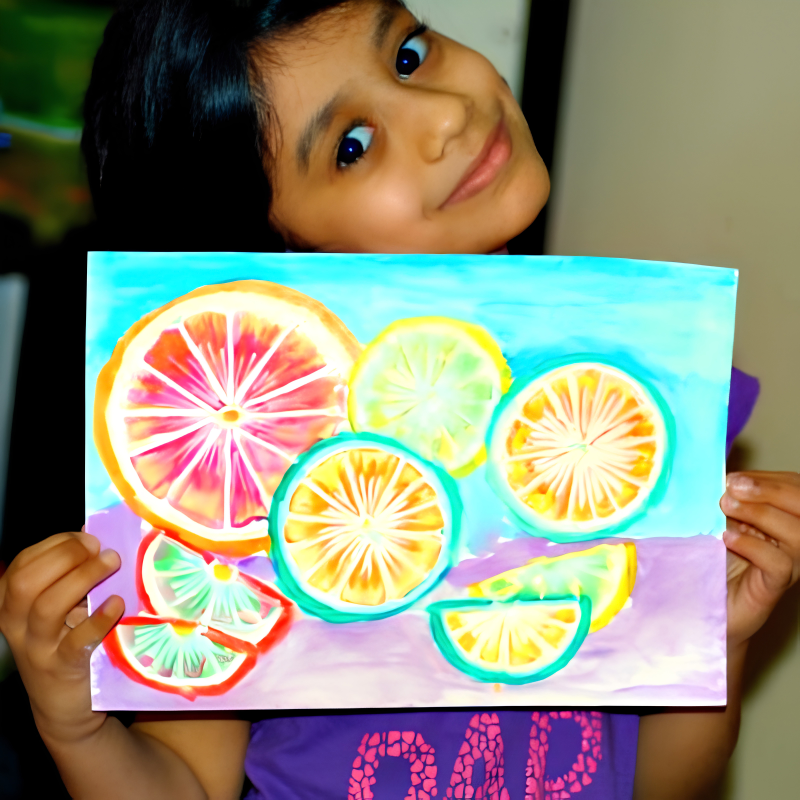
There is something almost magical about watercolor. Add a little more water and a color becomes beautifully transparent. Touch one wet color to another and watch them mingle across the page. Drop pigment into a damp wash and it blooms in ways you couldn’t completely predict if you tried.
Painting with watercolors is an intricate dance of adding just the right amount of pigment with just the right amount of water.
That’s part of watercolor’s charm.
It’s also the reason watercolor can sometimes frustrate beginning artists. Watercolor doesn’t behave like acrylic paint. You can’t completely control it—and you really shouldn’t try. Instead, learning watercolor is about discovering how water, pigment, paper, and brushwork work together.
A good homeschool watercolor curriculum helps children do exactly that while giving them plenty of opportunities to experiment, create, and develop confidence with this beautiful medium.
And at Masterpiece Society, your child can begin exploring watercolor through simple, whimsical projects and continue all the way into a comprehensive middle and high school watercolor course.
Why Teach Watercolor in Your Homeschool?
Watercolor is one of my favorite mediums for homeschool art because it can be both wonderfully simple and surprisingly sophisticated. A young child can enjoy mixing colors and making beautiful washes with a basic watercolor set. An older student can spend years mastering transparency, glazing, value, edges, brushwork, color mixing, and the delicate balance between water and pigment.
That means watercolor can grow with your child.
It is also relatively easy to use at home. You don’t need an elaborate studio setup. Supplies can be stored in a small space, cleanup is manageable, and a few quality materials can provide hours and hours of creative exploration.
Most importantly, watercolor teaches young artists to pay attention. How wet is my paper? How much pigment is on my brush? What happens if I add another color here? Should I let this layer dry first? What happens if I don’t?
Those little decisions are part of learning to think like an artist.
What Should a Homeschool Watercolor Curriculum Teach?
Beginning watercolor instruction should give children time to get acquainted with the medium before expecting them to produce technically sophisticated paintings. They can experiment with color mixing, wet-on-wet and wet-on-dry painting, washes, brushstrokes, texture, layering, line and wash, and simple resist techniques.
As students become more experienced, they can begin exploring more advanced skills such as flat, gradated, and variegated washes, lifting, masking, glazing, backruns, value, composition, color theory, and working with gouache. But technical instruction is only half of a rich watercolor education.
Children also need to paint things they enjoy.
That’s why Masterpiece Society offers several different ways to explore watercolor—from free open-ended lessons to whimsical seasonal workshops to in-depth instruction for teens.
Start With Free, Open-Ended Watercolor Lessons
Sometimes the easiest way to introduce a new art medium is simply to play with it. No pressure. No complicated finished painting. Just paint, water, paper, and a little creative curiosity.
Our free Creative Juice: Watercolor Open Ended Art Lessons on YouTube are a wonderful place to begin. These lessons encourage children to experiment with watercolor and make their own artistic choices rather than trying to reproduce one identical finished project.
Open-ended art is important because children need opportunities to ask: What happens if I try this? That’s where creative confidence grows.Use these lessons on their own, as an easy watercolor afternoon, or alongside more structured watercolor instruction.

👉 Watch Our Watercolor Prompts on YouTube
Watercolor Whimsies: Watercolor Art for Kids & Teens
Once your children are ready to create finished watercolor projects, our Watercolor Whimsies series provides a playful way to keep learning. Each course includes five themed watercolor projects using watercolor and pen. The projects are approachable enough for newer artists while giving children plenty of room to add their own personality.
And because the series follows different seasons, you can sprinkle watercolor throughout your homeschool year.
Watercolor Whimsies: Spring
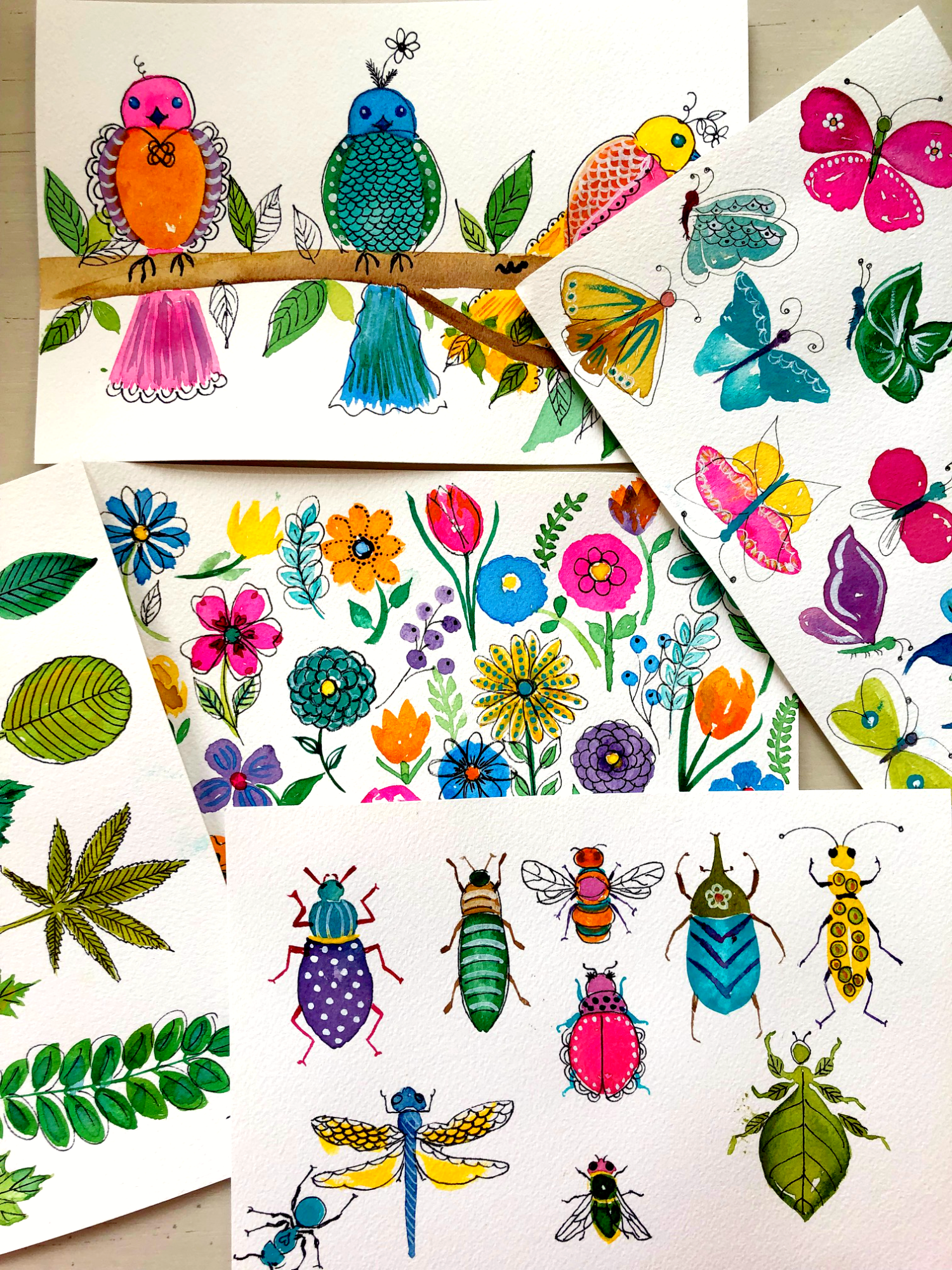
Spring is practically begging to be painted in watercolor. In Watercolor Whimsies: Spring Edition, students explore five springtime themes:
Blooms • Bugs • Birds • Branches • Butterflies
The combination of watercolor and ink is especially fun for these nature-inspired subjects because children can experiment with loose washes of color and then add line, detail, pattern, and personality.
👉 Explore Watercolor Whimsies: Spring Edition
Watercolor Whimsies: Summer

Take your watercolor studies under the sea with Watercolor Whimsies: Summer Edition. Students create five whimsical ocean-inspired projects:
Funky Fish • Terrible Tentacles • Shimmering Shells • Incredible Invertebrates • Fathomless Favorites
These make wonderful summer homeschool art lessons—or simply an excuse to keep creating when your regular school schedule slows down.
👉 Explore Watercolor Whimsies: Summer Edition
Watercolor Whimsies: Autumn

Autumn provides an entirely different palette and collection of subjects. In Watercolor Whimsies: Autumn Edition, students paint their way through:
Flora • Fauna • Fungi • Foliage • Fruit
Think woodland creatures, mushrooms, colorful leaves, autumn plants, and the rich colors of harvest time. It’s an easy way to connect watercolor with seasonal nature study while continuing to develop confidence with paint and pen.
👉 Explore Watercolor Whimsies: Autumn Edition
Watercolor Whimsies: Christmas
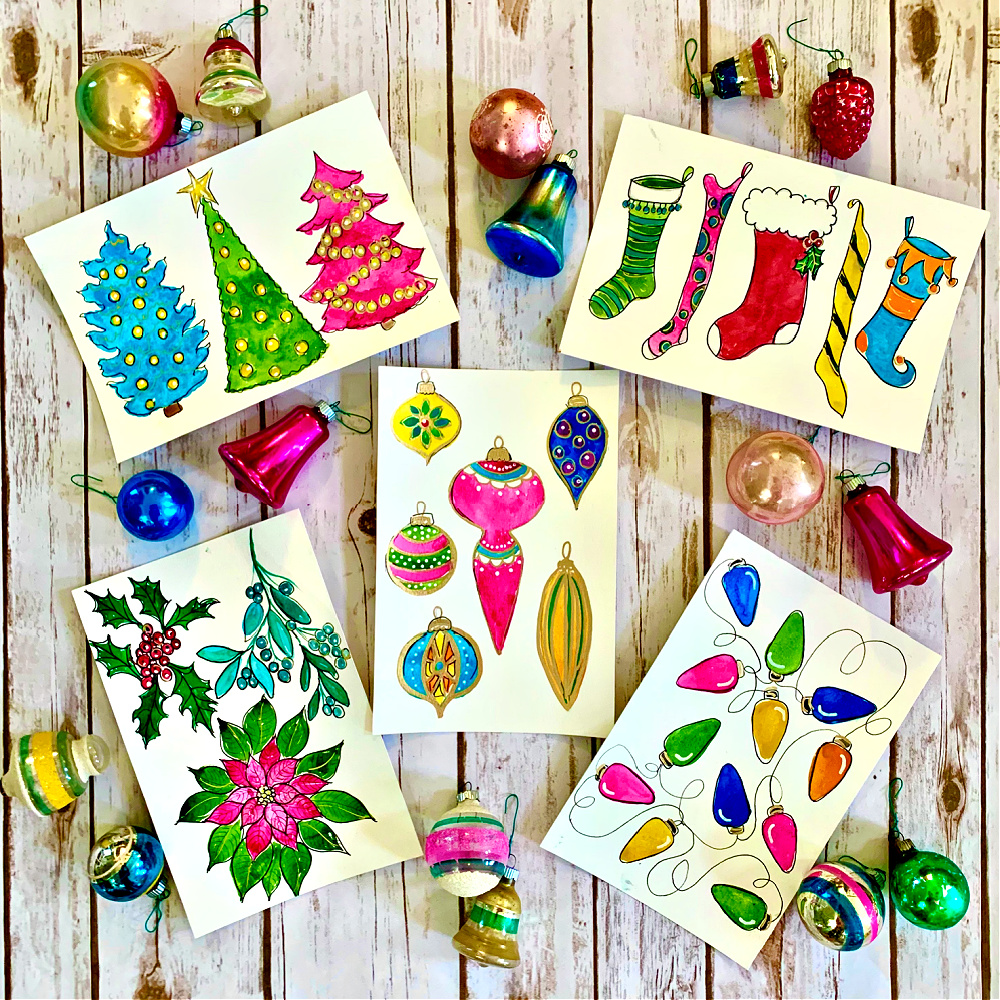
And, of course, we couldn’t leave out Christmas. Watercolor Whimsies: Christmas Edition includes five festive themes:
Trees • Ornaments • Botanicals • Lights • Stockings
Use these lessons during December when you want your homeschool days to slow down a bit, or turn the finished artwork into cards, decorations, gifts, or keepsakes.
👉 Explore Watercolor Whimsies: Christmas Edition
Together, all four Watercolor Whimsies courses give your children 20 watercolor projects spread naturally across the year.
You could use them as seasonal additions to another art curriculum—or make Watercolor Whimsies the backbone of a relaxed year of watercolor exploration.
Homeschool Watercolor Curriculum for Middle & High School
Eventually, a student who loves watercolor may want to understand the medium at a much deeper level. They want to move beyond simply following a project. They want to understand why watercolor behaves the way it does.
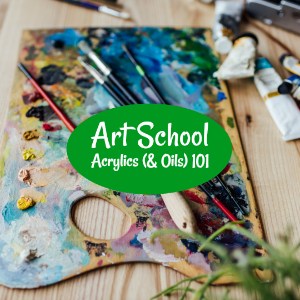
That’s where Art School: Watercolors 101 comes in.
Art School: Watercolors 101
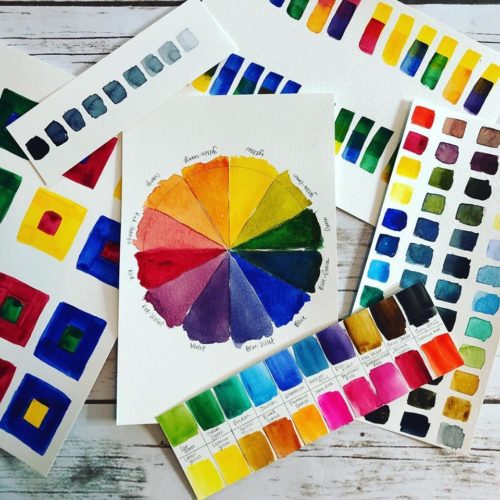
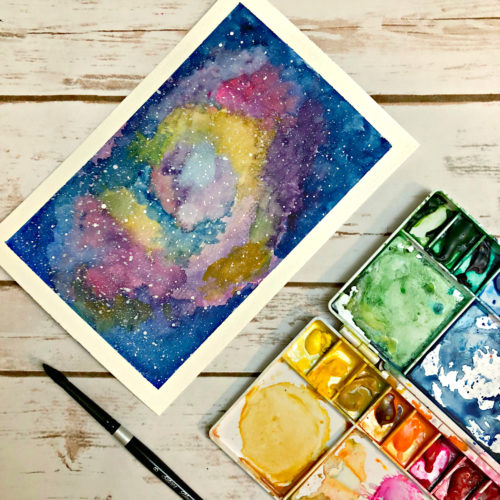
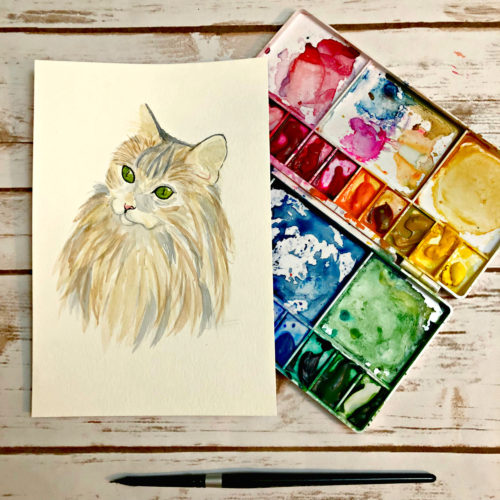
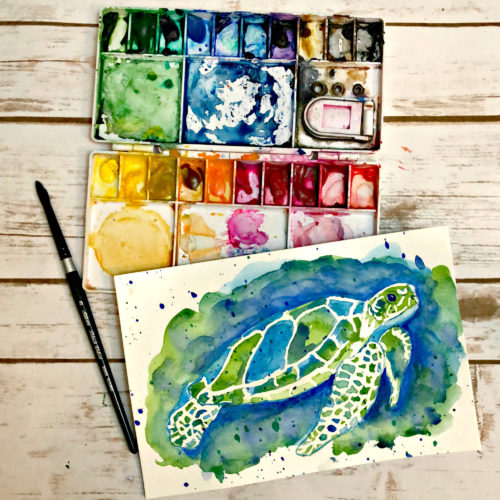
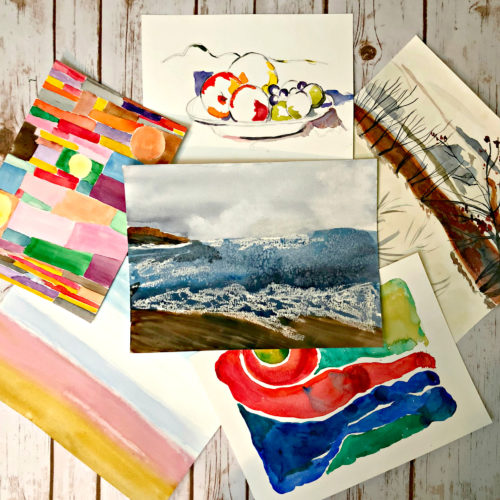
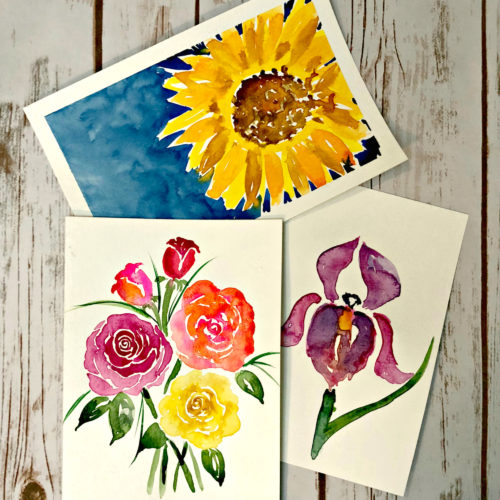
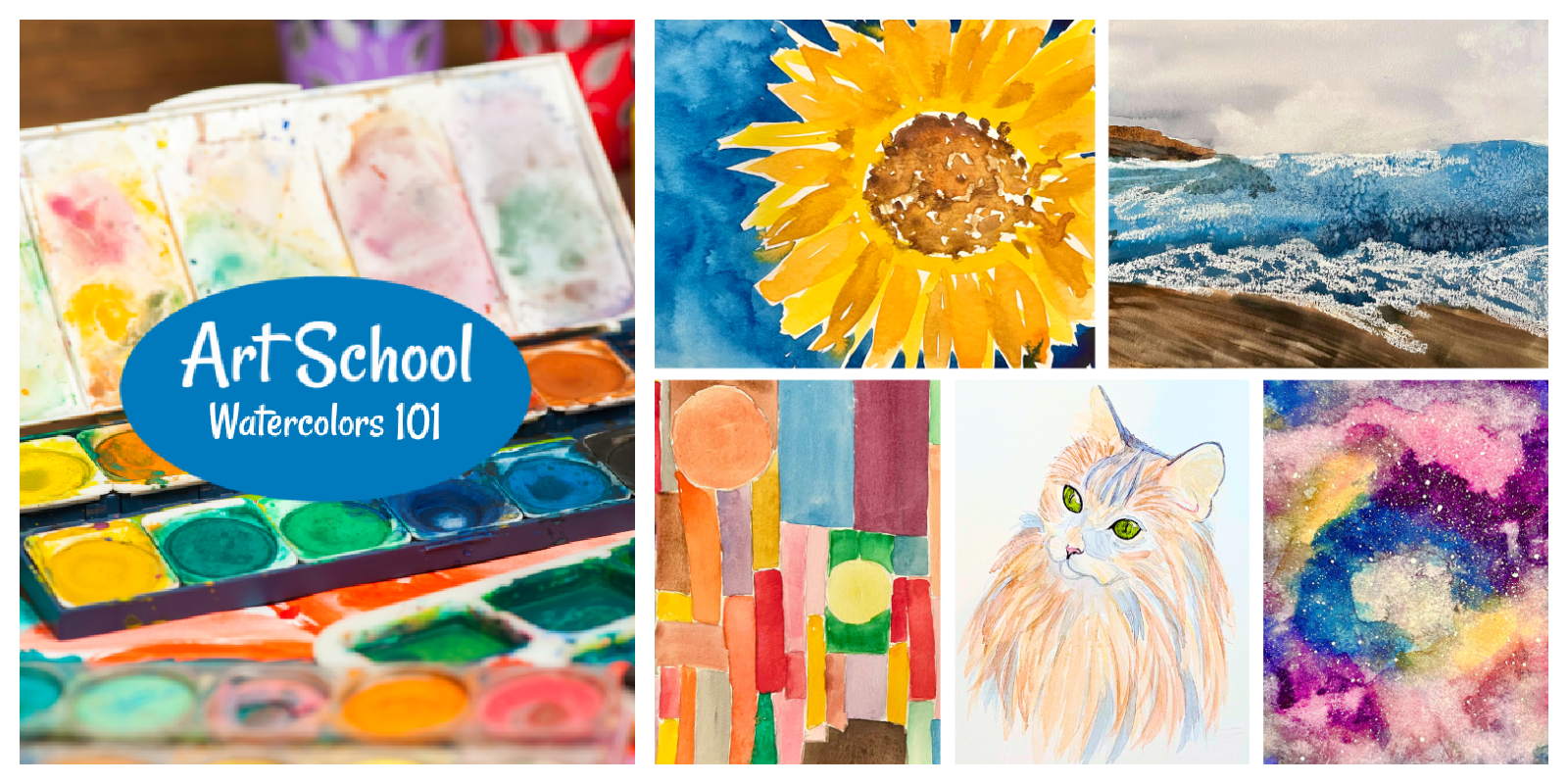
Created for middle and high school students, Watercolors 101 provides more than 30 lessons exploring watercolor and gouache through both classical and modern techniques. Students learn skills including color mixing, flat washes, gradated washes, variegated washes, wet-on-dry, wet-on-wet, brushwork, lifting, masking, texturing, wax resist, line and wash, backruns, and more.
But technique isn’t studied in isolation. Students also learn from the artists who came before them. Throughout Watercolors 101, they study and recreate watercolor techniques inspired by master artists including Paul Cézanne, Paul Klee, Andrew Wyeth, J.M.W. Turner, Winslow Homer, and Georgia O’Keeffe.
This combination of technical study, master studies, and finished paintings helps teens build a genuine foundation in watercolor rather than simply accumulating a collection of unrelated projects.
👉 Explore Art School: Watercolors 101
Why Study the Masters?
Copying master artwork as a learning exercise has a long tradition in art education.
When students slow down and study how another artist handled color, value, composition, edges, brushwork, or light, they begin seeing things they might otherwise miss. They’re not trying to become the next Turner or O’Keeffe.
They’re asking: What did this artist do? Why does it work? What can I learn from it? And how might I use that knowledge in my own artwork?
Eventually, those individual lessons become part of the student’s own artistic vocabulary.
A Watercolor Curriculum That Grows With Your Child
You don’t have to jump immediately into an intensive watercolor course. In fact, I love the idea of allowing watercolor to grow naturally with your child’s interests. A Masterpiece Society watercolor pathway might look something like this:
Beginning & Exploring
Creative Juice: Watercolor Open Ended Art Lessons
↓
Kids & Teens
Watercolor Whimsies: Spring
Watercolor Whimsies: Summer
Watercolor Whimsies: Autumn
Watercolor Whimsies: Christmas
↓
Middle & High School
Art School: Watercolors 101
↓
Independent Artist
Sketchbooks, nature journaling, master studies, original paintings, mixed-media projects, and continued watercolor practice.
This gives children both creative freedom and technical growth. And they don’t have to move through it quickly. Art isn’t a race.
What Watercolor Supplies Do Homeschoolers Need?
One of the nice things about watercolor is that you can begin with a relatively simple supply list. At minimum, you’ll need a simple watercolor set, watercolor paper, brushes, water jars, and a few basic household supplies such as paper towels. For Watercolor Whimsies, you’ll also use permanent black pens to add line and detail.
As students become more serious, upgrading the quality of the paper, paint, and brushes can make a noticeable difference. Watercolor paper is particularly important because ordinary drawing or printer paper doesn’t respond well to large amounts of water. So, I'd encourage you to start with 140 lb. weight of paper.
But don’t feel like you need professional materials for a child who is just beginning. Start with good basic supplies. Let them paint. Upgrade when their skills and interest justify it.
How Often Should We Include Watercolor in Our Homeschool?
That depends entirely on your family’s goals. For a general homeschool art education, you might spend several weeks exploring watercolor before moving into another medium. You could also use the four Watercolor Whimsies courses seasonally throughout the year.
Or, if you have a teenager who wants to study watercolor seriously, make Watercolors 101 a semester- or year-long part of their fine arts studies and allow plenty of time for practice between lessons. There isn’t one correct schedule. The advantage of homeschool art is that you can spend more time where your child is flourishing.
Can Watercolor Count Toward High School Art Credit?
For teens, Art School: Watercolors 101 can provide a substantial instructional component for a homeschool high school fine arts course. Families can combine the lessons with independent watercolor practice, sketchbook work, master studies, art appreciation, museum visits, additional paintings, and portfolio work.
Because homeschool graduation and credit requirements vary by state, parents should determine how to document and award credit according to their own state’s requirements. But don’t underestimate the educational value of serious art study.
Students are learning observation, color theory, composition, technique, creative problem-solving, persistence, visual communication, and artistic decision-making. That’s real learning.
What If Watercolor Feels Unpredictable?
It is. That’s part of the lesson. Watercolor teaches us that sometimes the most beautiful effects happen when we stop trying to control every inch of the page. Paint blooms. Colors merge. Edges soften. A backrun appears where you weren’t expecting one.
Sometimes you correct it. Sometimes you incorporate it. Sometimes it becomes your favorite part of the painting.
Learning technique gives students more control over the medium. Learning creativity helps them know when to let go of that control. A good watercolor education needs both.
Find the Right Homeschool Watercolor Curriculum
Whether your child has never touched a watercolor brush or your teenager is ready to explore classical techniques and master studies, you can build watercolor into your homeschool in a way that fits your family.
Begin with an open-ended lesson. Spend a season painting whimsical projects. Or dive deeply into watercolor technique with your teen. You don’t have to be the watercolor teacher. We’ll do that part for you.
Ready to paint?
👉 Watch Creative Juice: Watercolor Open Ended Art Lessons free on YouTube.
👉 Explore the Watercolor Whimsies Collection for 20 seasonal watercolor projects.
👉 Explore Art School: Watercolors 101 for comprehensive middle and high school watercolor instruction.
👉 Explore Masterpiece Society Studio for watercolor—and an entire library of homeschool art courses.
Get out the paints, fill the water jars, and make something beautiful.