Discover why fine arts belong in your homeschool and how art, creativity, art appreciation, and hands-on learning can enrich your child's education.
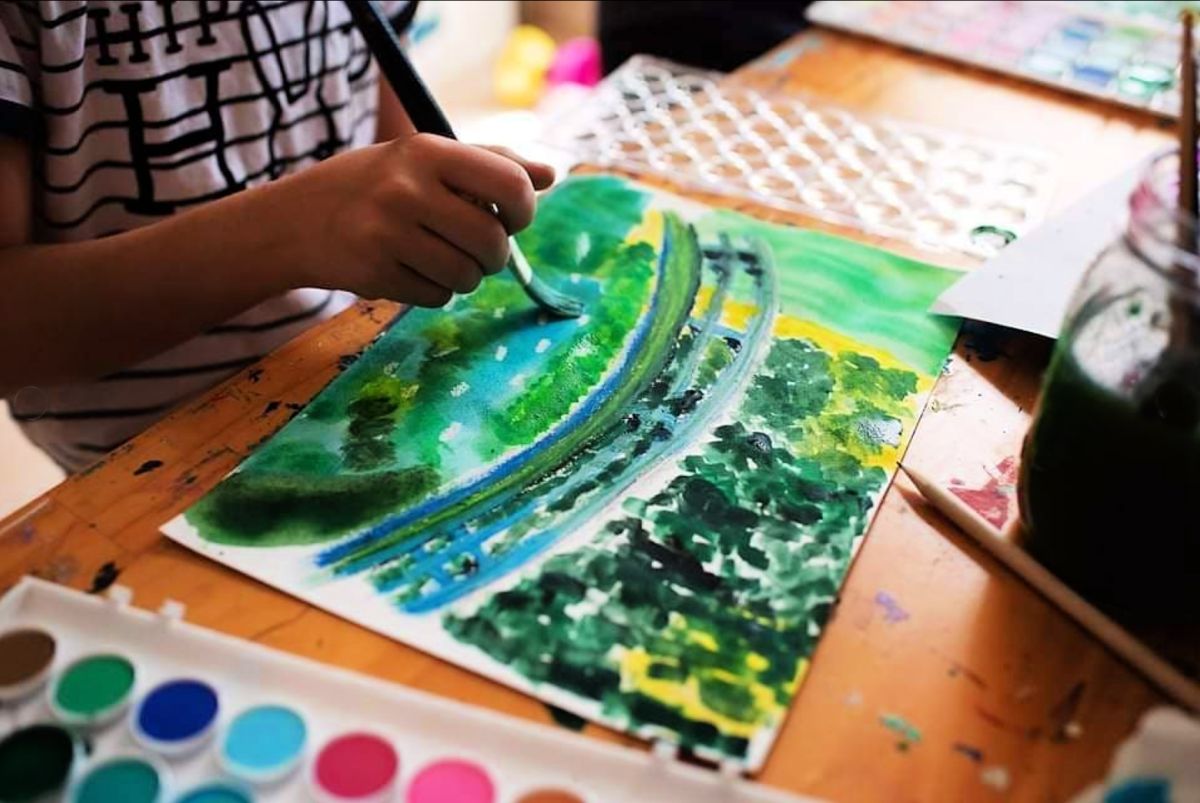
Math. Science. History. Language arts. When we're planning a homeschool year, those subjects usually find their way onto the schedule first.
Fine arts? Those are often the subjects we plan to get to once everything else is finished. And we all know how that tends to go.
The math lesson takes longer than expected. Someone needs help with an essay. There's another load of laundry, an appointment in the afternoon, and dinner to think about. Before long, art has quietly disappeared from the week again.
But I don't believe the fine arts are simply an extra we add to our children's education when we happen to have enough time. Art is part of a rich education.
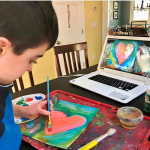
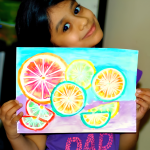
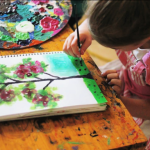
When children draw, paint, study a masterpiece, listen to beautiful music, encounter great architecture, watch a play, or create something with their own hands, they're learning to pay attention to things that aren't always easily measured on a test. They're learning to notice, imagine, interpret, make decisions, recognize beauty, and create something that didn't exist before.
Those are worthwhile things to cultivate in our children.
What Are the Fine Arts?
When we talk about fine arts in education, we're talking about much more than drawing and painting. Fine arts can include:
- visual art
- music
- theater
- dance
- photography
- sculpture
- architecture
- film and other visual media
Depending on how broadly you define the arts, you might also include poetry, creative writing, fiber arts, ceramics, and other forms of creative expression.
You don't have to include every one of these in your homeschool. The goal isn't to create another enormous list of subjects you're supposed to squeeze into an already-full week.
Instead, think of the fine arts as an invitation to give your children regular opportunities to encounter beauty and create something of their own.
For us here at Masterpiece Society, that emphasis is primarily visual art: drawing, painting, mixed media, art history, art appreciation, architecture, and other forms of visual creativity. And after years of teaching art to homeschool families, I'm more convinced than ever that these things deserve a place in our children's education.
Why Fine Arts Matter in Your Homeschool
There are plenty of practical reasons to include art in your homeschool, but I think the value goes much deeper than simply adding another subject to the transcript. Fine arts shape the way children encounter the world.
Fine Arts Teach Children to Notice
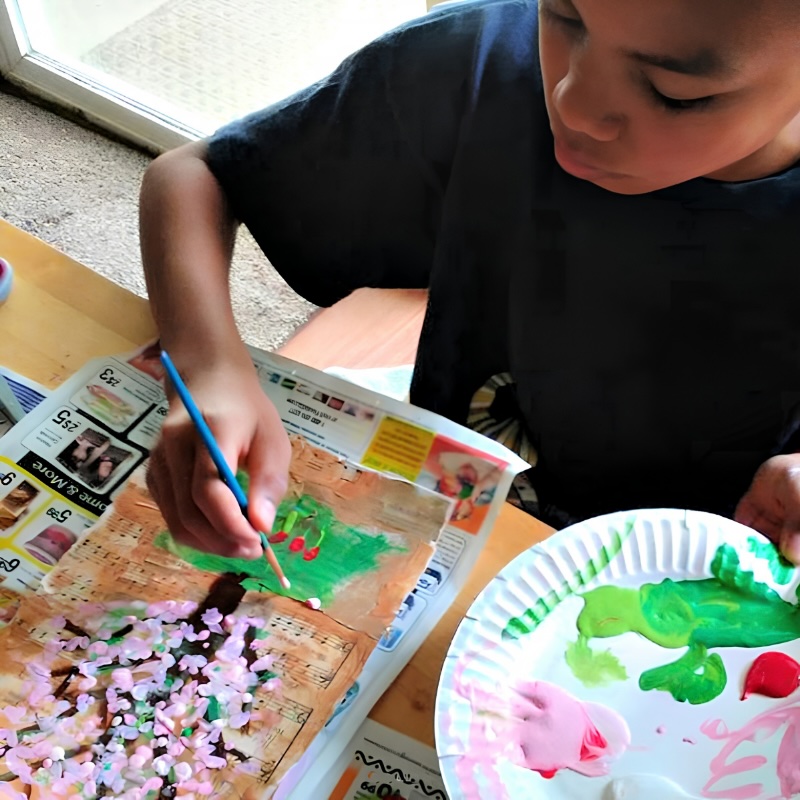
Before a child can draw something well, they have to learn to see it. Not simply glance at it, but see it.
Where does the line curve? Which shape is larger? Where does the light fall? What color is that shadow? What happens to an object as it moves farther away?
Art slows us down enough to notice details we might otherwise miss.
Art appreciation does the same thing. Place a great painting in front of a child and give them time to really look at it. They begin noticing expressions, colors, clothing, light, landscape, symbols, brushstrokes, and tiny details hidden in the background.
That habit of attention doesn't have to remain confined to an art lesson. Children who learn to look closely at paintings can also learn to look closely at flowers, faces, architecture, illustrations, landscapes, and the world around them.
Fine Arts Give Children Opportunities to Create

Children spend much of their education receiving information. They read, listen, solve problems someone else has written, answer questions, memorize, and practice.
Those things matter. But children also need opportunities to take what is inside their own minds and bring it into the world.
A blank piece of paper asks a very different question from a worksheet: What will you do with this?
There may be techniques to learn and principles to understand, but eventually the child has to make decisions. Which colors? Which marks? Which composition? What should stay? What should change? What happens if I try this?
Creating requires participation in a way that simply consuming information does not.
Fine Arts Teach That There Can Be More Than One Good Solution
Many academic problems have a correct answer. Seven times eight is fifty-six.
But art often asks children to work within a set of principles while still making individual decisions. Give ten children the same materials and the same art lesson, and you shouldn't necessarily end up with ten identical pieces of artwork.
I don't want that.
Good art instruction gives children enough guidance to learn a skill without removing every opportunity to think for themselves. One student might choose a different color palette. Another may change the composition. One may work carefully and precisely while another uses loose, expressive marks.
They're learning that sometimes there can be several good ways to solve a creative problem. That's a valuable lesson far beyond the art table.
Fine Arts Give Children a Place to Experiment
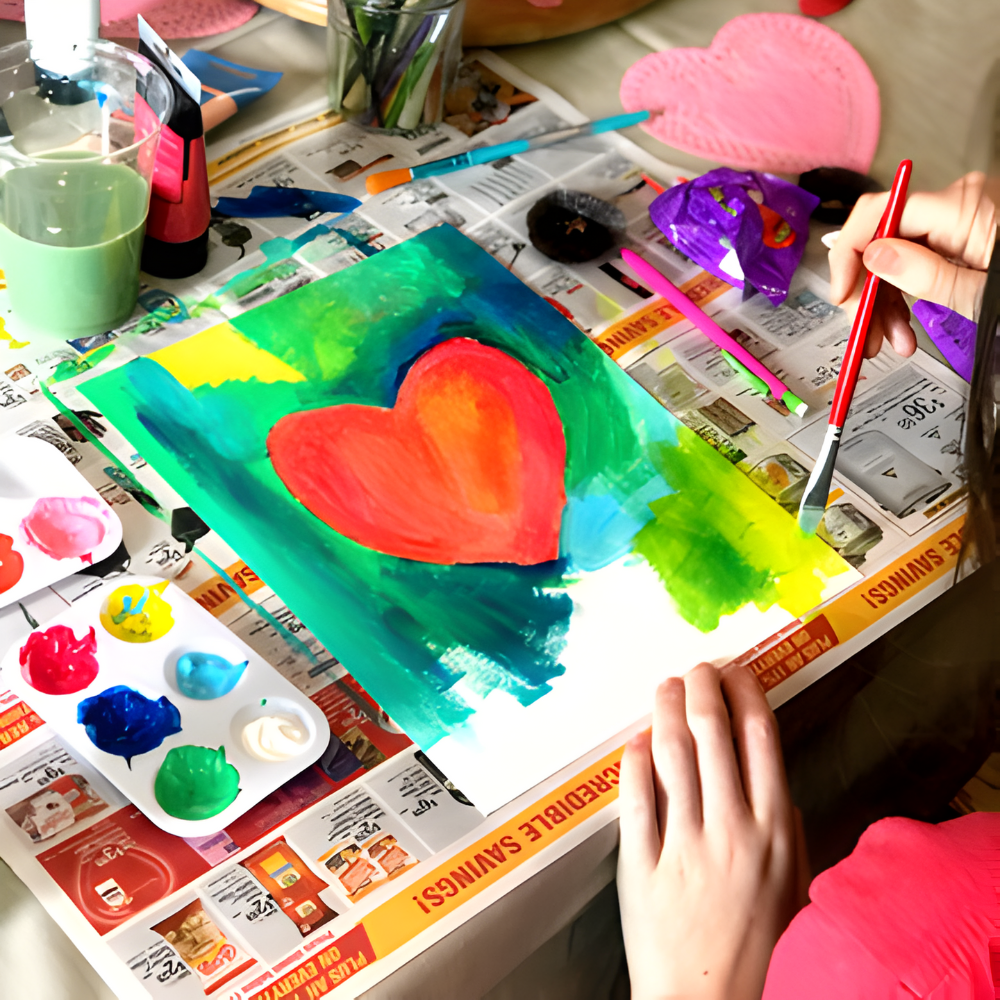
One of the things I love about art is that it gives children a relatively safe place to try something and see what happens.
Mix those colors. Change the line. Layer another medium over it. Turn the paper. Try a different brush. Add water. Use less water. Start again.
Not every experiment will work. That's part of learning.
Over time, children discover that an unexpected result doesn't necessarily mean the entire project is ruined. Sometimes it can be changed. Sometimes it can be incorporated. Sometimes it teaches you what to do differently next time.
Creativity requires a certain willingness to experiment without knowing exactly how everything will turn out. Art gives children opportunities to practice that.
Fine Arts Develop Real Skills
I love open-ended creativity, but I don't believe we have to choose between creativity and skill. Children can have both.
As they study art, they can gradually learn:
- observation
- drawing
- proportion
- color mixing
- value
- form
- perspective
- brushwork
- composition
- texture
- layering
- different art materials and techniques
A young child may encounter these ideas through playful mixed-media projects. An older student might study them intentionally through drawing, watercolor, acrylics, oils, or pastels.
Over time, those small lessons begin to build on one another. A child who once struggled to draw what they saw begins noticing proportion more accurately. A student who couldn't control watercolor begins understanding the relationship between pigment and water. A teenager learns how value creates form or how composition changes the way the eye moves through a painting.
That's real progress. And progress builds confidence.
Fine Arts Help Children Become Comfortable With the Creative Process
Children sometimes assume artists sit down, immediately know exactly what they're doing, and create something beautiful on the first try.
Real creativity rarely works that way.
Artists revise. They experiment. They make awkward first attempts. They change their minds. They practice techniques. They create things they love and things they don't. They learn from both.
That's one reason I think children benefit from seeing the actual process of creating rather than only seeing polished finished artwork. They need to know that art can involve uncertainty, problem-solving, correction, and persistence.
A mistake isn't proof that you aren't an artist. It's part of making art.
Fine Arts Introduce Children to Beauty
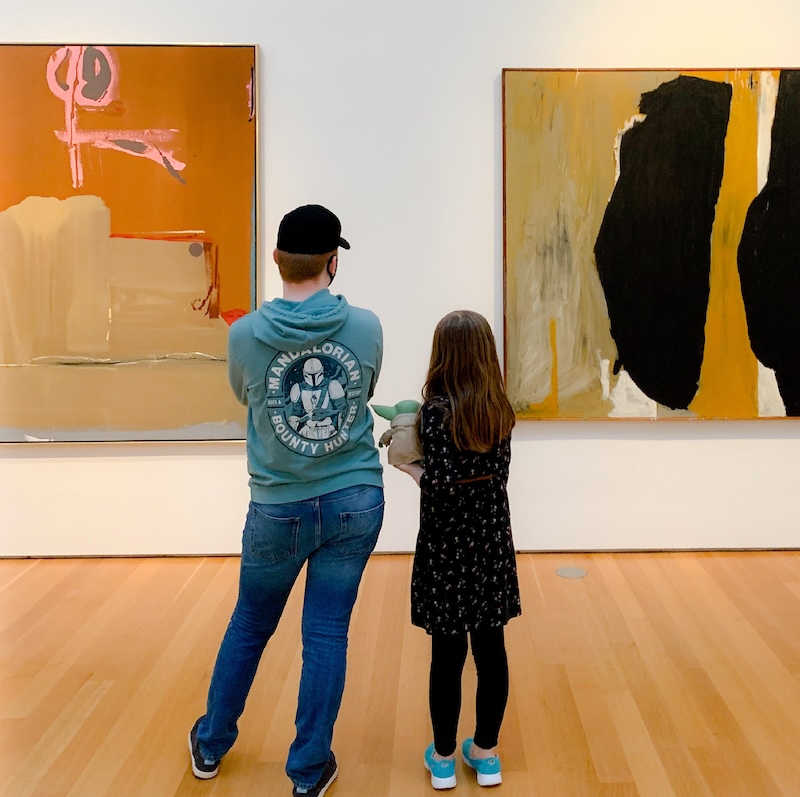
Education isn't only about preparing children to earn a living someday. It's also about helping them become people who are awake to the world around them.
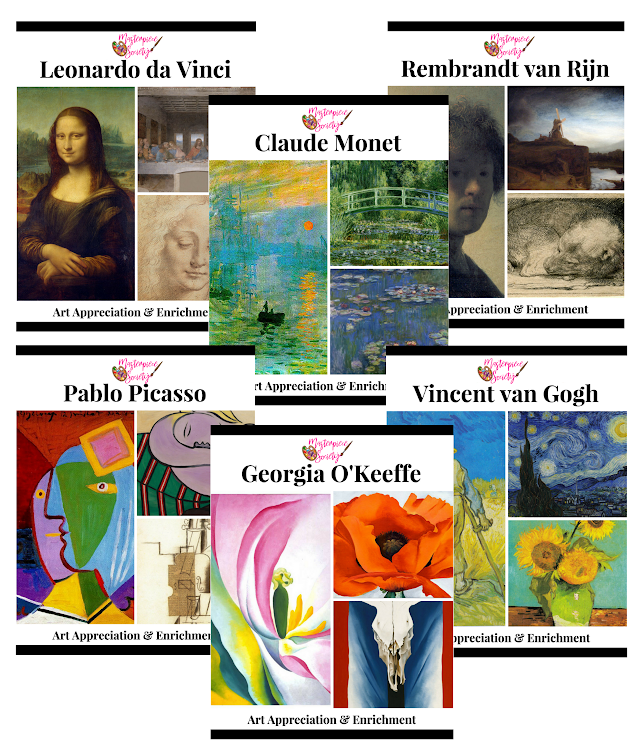
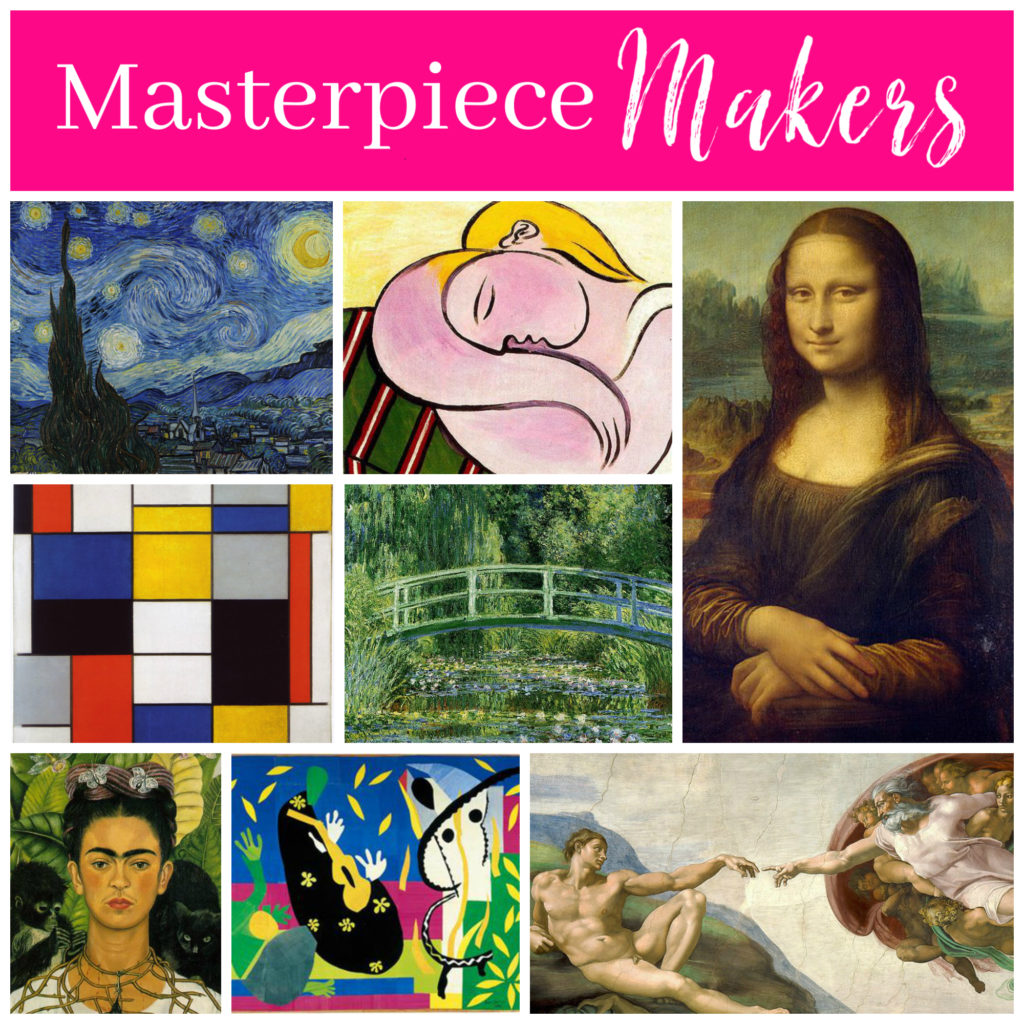
There is value in knowing how to stop in front of a beautiful painting and really look at it. There is value in recognizing a Monet or Van Gogh, in walking into an old cathedral and noticing the architecture, or in seeing pattern in an Islamic tile, movement in a Japanese print, light in a Vermeer, or color in a Matisse.
Our children will spend their lives surrounded by visual culture. Helping them encounter great art gives them a richer visual vocabulary and a deeper awareness of the enormous range of things human beings have created across centuries and cultures.
Fine Arts Bring History to Life
Art gives children another doorway into history.
A history textbook can tell us what people wore, what they valued, how they worshiped, what they built, where they lived, and what was happening politically or culturally. Artwork lets us see some of that world.
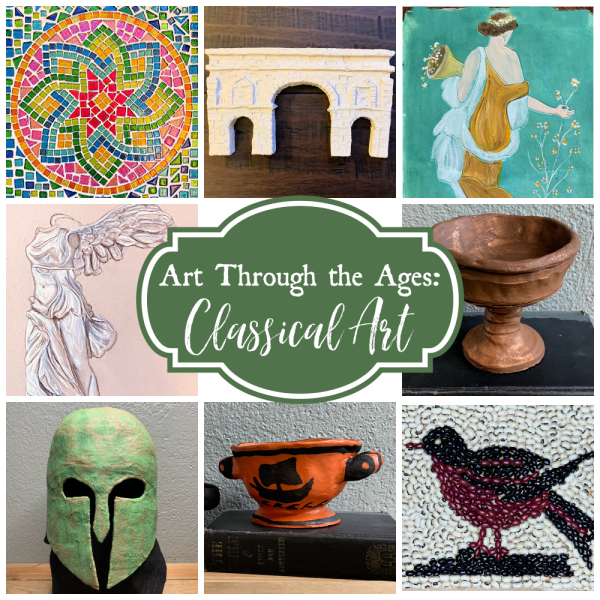
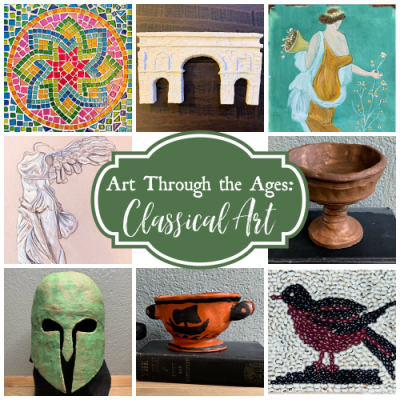
Study Ancient Egypt and you'll encounter monumental sculpture, tomb paintings, hieroglyphics, and architecture. Study Ancient Greece and Rome and you'll find pottery, mosaics, sculpture, temples, and classical architecture.
Move through the Middle Ages and Renaissance and the visual world changes again. Continue through Impressionism, Post-Impressionism, Modernism, and contemporary art, and children can begin seeing how artistic styles developed alongside changes in history, philosophy, technology, religion, and culture.
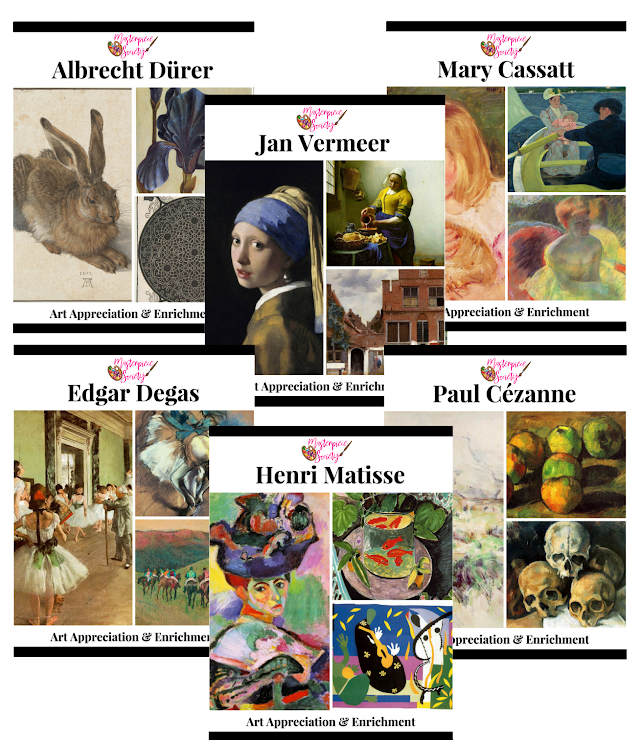
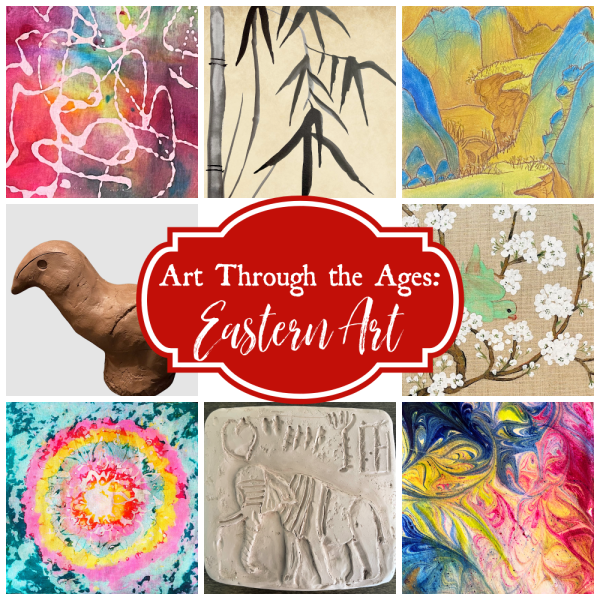
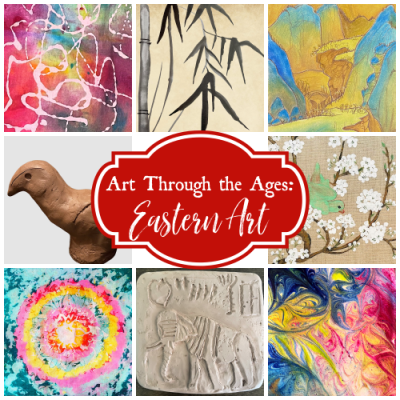
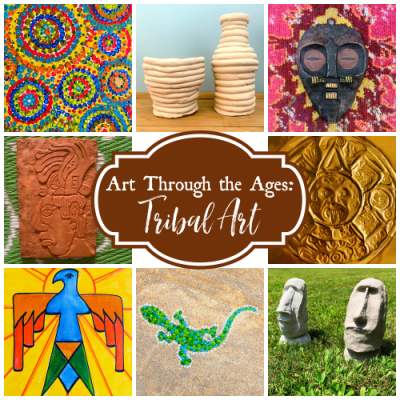
That's why I love connecting art and history through courses such as Art Through the Ages and Historical ARTchives.
Art isn't separate from history. It's part of the evidence history left behind.



Fine Arts Connect Beautifully With Other Homeschool Subjects
One of the great advantages of homeschooling is that subjects don't have to live in separate boxes. Art can naturally connect with almost everything else you're studying.
Studying ancient Egypt? Look at Egyptian art and architecture. Reading a wonderful novel? Create art inspired by the story. Studying geometry? Explore symmetry, proportion, pattern, perspective, tessellation, and artists who use mathematical ideas. Learning about the Renaissance? Meet Leonardo, Michelangelo, and Raphael. Studying nature? Draw what you observe. Learning about another culture? Study its art and architecture.
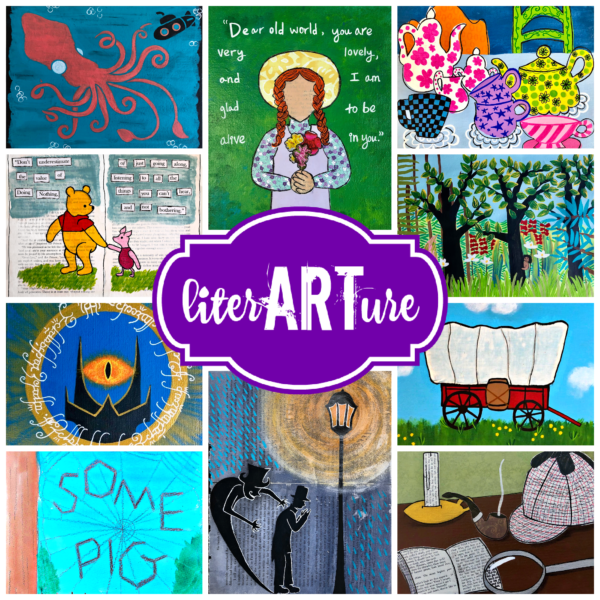
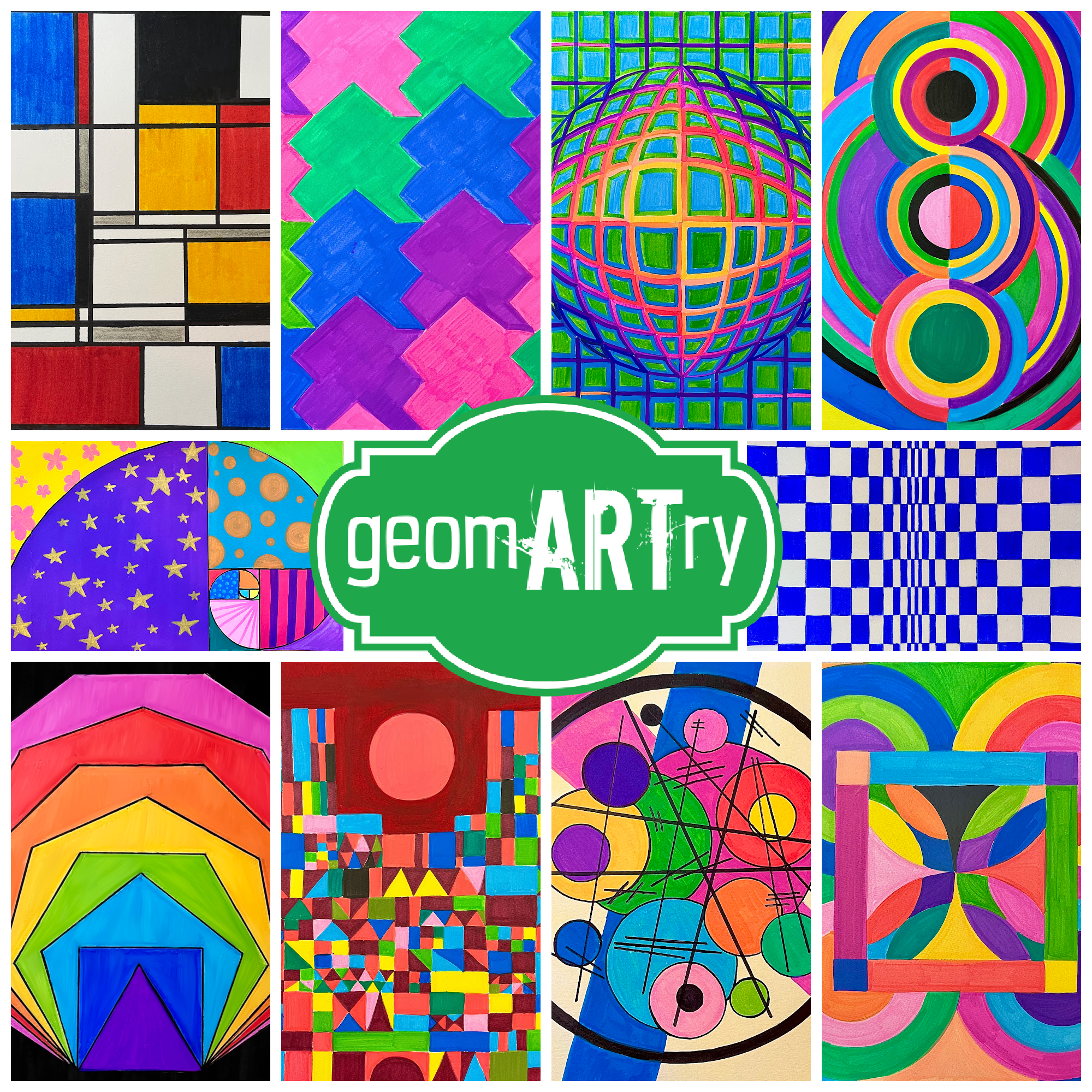
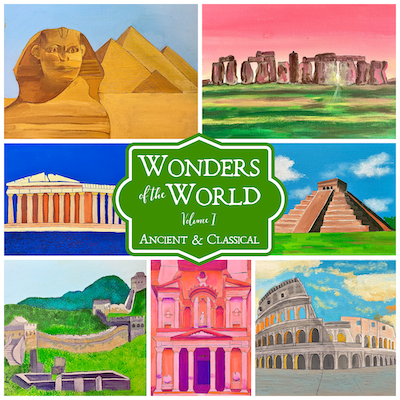
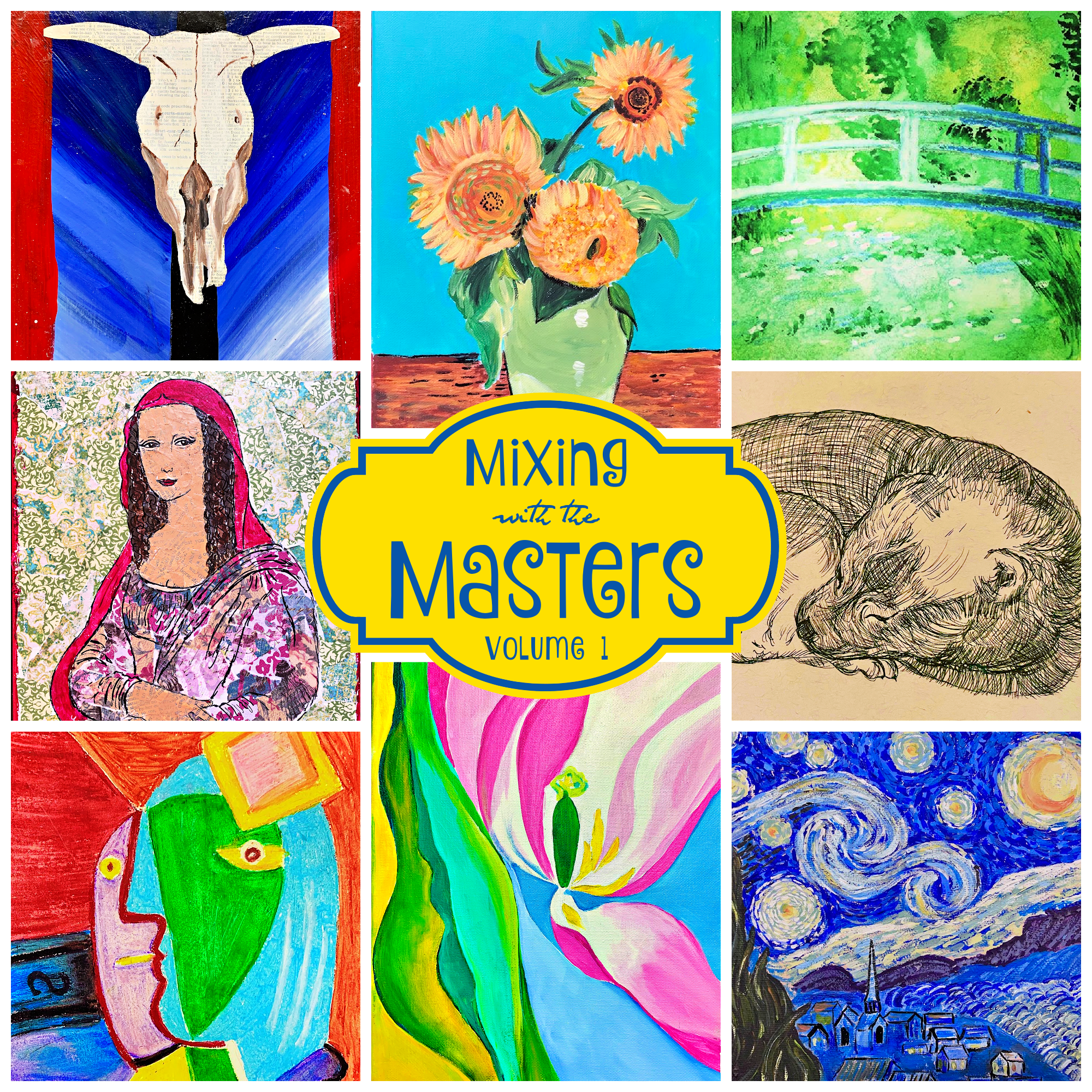
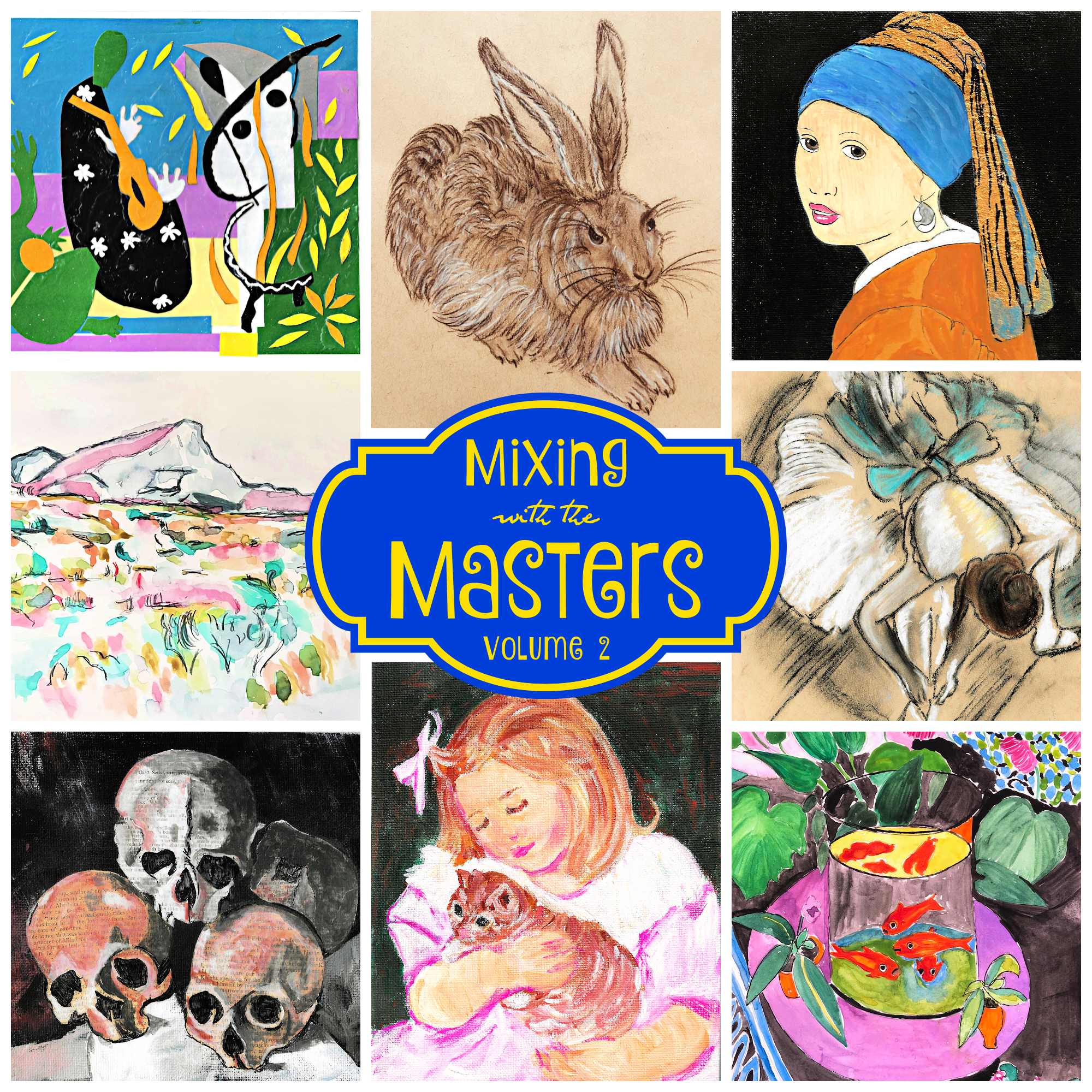
Those connections are the inspiration behind courses such as LiterARTure, GeomARTry, Mixing with the Masters, and Wonders of the World.
The arts don't have to compete with the rest of your homeschool. They can enrich it.

Fine Arts Are Especially Well Suited to Homeschooling
Homeschooling gives us something traditional classrooms often struggle to provide: flexibility.
You don't necessarily have to stop creating because a bell rings after forty-five minutes. If everyone is engrossed in painting one afternoon, you can keep painting. If you're studying the Renaissance, you can spend extra time with Leonardo da Vinci and Michelangelo. If one child becomes fascinated with watercolor, you can let them go deeper. If another would rather draw, you can nurture that interest too.
You can visit museums, keep sketchbooks, hang children's artwork throughout your home, spend an afternoon creating together, combine ages, connect art to whatever you're studying, and follow a child's developing interests.
Art doesn't have to be another subject you're trying to reproduce exactly as it would be taught in a school building. You can make it part of the culture of your home.
You Don't Have to Be an Artist to Include Fine Arts
This is one of the biggest obstacles I hear from homeschool moms: "But I'm not artistic."
You don't have to be.
You don't personally teach every subject in your homeschool from your own expertise. You use books, curriculum, videos, online classes, museums, libraries, and teachers. You can do exactly the same thing with art.
Your role can be as simple as making sure the supplies are available, creating space in the schedule, encouraging your children, displaying their work, and finding good instruction. Someone else can teach perspective. Someone else can demonstrate watercolor washes. Someone else can explain how to shade a sphere or mix a particular color.
That's one of the reasons I created Masterpiece Society in the first place.
You don't have to be the art teacher to give your children a rich art education.
If the practical side of adding art feels overwhelming, read How to Teach Art in Your Homeschool next. It walks you through supplies, scheduling, skills, art appreciation, and how to actually make art a regular part of your homeschool.
Fine Arts Don't Have to Take Over Your Schedule
There's another misconception worth clearing up. Giving your children a rich art education does not require doing art every day.
You could establish a simple weekly rhythm: Friday afternoons are for art (our Studio members call them Fine Arts Fridays.) Or perhaps you alternate between creating art and studying artists. One week you paint. The next week you spend time with a great work of art. Another week you continue a longer project. You could even set aside one longer afternoon every other week.
Consistency matters much more than creating an elaborate schedule you can't maintain.
A single meaningful art lesson each week adds up to dozens of creative experiences over the course of a school year.
What Could Fine Arts Look Like Through the Homeschool Years?
Fine arts can grow alongside your children.
Early Elementary
These years should include plenty of exploration. Children can paint, draw, cut, glue, layer, mix colors, explore texture, and become comfortable using real art materials. They can begin encountering famous artwork and learning the names of artists.
Most importantly, they can discover that creating is something they are allowed to do.
For more ideas for these years, see Elementary Homeschool Art Curriculum.
Upper Elementary
As children grow, art can become more intentional without losing its creativity. They can begin developing drawing and painting skills, learning more about color and composition, studying famous artists, exploring art history, and trying a wider variety of mediums.
They can also begin making more connections between art and subjects such as literature and history.
Middle School
Middle school is a wonderful bridge between exploratory elementary art and more focused high school instruction. Students can begin strengthening foundational skills while discovering which media and subjects interest them most.
This is a great time for drawing, painting, mixed media, artist studies, art history, architecture, and increasingly independent work.
High School
Teenagers are ready to go deeper. They can study drawing, proportion, value, perspective, composition, watercolor, acrylics, oils, pastels, art history, architecture, nature journaling, modern art, abstraction, and other specialized areas.
Some students will simply need a meaningful fine-arts component in their high school education. Others may discover that art is becoming an important part of their future.
If you're planning art for a teenager, see Art Curriculum for Teens & High School Homeschoolers.
What If You Have Several Ages?
This is another place where homeschooling has an advantage. Fine arts can be one of the easiest subjects to enjoy together.
A six-year-old and a twelve-year-old don't need to produce the same artwork to participate in the same creative experience. The younger child may work more simply. The older child can add greater detail, use more sophisticated techniques, or approach the assignment more independently.
Meanwhile, everyone is gathered around the same table.
That can make art especially valuable for larger homeschool families who don't want every subject divided into separate grade levels.
If that's your situation, read Art Curriculum for Multiple Ages for ideas about creating an art plan that works across your family.
What Should a Homeschool Fine Arts Curriculum Include?
If visual art will be a significant part of your fine arts studies, I would look for a curriculum that includes more than a collection of disconnected crafts.
Children should have opportunities to create art, develop artistic skills, explore different materials and techniques, encounter great artists, look carefully at great works of art, learn something about art history, and gradually become more independent in their own creative decisions.
That doesn't mean every curriculum needs to accomplish everything. One course may concentrate on drawing. Another may focus on watercolor. Another may introduce famous artists. Another may connect art with history, literature, architecture, nature, or mathematics.
Over the years, those experiences can work together to create a wonderfully rich art education.
Building a Fine Arts Education With Masterpiece Society
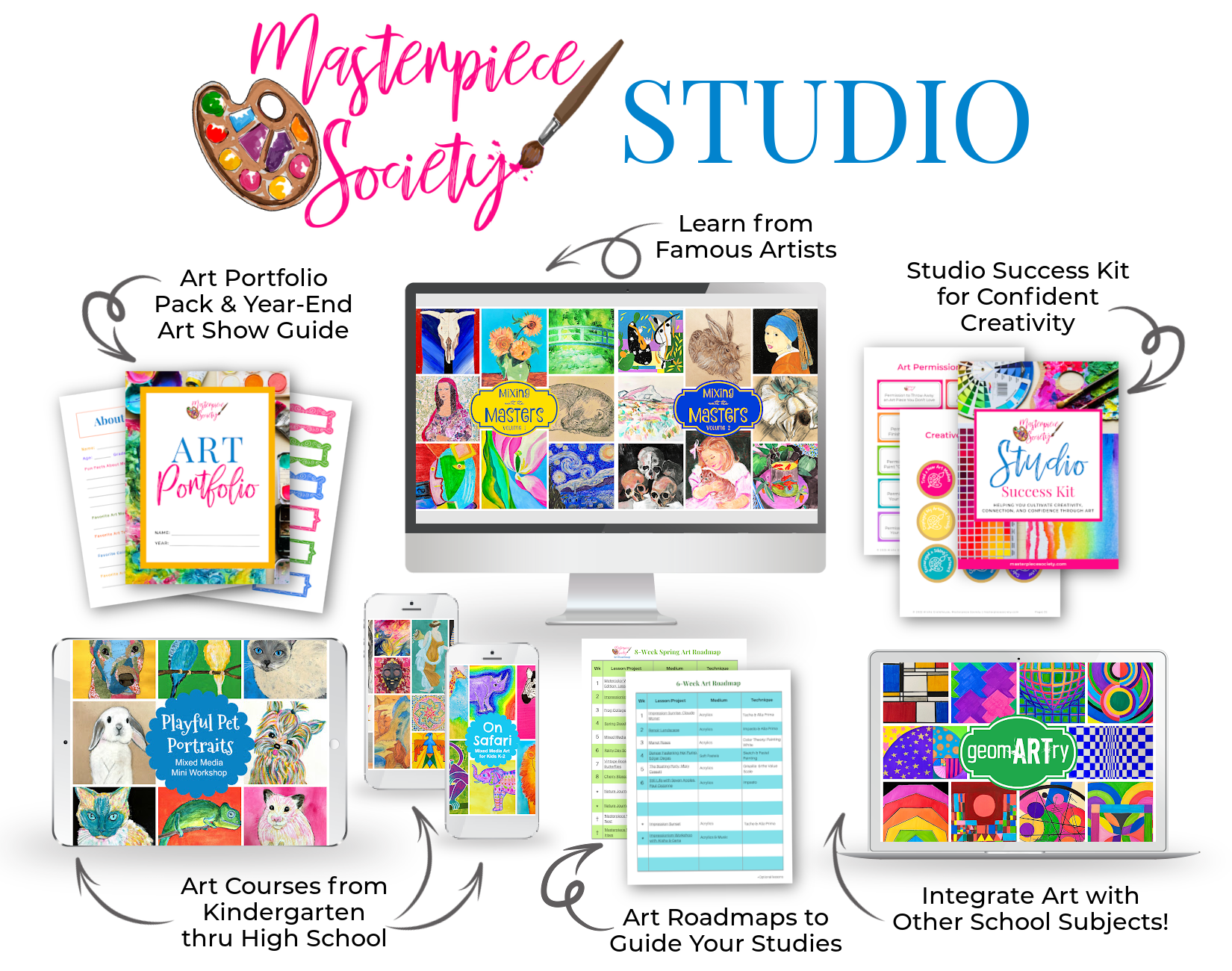
This is exactly what I've tried to build through Masterpiece Society.
Rather than giving homeschool families one narrow path through art, I wanted children to have opportunities to encounter art from many directions.
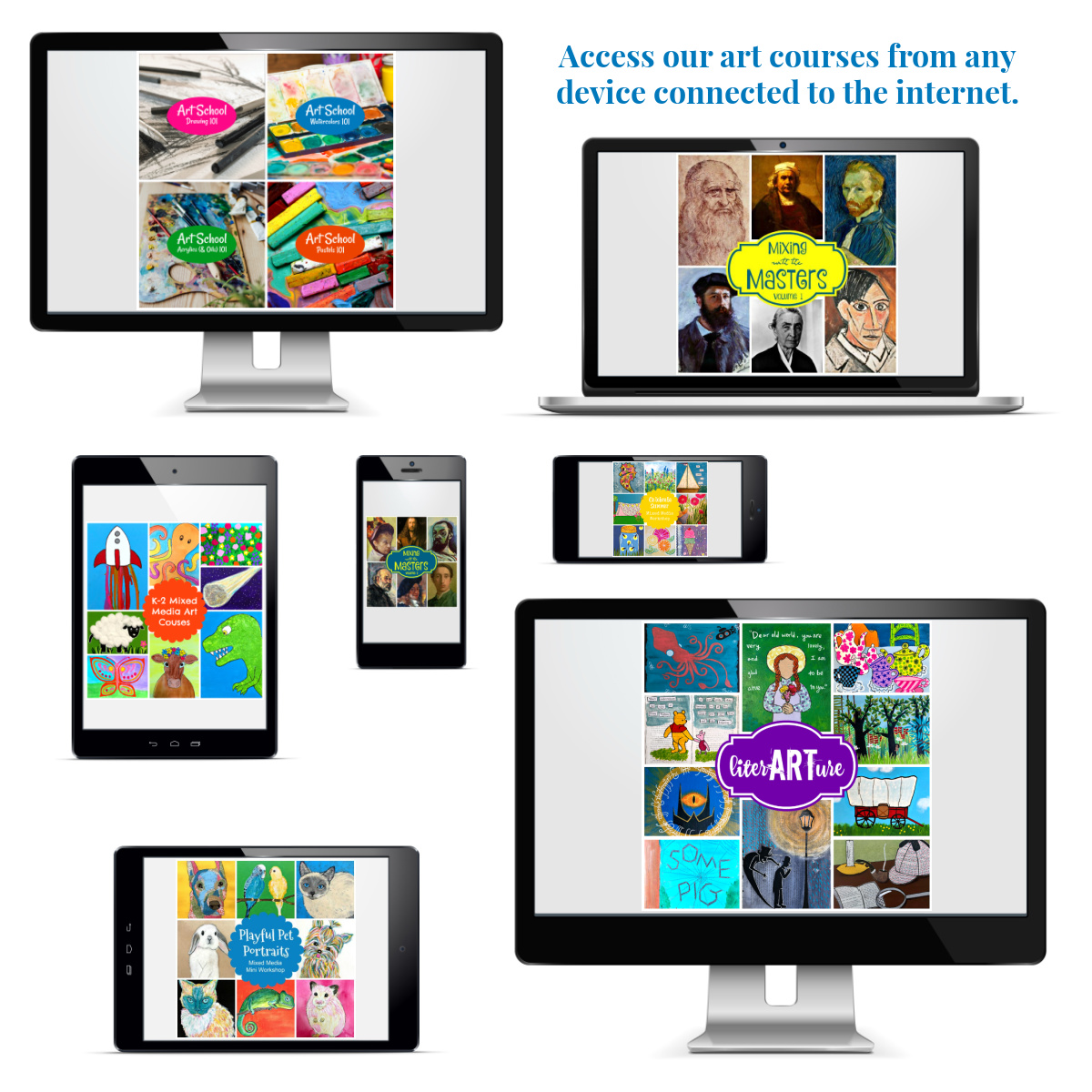
A young child might begin with playful mixed-media projects. An elementary student might explore famous artists through Mixing with the Masters, connect books and creativity through LiterARTure, or follow a full year of lessons through The Artful Year.
Older students can explore art and history through Art Through the Ages, art and architecture through Wonders of the World, or mathematics and modern art through GeomARTry.
Teens who are ready for deeper skill development can move into Art School, studying drawing, watercolor, acrylics and oils, and pastels more intentionally.
And families who want access to a broad range of art instruction can use Masterpiece Society Studio as an ongoing art resource that grows with their children.
👉 Explore Masterpiece Society Studio
Make Room for Art
The arts deserve a place in our children's education.
Not because every child will grow up to become an artist. Not because every painting needs to be beautiful. And not because art is one more box homeschool parents need to check.
Art deserves a place because education should do more than fill children's minds with information. It should teach them to:
- pay attention
- recognize beauty
- encounter new ideas
- understand people and cultures beyond their own
- experiment and think outside the box
- persevere
- imagine
- create something that has never existed before
That's more than enough reason to make room for fine arts in your homeschool.
Not Sure Where to Begin?
If you're convinced art belongs in your homeschool but aren't sure what to do next, start with How to Teach Art in Your Homeschool. I'll walk you through a simple approach to supplies, scheduling, foundational skills, art appreciation, and creating an art rhythm that actually works for your family.
And if you'd rather have someone else handle the teaching, explore Masterpiece Society's Homeschool Art Curriculum to find art lessons for young children through high school.
You don't have to be an artist to give your children a rich art education. You simply have to make room for one.