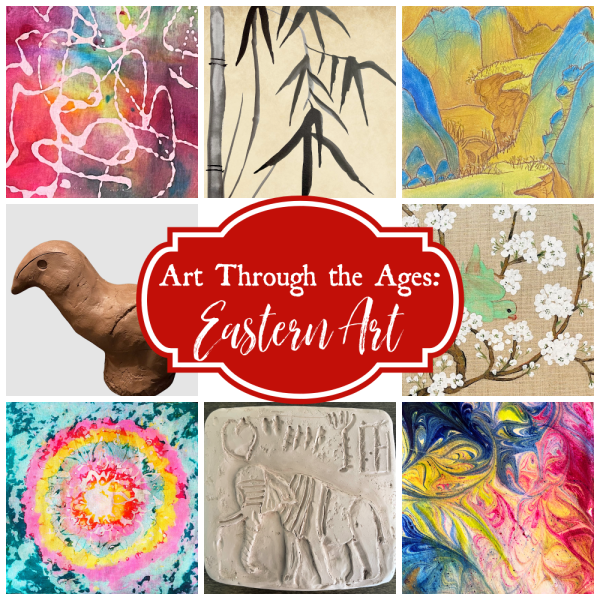
How to Build a Rich, Joyful Art Education at Home—Even If You’re Not an Artist
Learn how to build a rich homeschool art curriculum with drawing, painting, art appreciation, multiple media, age-by-age guidance, supplies, scheduling, and more.

If you have ever looked at a beautiful painting your child created and thought, “I wish I knew how to help them do more of this,” you are not alone. Many homeschool parents want art to be part of their children’s education, but they are not quite sure where to begin.
Maybe you love the idea of a rich, creative homeschool, but you do not consider yourself artistic. Maybe you have purchased art supplies with the best intentions, only to discover that no one knows what to do with them. Or perhaps your child loves art so much that you are beginning to wonder whether casual crafts are enough—and what a real homeschool art curriculum should actually include.
The good news is that you do not need an art degree, a dedicated studio, or hours of extra time each week to give your children an excellent art education. You need a thoughtful plan, good instruction, appropriate materials, and permission to let art be both educational and enjoyable.
I homeschooled my own three children for over 19 years, and I began creating homeschool art curriculum because I wanted the same thing so many parents want: meaningful art instruction that could fit naturally into real homeschool life. Over the years, I have seen again and again that children do not need a parent who can draw beautifully. They need a parent who is willing to make room for creativity and give them opportunities to learn.
This guide will walk you through the major pieces of a strong homeschool art education—from drawing and painting to art appreciation, art history, creative exploration, supplies, scheduling, multiple ages, and high school credit—so that you can create an approach that works for your own family.
What Is Homeschool Art Curriculum?
A homeschool art curriculum is a planned approach to helping children develop artistic skills, creative confidence, visual awareness, and an understanding of art and artists. At its best, it includes more than a collection of crafts or printable activities. It gives children repeated opportunities to observe, create, experiment, learn techniques, encounter beautiful works of art, and gradually develop their own artistic voice.
That does not mean every homeschool needs to recreate an art school at the kitchen table. In fact, one of the great advantages of homeschooling is that art can be more personal, flexible, and integrated with the rest of family life.
A complete art education can include five broad areas: art-making skills, experience with a variety of media, art appreciation, art history and cultural context, and open-ended creativity. Some weeks may emphasize one area more than another. Over the course of a year, however, children benefit from experiencing all five.
This distinction matters because “doing something artistic” is not always the same as receiving art instruction. Crafts can be delightful. Coloring pages can be relaxing. Seasonal projects can create wonderful family memories. But children also benefit from learning how line, shape, color, value, texture, form, space, composition, proportion, and perspective actually work.
A strong homeschool art curriculum gives children tools. Once they have those tools, they can use them creatively rather than simply copying a finished example.
Why Art Belongs in a Homeschool Education
Art is sometimes treated as an optional extra—the subject we will get to after math, reading, science, history, chores, appointments, and everything else is finished. In many homes, that means art quietly disappears.
But art develops ways of seeing and thinking that other subjects do not develop in quite the same way. When a child draws an object, they have to slow down and truly look at it. When they mix colors, they make predictions and adjust. When a painting does not turn out as expected, they solve problems. When they study a masterpiece, they learn to notice details, patterns, mood, symbolism, technique, and historical context.
Art also gives children a place where there may be more than one good answer. That matters. Much of childhood education asks students to find the correct answer. Creative work asks a different set of questions: What do you notice? What could you try? What happens if you change this? Which choice communicates your idea best?
Those questions nurture flexibility, persistence, observation, decision-making, imagination, and confidence. Art can also become a meaningful form of rest and expression for children who spend much of the day working with words and numbers.
And for the child who already loves art, consistent instruction communicates something important: this interest is worth cultivating. You do not have to know whether your eight-year-old will someday become an artist. You can simply give that interest room to grow.
What Should a Good Homeschool Art Curriculum Include?
There is no single perfect art curriculum for every family. A five-year-old who wants to paint animals has different needs from a fifteen-year-old building a portfolio. Still, there are several elements I look for in a well-rounded program.
1. The Elements and Principles of Art
Children should gradually become familiar with the building blocks artists use: line, shape, color, value, form, texture, and space, along with principles such as balance, contrast, emphasis, movement, pattern, rhythm, proportion, and unity.
These ideas do not need to be taught as dry vocabulary lists. They are most memorable when children use them. A lesson on value becomes meaningful when a student creates a drawing with highlights, midtones, and shadows. Color theory becomes real when a child mixes paint and discovers what happens when complementary colors meet.
2. Foundational Drawing Skills
Drawing is foundational because it trains the eye as much as the hand. Children can learn to see basic shapes within complex objects, compare proportions, use contour lines, create value, understand positive and negative space, and eventually work with perspective and more complex subjects.
Young children should not be pushed into overly technical drawing too soon, but they can begin learning observation from the start. Older students can progress into more structured study of proportion, portraits, perspective, shading, and composition.
3. Experience With Multiple Art Media
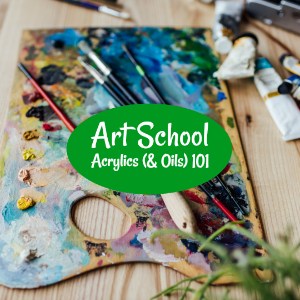
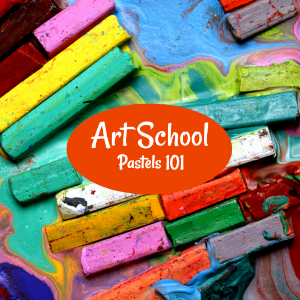
Children benefit from discovering that different materials behave differently. Watercolor invites transparency, layering, and beautiful "blooms" running into each other. Acrylic paint is bright, opaque and extremely forgiving (ask me how I know!). Oil pastels encourage rich, luscious color and direct mark-making. Pen and ink emphasize line. Collage teaches shape, layering, and composition. Mixed media encourages experimentation. And all of them together invite "happy little accidents" to occur on a regular basis. 😉
You do not need to introduce every medium at once. In fact, children often learn more when they spend enough time with one material to move beyond the awkward first attempt. A thoughtful curriculum revisits media so skills can deepen.
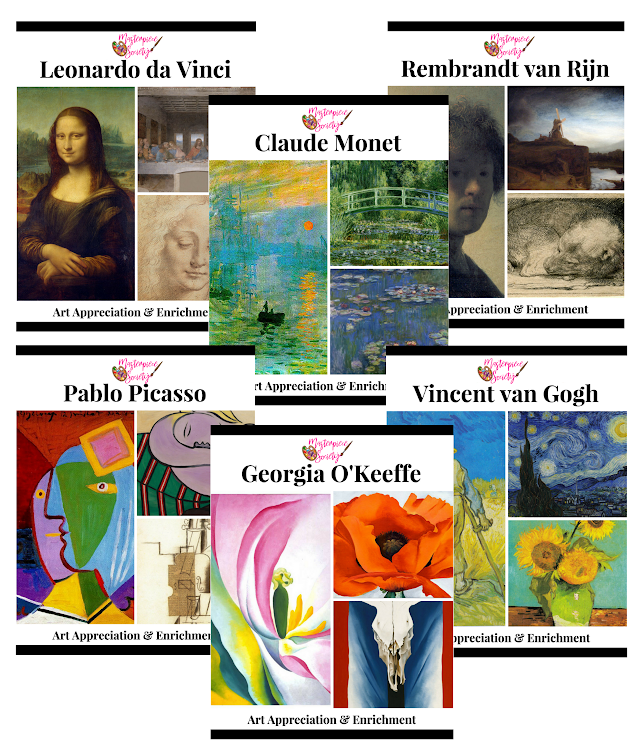
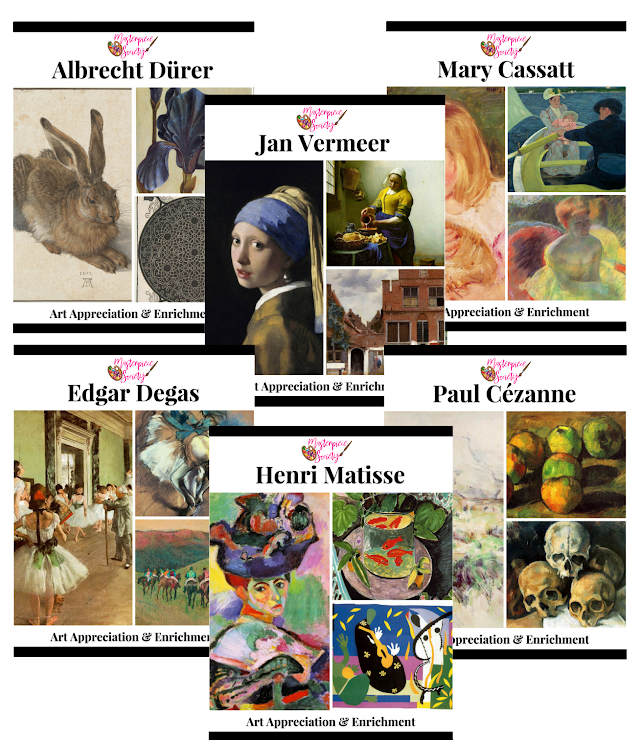
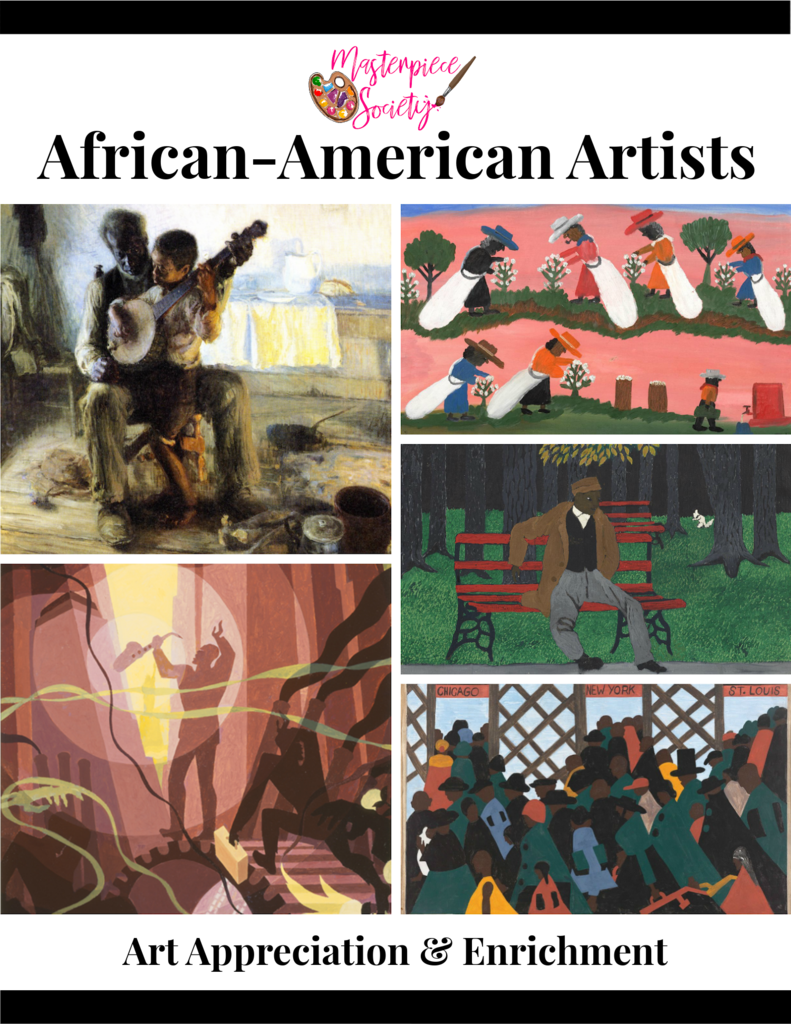
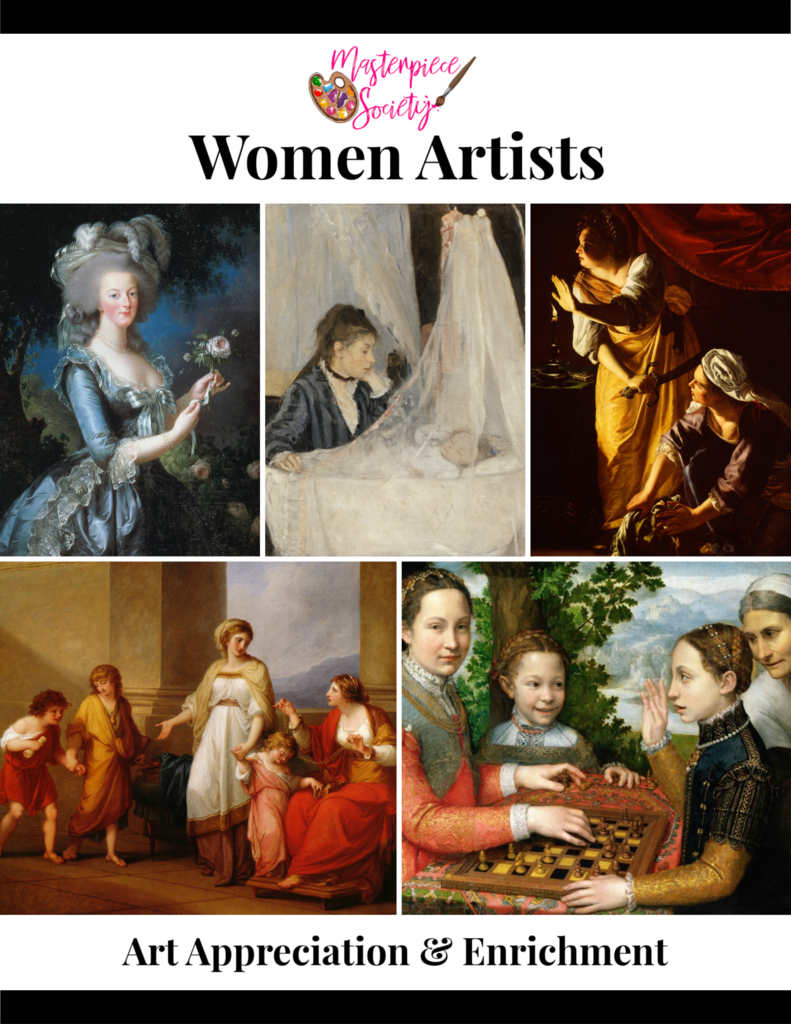
4. Art Appreciation and Famous Artists
Children should encounter excellent art—not only make their own. Looking closely at paintings, sculpture, architecture, illustration, and other visual art develops visual literacy and gives children a larger vocabulary of possibilities.
Art appreciation does not have to become a lecture. Put a work of art in front of your children. Give them time to look. Ask what they notice. What is happening? Where does their eye go first? What colors dominate? How does the artwork make them feel? What do they think the artist wanted them to notice?
Then add a small amount of context about the artist, period, technique, or story. The goal is not to turn every picture study into a test. The goal is to help children become comfortable looking at art attentively and forming thoughtful observations.
5. Art History and Cultural Context
As children mature, connect artworks to the people, places, beliefs, technologies, and historical moments that shaped them. Art history becomes especially memorable when it intersects naturally with history, literature, geography, architecture, or cultural studies.
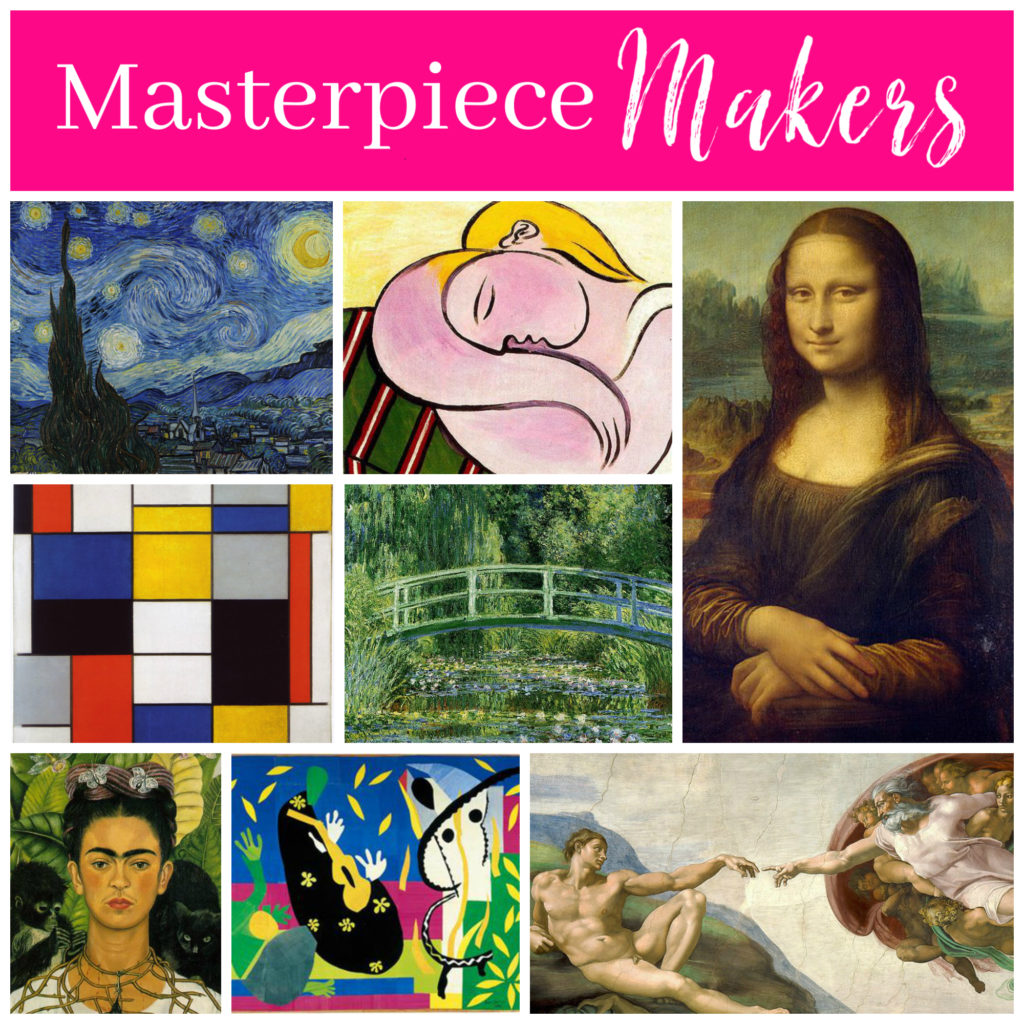
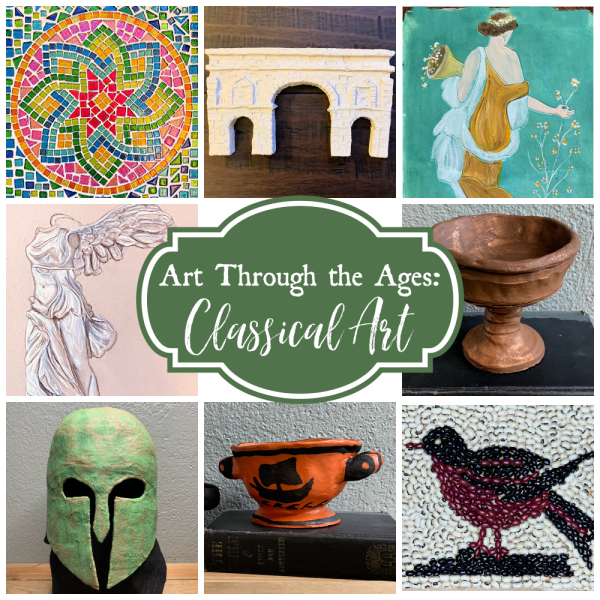
A child studying ancient civilizations can encounter Egyptian art, Greek pottery, Roman mosaics, or architecture. A Renaissance study can include Leonardo, Michelangelo, Raphael, and the extraordinary changes in perspective and observation taking place at the time. Modern history opens doors to Impressionism, Post-Impressionism, abstraction, photography, design, and contemporary art.
This is one of the beauties of homeschooling: subjects do not have to live in separate boxes.
6. Creative Choice in a Homeschool Art Curriculum
Step-by-step instruction is useful. It teaches techniques and gives hesitant students a clear path into a project. But children also need opportunities to make choices.
After learning a technique, invite them to change the subject, colors, composition, background, materials, or mood. Ask, “How could you make this your own?” The goal is not permanent dependence on an instructor. The goal is to equip children with skills they can eventually use independently.
How Often Should Homeschoolers Do Art?
For many homeschool families, one intentional art lesson each week is enough to build skills and creative confidence, especially when children also have access to materials for informal creating. Families with children who are particularly interested in art may choose two or more sessions per week.
Consistency matters more than an ambitious schedule that lasts three weeks. A relaxed 45- to 90-minute art period every Friday afternoon can accomplish far more over a year than a complicated plan that continually gets postponed.
For younger children, lessons may be shorter. Twenty or thirty focused minutes followed by free exploration can be plenty. Older children and teens often want longer blocks because setup, technique, and more developed projects take time.
If art repeatedly gets pushed aside, give it a real place on the calendar. Do not wait for every “important” subject to be completed first. In our homeschool, I learned that the subjects that nourish a family often need intentional protection precisely because they do not arrive with the same sense of urgency as math assignments or deadlines.
How to Teach Art When You Are Not an Artist
This may be the most important section in this entire guide: you do not have to be an artist to provide a quality homeschool art education.
Your job is not to stand at the front of the room and demonstrate every technique from memory. Your job is to provide access to good teaching, create a workable environment, encourage careful observation and experimentation, and help your children continue when something feels difficult.
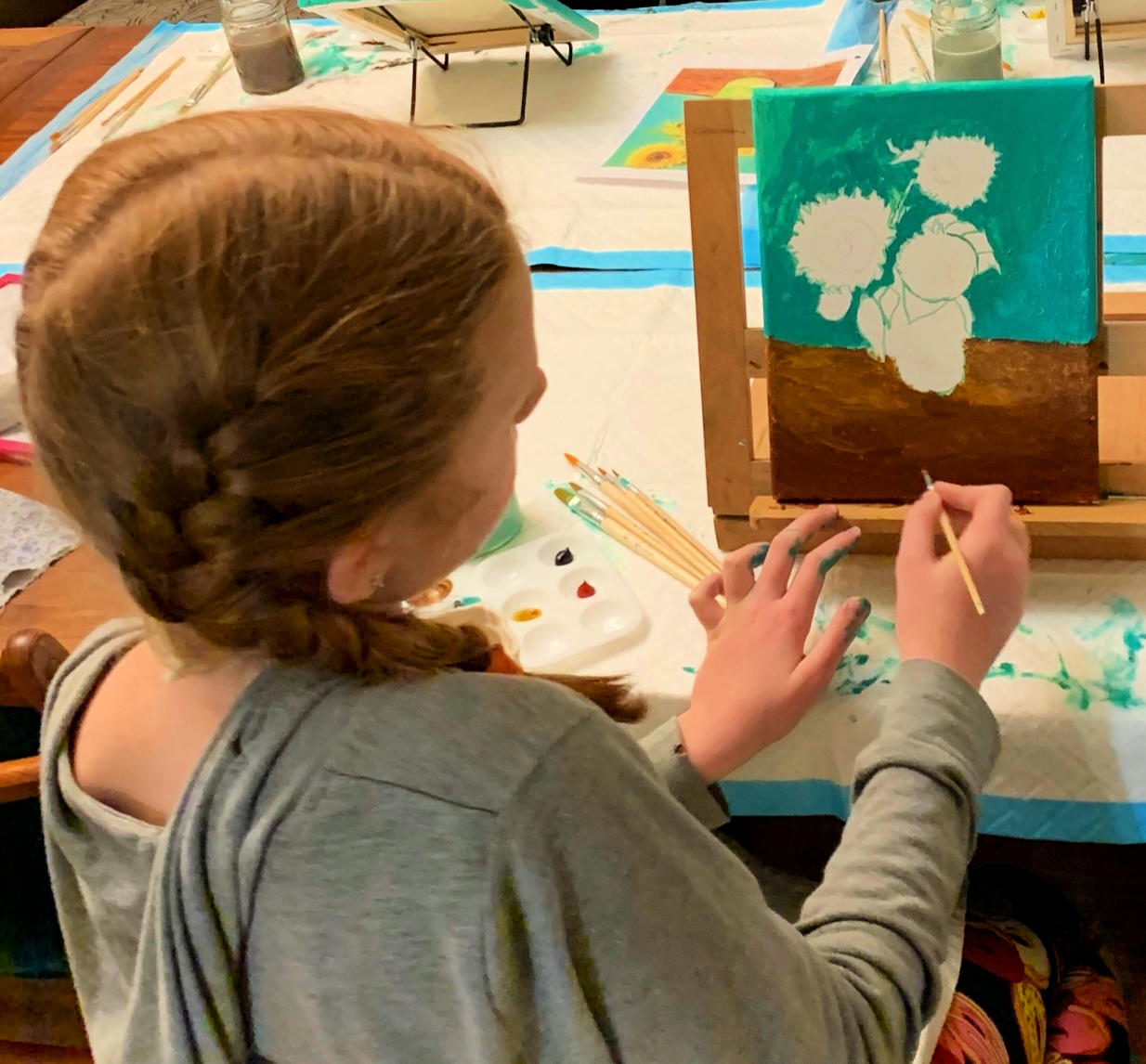
A quality video-based or step-by-step curriculum can carry the instructional load. You can learn alongside your children—or simply sit nearby with your own sketchbook and enjoy creating too.
Try replacing “I can’t draw” with “I haven’t learned how to draw that yet.” Children listen to the way adults talk about creativity. When we announce that we are terrible at art—or the one I hear the most: "I don't have a creative bone in my body"—we can unintentionally teach them that artistic ability is a fixed trait some people possess and others do not.
You do not need to praise every mark as a masterpiece either. Helpful encouragement is specific: “I noticed how carefully you mixed those colors.” “That shadow makes the object look three-dimensional.” “You kept working even when that section frustrated you.” “Your brushstrokes give this so much movement.”
That kind of response values observation, effort, technique, decision-making, and growth rather than simply declaring everything “good.”
Homeschool Art Curriculum by Age
PreK: Approximately Ages 3-4
At this age, art should focus on exploration, creativity, and delight rather than polished results. Give children plenty of opportunities to draw, finger paint, cut, glue, sculpt, mix colors, and experiment with different materials. Simply allow them to play and create.
Keep instruction very short and playful, and begin simple art appreciation by looking at beautiful artwork together and talking about what they notice.
Early Elementary: Approximately Ages 5–7
At this stage, protect delight. Children need plenty of experience handling materials, mixing colors, drawing from observation and imagination, cutting, gluing, painting, and making things.
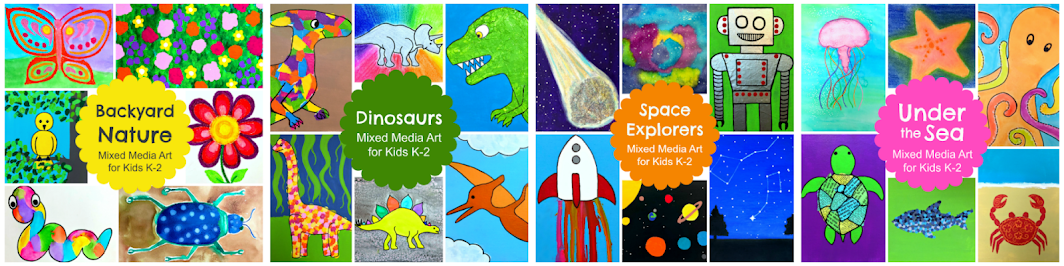
Lessons should introduce art concepts without demanding adult-looking results. Use broad themes children enjoy—animals, nature, oceans, space, seasons, stories, and familiar objects. Build fine-motor control naturally through art rather than making perfection the goal. Check out our K-2 art courses here.
This is also a wonderful age to begin simple picture study. Children are often remarkably perceptive when adults give them time to look.
Upper Elementary: Approximately Ages 8–11
Children can begin handling more structured instruction while retaining plenty of imagination. Introduce more deliberate drawing, value, composition, color theory, art vocabulary, famous artists, and varied media.
This age is particularly important because some children begin comparing their work to others and deciding they are “not good at art.” Good instruction can help bridge the gap between what they imagine and what their hands can currently produce.
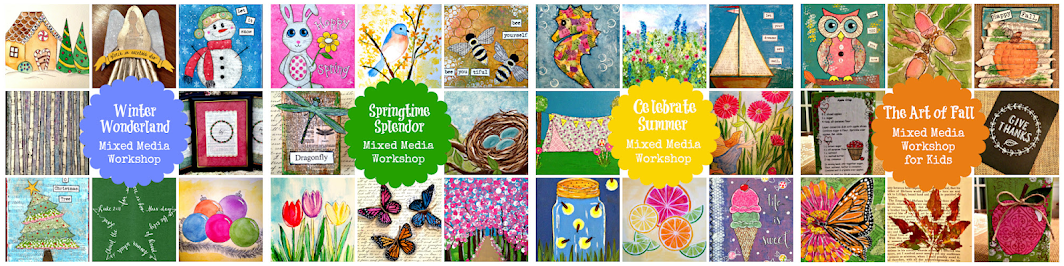
Our seasonal mixed media workshops are perfect for this age group as they introduce multiple mediums: acrylics, watercolors, oil pastels, charcoal, collage, and more. They also offer a variety of art techniques to explore and experiment with.
Middle School: Approximately Ages 12–14
Middle school students are ready for greater technical depth. They can study proportion, perspective, portraiture, shading, composition, color relationships, and more sophisticated media techniques.
Give them choices whenever possible. Adolescents often respond better when a project feels like a genuine artistic challenge rather than a childish craft. Introduce sketchbooks and encourage personal experimentation alongside assigned work.
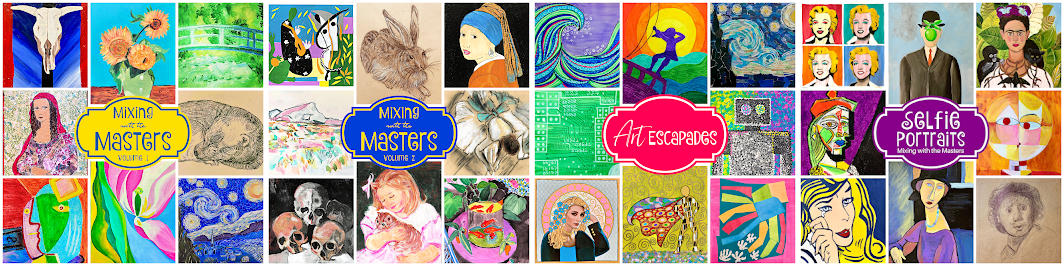
Introducing them the great master artists is an excellent way to encourage their own artistic growth. In our Mixing with the Masters series, we learn about famous artists, their artworks, and then put our own playful twist on each piece. This teaches not only technical art skills, but free students to use their own creative license and begin expressing themselves.
High School: Approximately Ages 15–18

High school art can become a serious elective. Students can work through progressive drawing and painting studies, art history, portfolio development, personal projects, and critique. A student who may pursue art, design, architecture, animation, illustration, or another creative field will need both technical practice and a body of finished work.
Even students who have no intention of pursuing art professionally can benefit from a high school visual arts credit. The goal can be cultural literacy, creativity, stress relief, craftsmanship, and a richer understanding of the visual world.
Our Art School series helps teens learn the classical art techniques, connect with the great master artists, and receive a firm foundation in the Fine Arts. Each lesson gives them confidence in their ability, laying a firm foundation in art techniques, tools and classical media. You could easily put together a half or whole Fine Arts credit for high school with these courses.
How to Teach Homeschool Art to Multiple Ages Together
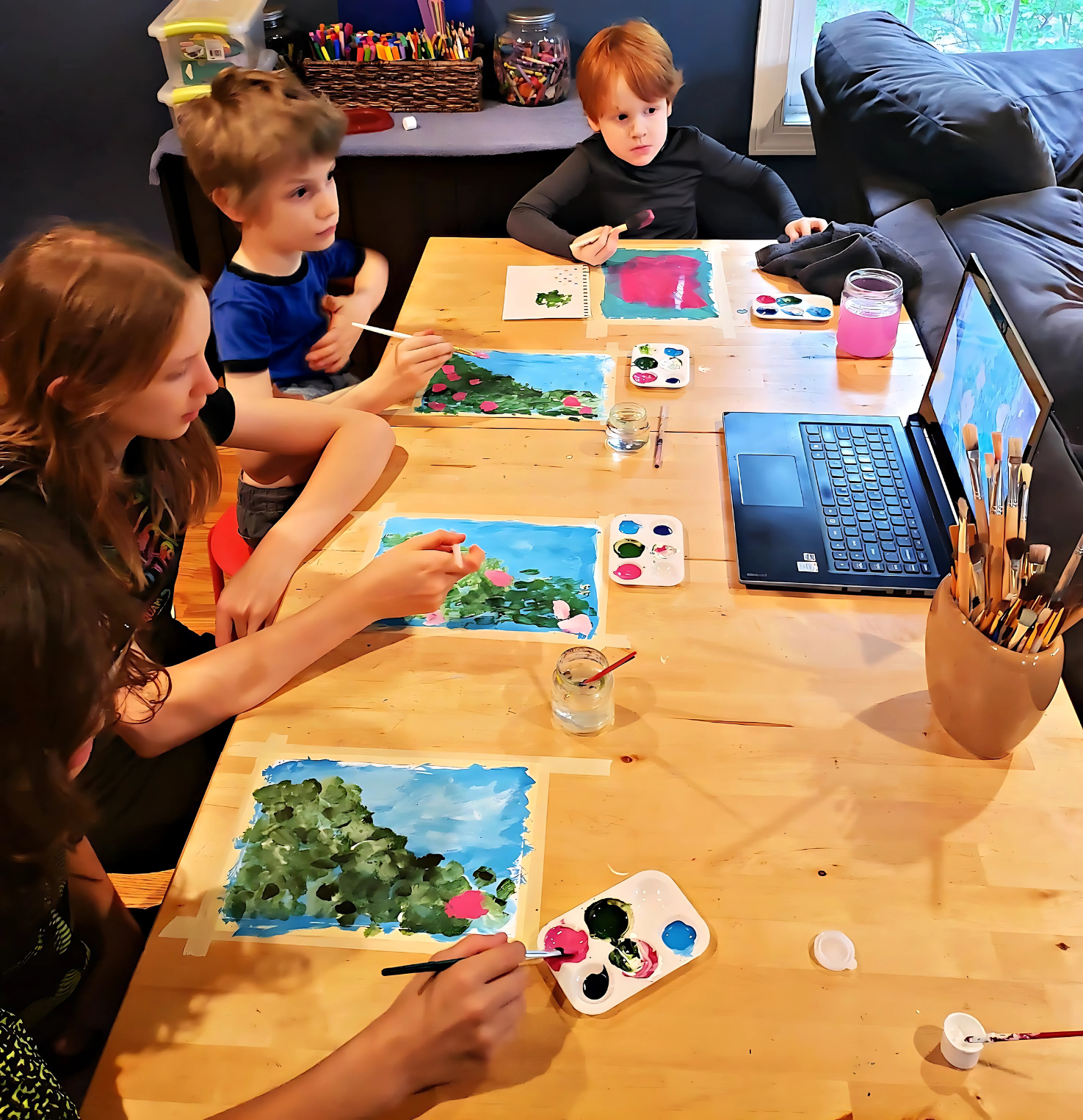
One of the best features of homeschool art is that it can often be taught family-style. A seven-year-old and a fourteen-year-old can study the same artist or paint the same general subject while working at very different levels.
Keep the shared concept the same and vary the expectation. Everyone might study Monet and paint a water scene. A younger child focuses on color and loose brushstrokes. An older child studies atmospheric perspective, reflected color, composition, and brushwork in more depth.
Family-style art works especially well for art appreciation, famous artist studies, seasonal projects, nature-inspired art, mixed media, and thematic studies. Technical courses such as advanced drawing may eventually need to separate by skill level, but you do not need a completely different art program for every child.
Most importantly, resist comparing siblings. The goal is not to produce four matching paintings. Different outcomes are evidence that different people made them.
What Art Supplies Do Homeschoolers Really Need?
You can spend a fortune on art supplies, but you do not need to. Begin with a small collection of dependable materials and expand as your children’s skills and interests grow.
A practical core collection might include drawing pencils, a good eraser, a black permanent pen, sketch paper, heavier mixed-media or watercolor paper, watercolor paints, a small set of acrylic paints, several useful brushes, oil or chalk pastels, colored pencils, scissors, glue, and a basic palette.
Paper quality matters more than many beginners realize. Frustration with watercolor, for example, is sometimes a paper problem rather than a child problem. Very thin paper buckles, pills, and cannot handle much water. You do not need professional materials for every project, but the material should be capable of doing what the lesson asks it to do.
Avoid buying enormous sets simply because they look impressive. Twelve useful colors of decent paint are usually better than fifty weak colors. A few reliable brushes are better than a giant assortment that sheds bristles.
Store supplies where they can actually be used. A beautiful art cabinet in a distant room is less useful than a simple art cart your child can reach. If mess is a barrier, create a basic setup routine: cover the table, fill a water jar, place a rag nearby, and keep a tray or bin ready for wet supplies. Here is a list of basic art supplies we use in our courses.
Art Appreciation: The Missing Half of Art Education
Many families think of art curriculum primarily as projects. But making art and learning to see art belong together.
Art appreciation introduces children to the enormous conversation artists have been having across centuries and cultures. They begin to recognize that a landscape can be approached like Constable, Monet, Van Gogh, or an abstract painter—and that each artist made choices about what mattered.
A simple picture-study routine can be remarkably effective. Choose one artwork. Look at it silently for a minute or two. Turn it over or remove it and ask children to tell what they remember. Look again and discuss what they missed. Ask a few open-ended questions. Then share a short story or interesting detail about the artist.
You do not need a worksheet every time. In fact, observation and conversation are often more valuable than filling blanks.
Over time, children develop a mental gallery of images. They recognize artists, movements, styles, subjects, and techniques. More importantly, they learn that art is worth looking at slowly.
Should Art History Be a Separate Subject?
It can be, but it does not have to be. In elementary years, I prefer art history woven naturally into artist studies and broader history. As students grow older, a chronological art-history course can help them see how artistic ideas developed and responded to one another.
The key is context without overload. Children do not need to memorize endless dates to appreciate art. Give them enough information to understand why a work matters: Where and when was it made? What was changing? What materials or ideas were new? What did the artist do differently? How did later artists respond?
When possible, connect art to the history you are already studying. This creates a richer picture of the past and makes both subjects more memorable.
How to Choose an Online Homeschool Art Curriculum
Online art instruction can be a wonderful fit for homeschool families because students can watch a technique closely, pause, rewind, and work at their own pace. But not every collection of videos is a complete curriculum.
When evaluating a program, ask whether lessons progress in skill rather than existing as unrelated projects. Look for clear supply lists, age guidance, instruction in actual techniques, exposure to multiple media, art appreciation or art history where appropriate, and enough variety to keep children engaged.
Also consider the teacher’s philosophy. Does the instructor expect every child’s project to look identical? Is the tone encouraging without being patronizing? Are children taught why a technique works, or only told what to copy? Is there room for individual choices?
Finally, consider real homeschool life. Can siblings participate? Can you pause the program when life gets busy? Do you need to gather unusual supplies every week? Does the program offer enough depth for the child who wants more without overwhelming the child who simply needs a solid art education? The best curriculum is not necessarily the one with the longest feature list. It is the one your family will actually use consistently.
For over a decade, homeschooling families have trusted Masterpiece Society to provide a high-quality art education for the whole family—blending both art expression and appreciation. From classical techniques to fun mixed media projects, we offer a complete homeschool art curriculum that helps kids and teens explore their creativity, master multiple art mediums, and develop a lifelong love for art. Check out our individual art courses here, and our Studio membership here.

How to Give High School Credit for Homeschool Art
Requirements vary by state and by the colleges or programs a student may eventually apply to, so always check the rules that apply to your family. According to the HSLDA, “One credit is approximately 120-180 hours of work..." In general, homeschool parents often award high school credit based on documented coursework and time spent, completed projects, or demonstrated mastery.
A high school art course can include drawing, painting, design, art history, sketchbook practice, artist studies, written reflections, museum visits, and a final portfolio. Keep a simple record of lessons and hours, photograph finished work, and save representative pieces.
A portfolio does not need to contain every project. It should show growth, variety, technical ability, observation, creativity, and the student’s strongest work. If a student may apply to an art or design program, research that program’s portfolio requirements well in advance because expectations vary significantly.
For a general transcript, a course title such as “Visual Art I,” “Drawing and Design,” “Painting,” or “Art History and Studio Art” may be more descriptive than simply “Art.”
What If My Child Says, “I’m Not Good at Art”?
This often appears when children become old enough to see the difference between what they want to create and what they can currently create. They may also begin comparing themselves with siblings, friends, teachers, or polished artwork online.
Do not respond by insisting that they are secretly brilliant. Instead, normalize skill-building. Drawing, painting, and design contain learnable skills. Some children begin with stronger visual instincts or fine-motor control, just as some children take naturally to music or mathematics, but practice still matters.
Break difficult tasks into smaller skills. A child who struggles to draw faces may need help with proportion rather than “more creativity.” A student frustrated by watercolor may need to understand water control. Specific instruction transforms a vague feeling of failure into a solvable problem.
Also protect some art time from evaluation. Not every sketchbook page needs to become a finished piece. Artists experiment, make ugly drafts, test colors, abandon ideas, and try again. Children should be allowed to do the same.
What If My Child Is Exceptionally Interested in Art?
Follow the interest. A child who voluntarily draws for hours is telling you something worth noticing.
Provide deeper instruction, better materials as appropriate, artist biographies, museum experiences, sketchbooks, and opportunities to revisit the same medium repeatedly. Encourage them to copy master drawings for study, draw from life, keep visual journals, and finish longer projects.
As they grow, expose them to the breadth of creative careers: fine art, illustration, animation, graphic design, architecture, photography, surface design, art education, museum work, game design, fashion, filmmaking, and many others.
At the same time, avoid turning a beloved activity into constant performance. A gifted or highly motivated child still needs room to make art that is private, experimental, silly, or simply enjoyable.
How to Create a Simple Homeschool Art Schedule
A workable art plan does not need to be complicated. One simple weekly rhythm might look like this: one longer studio lesson each week, a short picture study or artist study during Morning Time, and optional sketchbook or free-create time whenever children want it.
Another family might rotate: drawing one week, painting the next, mixed media the next, and artist study the fourth week. A high school student may instead follow a semester-long drawing or painting course.
Think in seasons rather than trying to do everything simultaneously. Spend six weeks with watercolor. Take a month to study Impressionism. Complete a drawing unit. Enjoy seasonal mixed-media projects in December. Then move into something new.
This keeps art fresh while allowing enough repetition for genuine learning.
Common Homeschool Art Mistakes—and What to Do Instead
Mistake 1: Waiting Until Everything Else Is Finished
If art matters to your family, schedule it. The subjects placed permanently at the bottom of the list rarely happen.
Mistake 2: Buying Supplies Instead of Building a Habit
A gorgeous set of supplies cannot replace regular creative time. Start smaller and use what you buy.
Mistake 3: Expecting Every Project to Be Pinterest-Perfect
A successful art lesson is not one in which every child produces the teacher’s sample. It is one in which the child learned, observed, experimented, or grew.
Mistake 4: Correcting Too Much
If adults constantly fix children’s drawings, children learn that their own decisions cannot be trusted. Demonstrate a technique when needed, but allow the work to remain theirs.
Mistake 5: Using Only Crafts
Crafts are wonderful, but add genuine drawing, painting, observation, art vocabulary, and artist study so children develop transferable skills.
Mistake 6: Using Only Technical Exercises
The opposite problem exists too. Endless drills can drain the life from art. Children need beautiful subjects, imagination, stories, experimentation, and meaningful finished projects alongside skill practice.
A Rich Art Education Does Not Have to Be Complicated
When parents hear the phrase “complete art education,” it can sound like one more enormous responsibility. I would rather you think of it as a rhythm.
Look at beautiful art. Learn a skill. Try a material. Make something. Talk about what happened. Return next week.
Over months and years, those ordinary experiences accumulate. A child who studies artists, fills sketchbooks, learns to mix colors, tries watercolor and acrylics, experiments with pastels, studies value and perspective, visits museums, creates seasonal projects, and has permission to invent is receiving a rich visual education—even if the kitchen table is your studio.
Your home does not have to look like an atelier. Your children do not have to become professional artists. And you do not have to become the art expert before you begin.
You simply need to make room for art to matter.
How Masterpiece Society Can Help
As an artist, and veteran homeschooling mom, I created Masterpiece Society to make a quality art education easier for homeschool families. Rather than asking parents to become the art instructor, our lessons provide step-by-step guidance while still encouraging children to develop their own creativity.
The larger goal is not to produce identical projects. It is to help children build skills, encounter great art, explore different media, and experience the joy of making something with their own hands.
Whether your family needs a complete homeschool art curriculum, focused drawing or painting instruction, art appreciation, seasonal projects, lessons for younger children, or more advanced work for teens, or simply a full-year of "done-for-you" art lessons, choose the path that fits your children and your current season. You do not have to do everything at once.
Start with one lesson. Put art on the schedule. Let your children create. Then keep going.
Frequently Asked Questions About Homeschool Art Curriculum
Do I need to be artistic to teach homeschool art?
No. A parent can provide an excellent art education by choosing good instruction, gathering appropriate materials, making time for art, and encouraging practice. You can learn alongside your child without being the expert.
How many days a week should homeschoolers do art?
For many families, one focused lesson per week is a strong starting point. Children who love art may create much more often, while younger children may benefit from shorter, more frequent creative sessions.
What is the best art curriculum for homeschoolers?
The best homeschool art curriculum is one that matches your child’s age and interests, teaches genuine artistic skills, offers clear instruction, includes appropriate variety, and is realistic enough for your family to use consistently. For many families, a program that combines studio art, multiple media, and exposure to artists provides the strongest long-term foundation. Of course, I'm quite partial to ours. 🤣
Should homeschool art include art history?
Yes, but it can be simple. Younger children can learn through picture study and short artist stories. Older students can study art chronologically and connect artistic movements with history, culture, literature, and ideas.
Can siblings of different ages do art together?
Absolutely. Many projects and artist studies work beautifully family-style. Keep the concept or subject shared while adjusting technique and expectations for each child’s developmental level.
What art supplies should I buy first?
Start with drawing pencils, an eraser, sketch and mixed-media paper, watercolor, a small acrylic set, a few reliable brushes, colored pencils or pastels, scissors, and glue. Add specialized materials as your curriculum requires them.
Can online art classes count as homeschool curriculum?
Yes, when the instruction is sufficiently structured and aligns with your homeschool requirements. For high school credit, keep records of coursework, projects, hours where relevant, and representative finished work.
At what age should children begin formal art lessons?
Young children can begin with gentle, age-appropriate instruction as soon as they enjoy handling art materials. Formal technical study should grow gradually. Early art should preserve experimentation and delight rather than demand polished results.
Where to Begin This Week
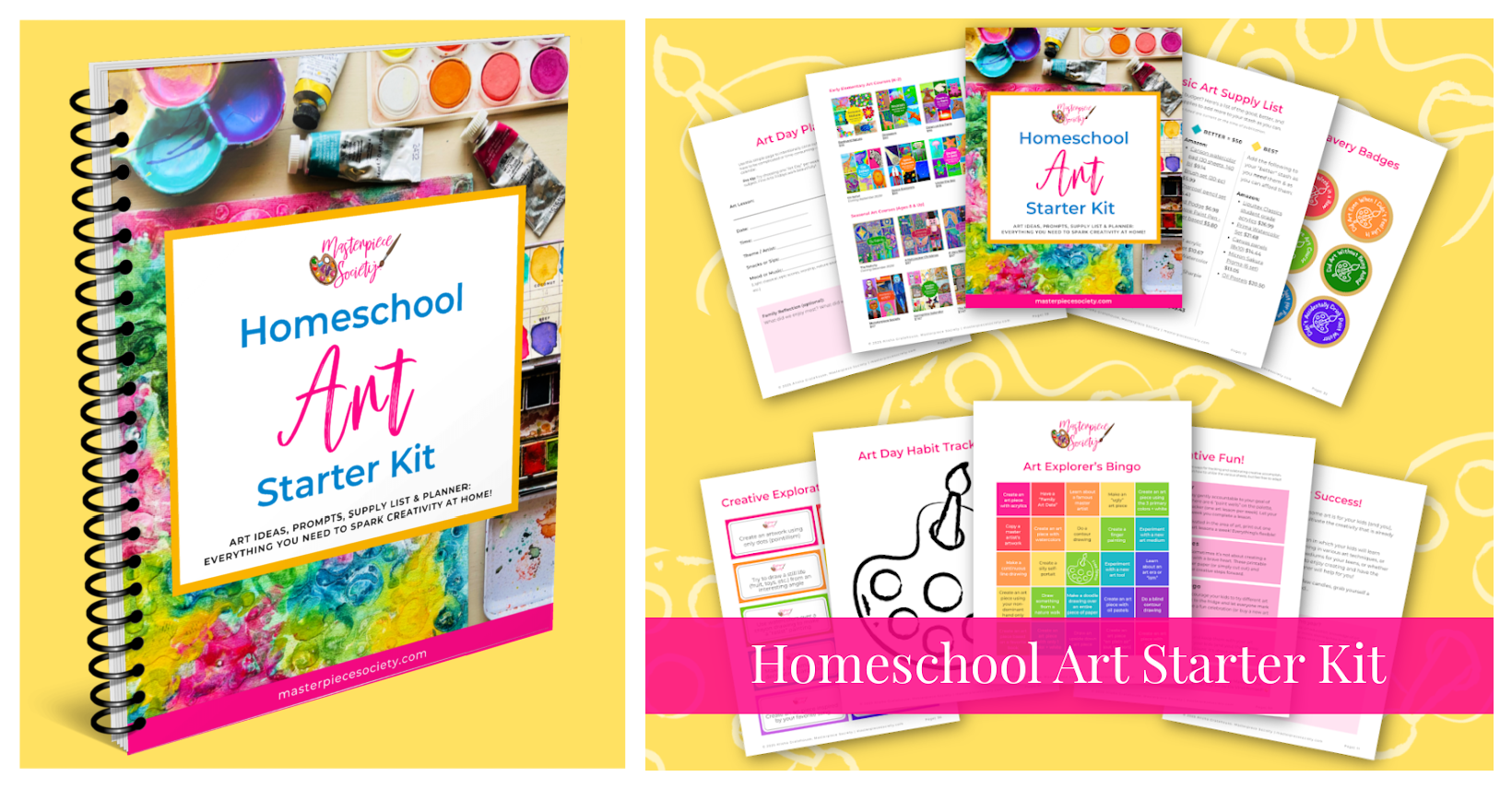
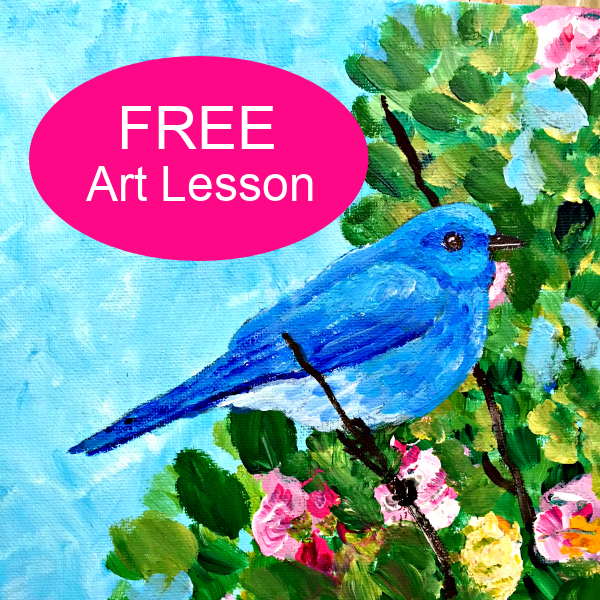
If art has been missing from your homeschool, do not begin by designing a twelve-year scope and sequence. Begin by downloading our Homeschool Art Starter Kit or try our FREE Impressionist Bluebird Sample Lesson.
Choose a lesson or artwork. Gather the supplies the night before. Put it on the calendar. Sit down together and make something.
Then do it again next week.
A rich homeschool art curriculum is built one drawing, one painting, one artist, one conversation, and one creative afternoon at a time. Years from now, your children may not remember every technique or artist date. But they can carry with them something larger: the ability to notice beauty, the confidence to create, and the knowledge that art was considered a worthwhile part of their education.