Teach art to multiple ages without juggling separate programs. Discover a flexible homeschool art curriculum for elementary through high school.
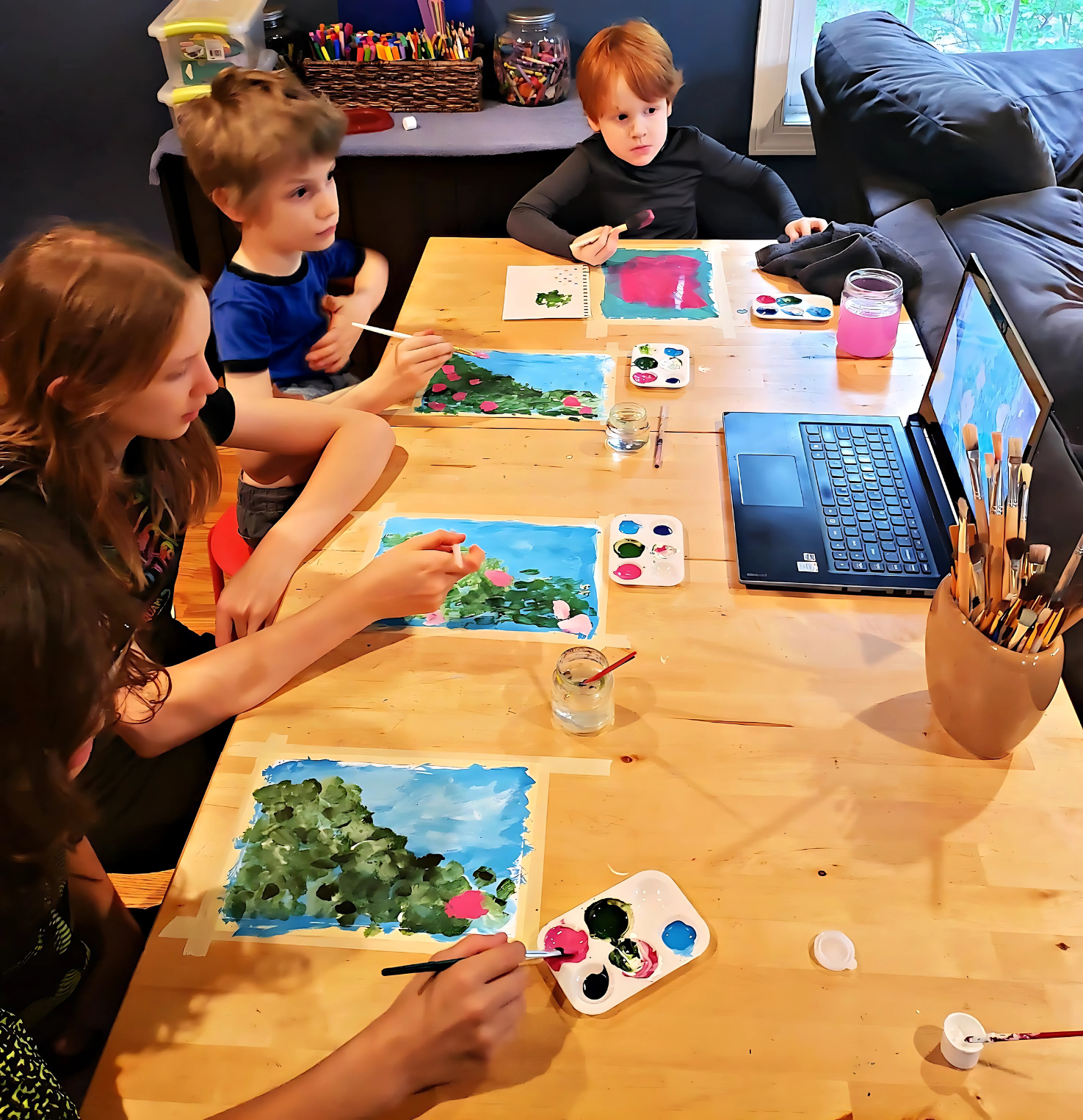
One of the first things you discover when you're homeschooling several children is that teaching every subject separately to every child can quickly become overwhelming.
Your eight-year-old needs one thing. Your eleven-year-old is ready for something more challenging. Your teenager wants to develop real art skills. And somehow you're supposed to coordinate all of it while teaching math, reading, history, science, and everything else your homeschool requires.
Thankfully, art doesn't have to be another subject you manage separately for every child. In fact, art is one of the easiest subjects to enjoy together as a family.
With the right approach, younger children, older children, and even teens can share an art time while working at different levels. And as children grow, you can gradually move them into more advanced instruction without rebuilding your entire homeschool art plan.
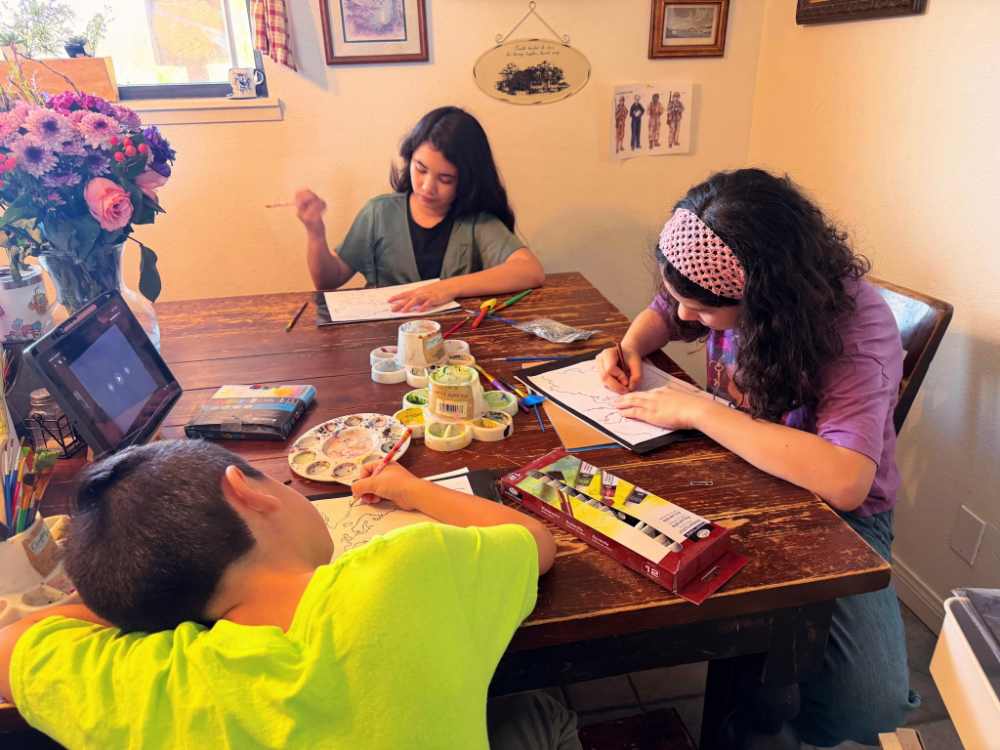
That's one of the things I love most about teaching art in a homeschool family. You can gather everyone around the same table—and still meet children where they are.
Can You Really Teach Art to Multiple Ages Together?

Yes. But teaching art together doesn't necessarily mean every child has to do exactly the same thing. That's an important distinction. If you have a six-year-old, ten-year-old, and fourteen-year-old, you probably wouldn't expect all three children to use the same math curriculum.
Art is different because children at several developmental levels can often participate in the same creative experience while approaching it differently. Imagine everyone is painting a landscape. Your younger child might concentrate on mixing colors, using the brush, and creating simple shapes. Your older elementary student might begin thinking more carefully about foreground, middle ground, background, texture, and color. Your teenager might work on value, atmospheric perspective, composition, color mixing, and more sophisticated brushwork.
They're all painting. They're all learning. But they aren't necessarily doing the same thing at the same level. Family art doesn't have to mean identical art.
Why Art Works So Well for Multiple-Age Homeschool Families
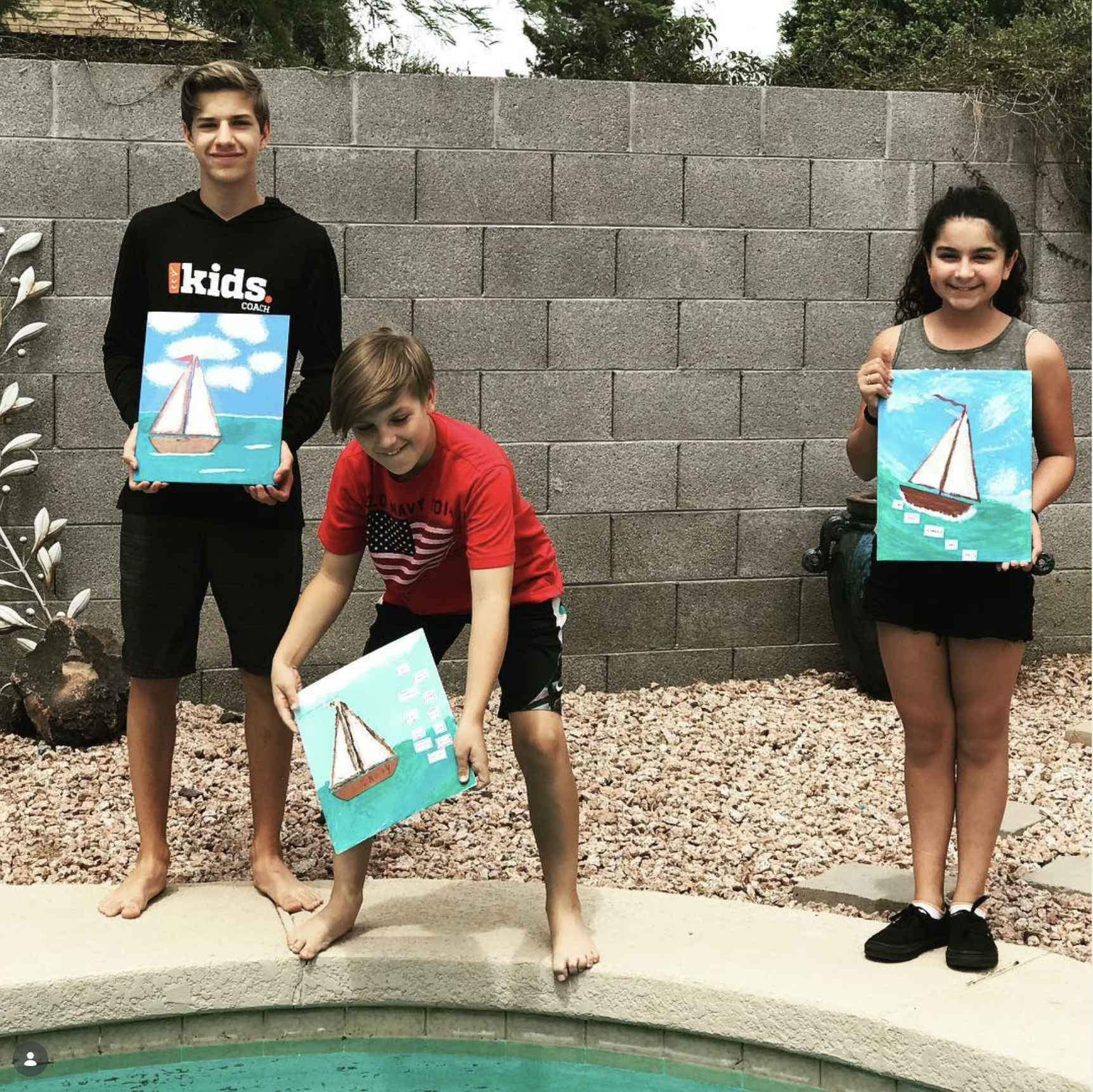
Art naturally allows for variation. There isn't always one correct finished product. Children can make individual decisions about color, composition, materials, details, and style. That makes it much easier to adapt an art experience to different ages and abilities.
A younger child can simplify. An older child can add complexity. A beginning artist can concentrate on one skill. A more experienced artist can challenge themselves further. And everyone can still enjoy creating together.
For homeschool families, that's incredibly valuable because it means art can become one of the subjects that brings everyone together instead of sending everyone in different directions.
The Goal Isn't to Keep Everyone on the Same Level
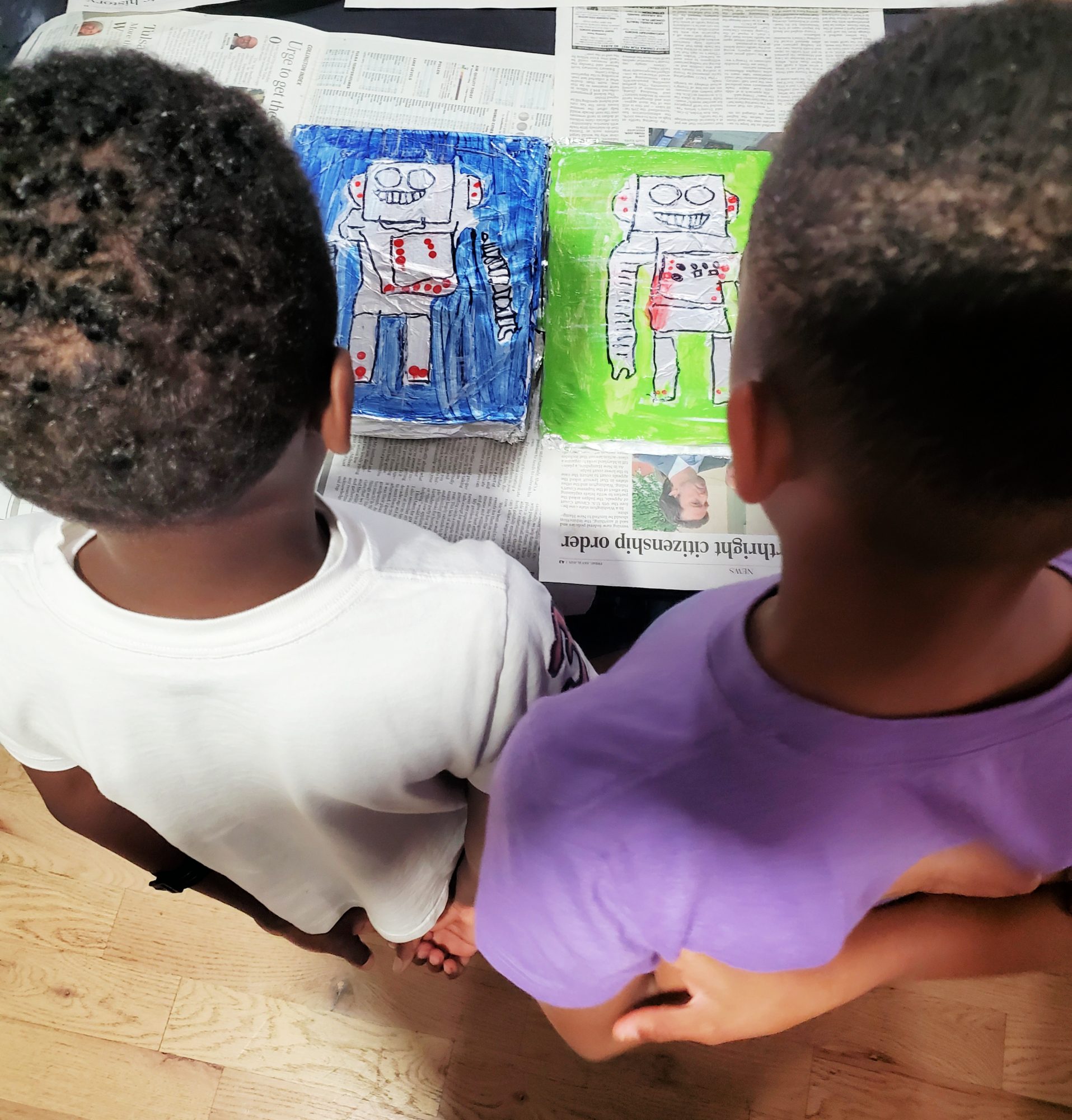
Sometimes parents assume that teaching multiple ages together means finding a curriculum right in the middle. The lesson can't be too difficult for the youngest child or too easy for the oldest, so everyone ends up doing something aimed vaguely at the average student.
I don't think that's the best solution.
Instead, think about family art in terms of shared experiences plus individual growth. There will be times when everyone creates together. There will also be times when an older child or teenager needs instruction specifically designed for their level.
Both can exist in the same homeschool.
Your seven-year-old doesn't need to study perspective simply because her older brother is ready for it. And your fifteen-year-old shouldn't be held indefinitely at an elementary level because younger siblings are participating. The goal isn't to keep everyone together at all costs.
The goal is to make your homeschool art program flexible enough to accommodate everyone.
What Does Art Look Like at Different Ages?
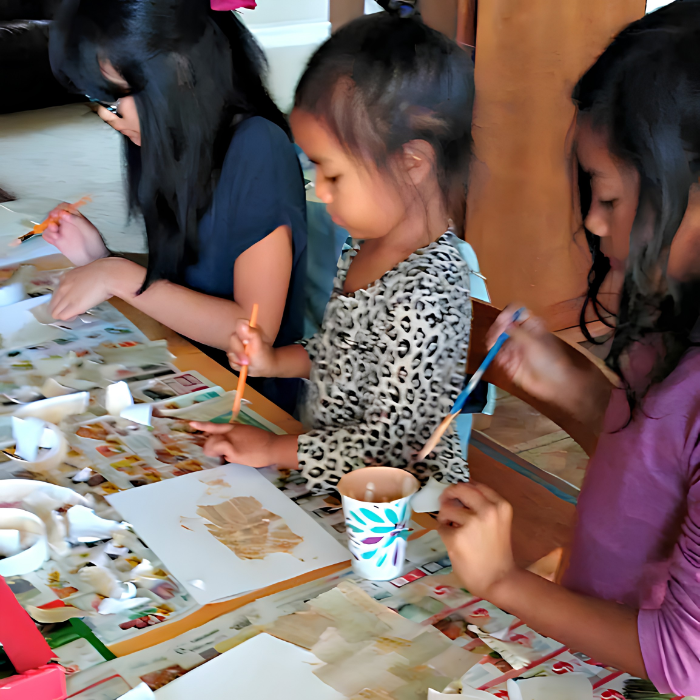
Understanding what children generally need at different stages makes planning family art much easier.
Early Elementary: Explore and Create
Young children need lots of opportunities to work with art materials. Let them draw, paint, cut, glue, layer, mix colors, create textures, experiment with different tools, and discover what materials can do. At this age, I care much more about children becoming comfortable creating than producing technically perfect artwork.
They can begin learning concepts such as line, shape, color, texture, pattern, and basic composition through hands-on projects.
If you have children in kindergarten through second grade, mixed-media art is especially wonderful because it introduces them to many different materials without requiring advanced technical skills.
Our K–2 Mixed Media collections were created specifically for these younger artists, with themes such as Backyard Nature, Dinosaurs, Space Explorers, Under the Sea, Featherly Friends, Down on the Farm, and On Safari.
These may be lessons your youngest children do while older siblings work on something more advanced—or occasionally everyone may decide to join in simply because the project looks fun.
Elementary: Build Skills While Keeping Art Enjoyable
As children move through the elementary years, they can begin developing artistic skills more intentionally. They're ready to learn more about drawing, painting, color, value, composition, different art materials, famous artists, and art history.
But they still need room to experiment.
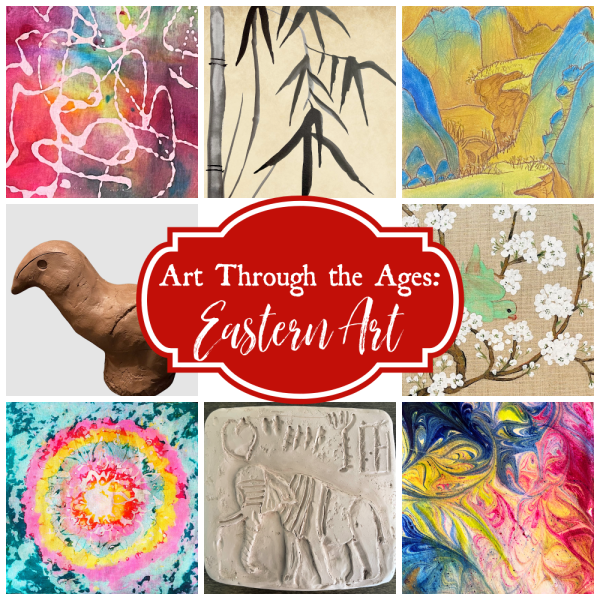
This is a wonderful stage for courses such as The Artful Year, Mixing with the Masters, Art Through the Ages, LiterARTure, Playful Pet Portraits, and Seasonal Art.
These kinds of courses work especially well in a family setting because older and younger elementary students can often participate together while bringing different levels of ability to their artwork.
If you'd like a more complete look at this stage, see Elementary Homeschool Art Curriculum.
Middle School: Begin Going Deeper
Middle school is an important transition. Students are moving beyond purely exploratory art and becoming capable of more intentional skill development. They can begin studying drawing, proportion, value, composition, painting techniques, art history, architecture, and other artistic concepts in greater depth.
This is also the age when individual interests often become more obvious. One child may constantly draw. Another may love watercolor. Another may become fascinated with architecture or famous artists. Another may love abstract art.
You don't need to force all of those children down exactly the same path.
Middle school is a wonderful time to continue some family art experiences while allowing children to begin following their own artistic interests. See Middle School Art Curriculum for a more detailed approach to these years.
High School: Develop Real Art Skills
By the teen years, students are ready for more focused instruction. This is where I want students who are interested in art to have opportunities to develop genuine skills in drawing and painting.
Our Art School series includes:
- Drawing 101
- Watercolors 101
- Acrylics & Oils 101
- Pastels 101
These courses allow teens to work more independently and go deeper into foundational skills and specific media.
High school students can also expand their art education through courses such as Nature Journaling, Art Through the Ages, Mixing with the Masters, Wonders of the World, GeomARTry, and modern and abstract art studies.
So your teenager can still participate in some family art experiences while also having a more substantial art curriculum of their own. See Art Curriculum for Teens & High School Homeschoolers for more ideas about building a complete high school art education.
What Can Everyone Do Together?
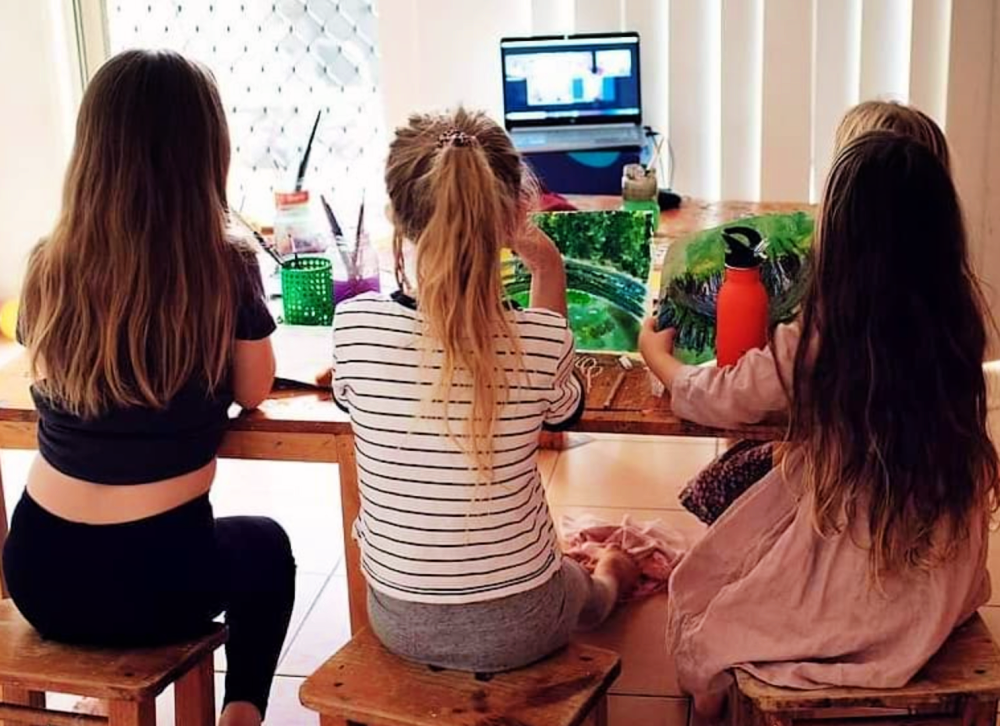
This is where multiple-age art becomes especially fun. Certain types of art studies lend themselves beautifully to family learning.
Study Famous Artists Together
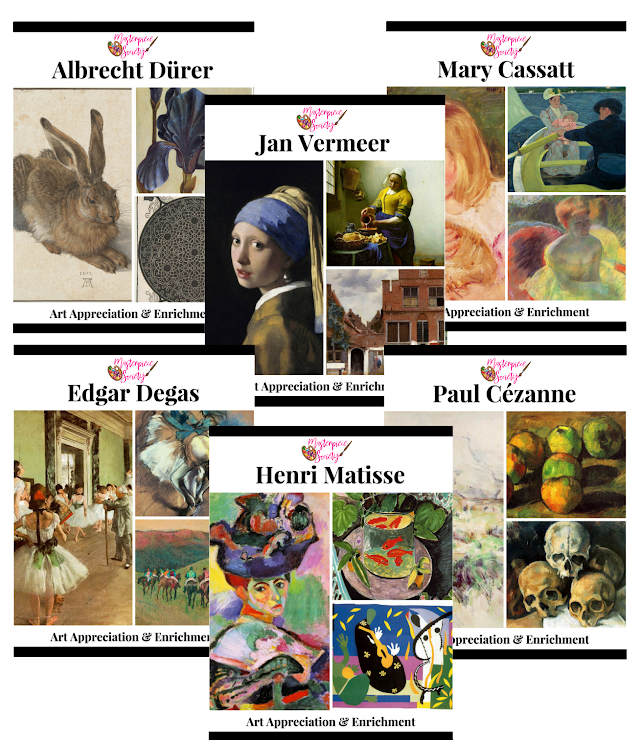
Choose an artist and let everyone look at the same works of art. Talk about what you notice. Learn a little about the artist's life and style. Then create artwork inspired by something you've discovered.
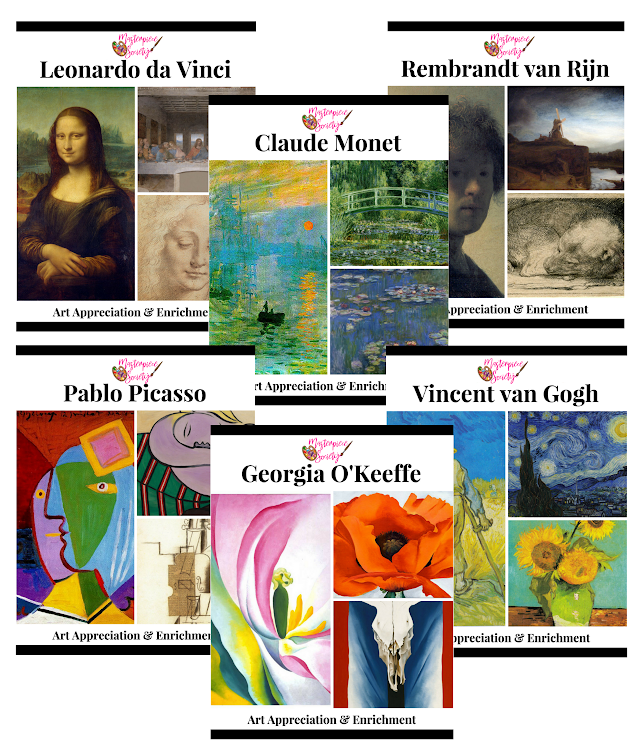
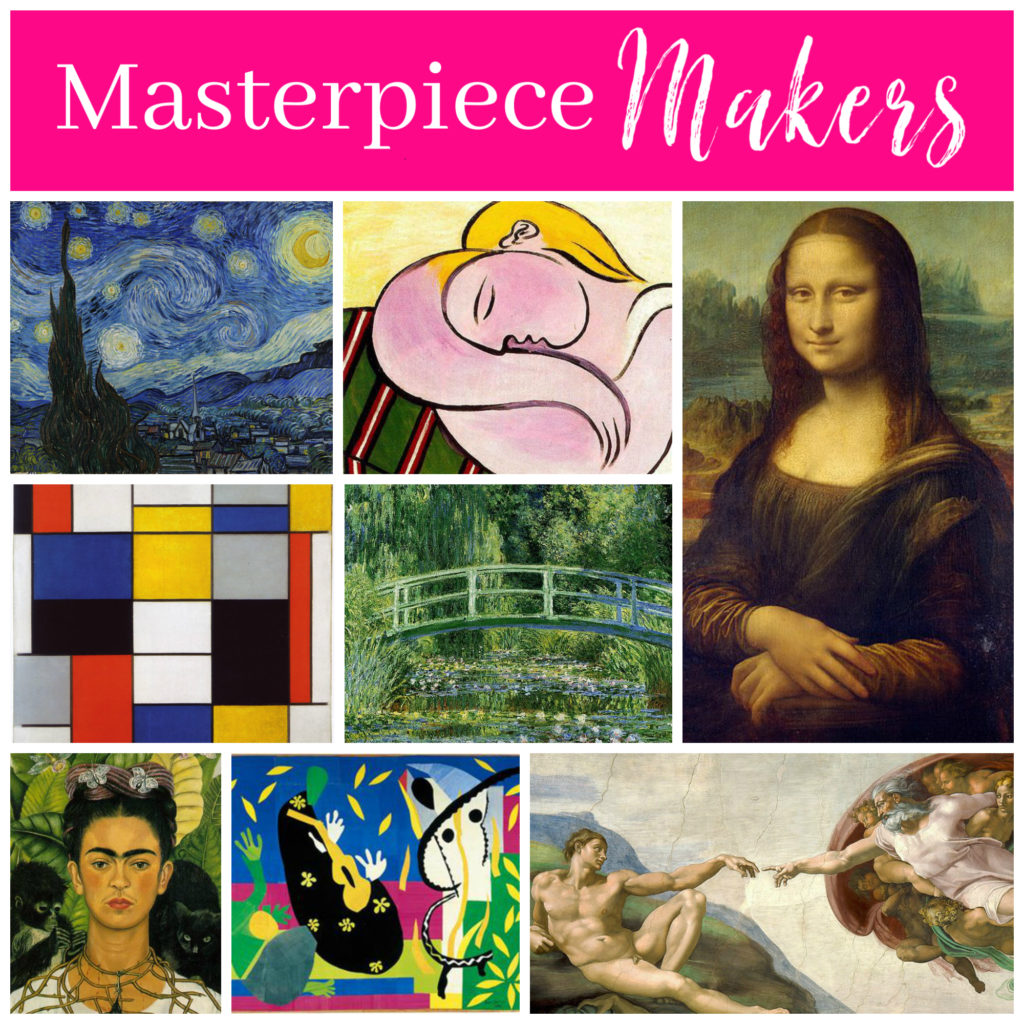
Your seven-year-old and fifteen-year-old can both study Monet.Their finished artwork shouldn't look the same—and that's perfectly fine. Courses such as Mixing with the Masters work beautifully for this kind of shared experience.
Explore Art History Together
If your family is studying a historical period, everyone can explore the artwork and architecture of that era. Young children might simply observe and create. Older students can understand more of the historical context. Teenagers can go deeper into artistic movements, techniques, symbolism, architecture, and cultural influences.
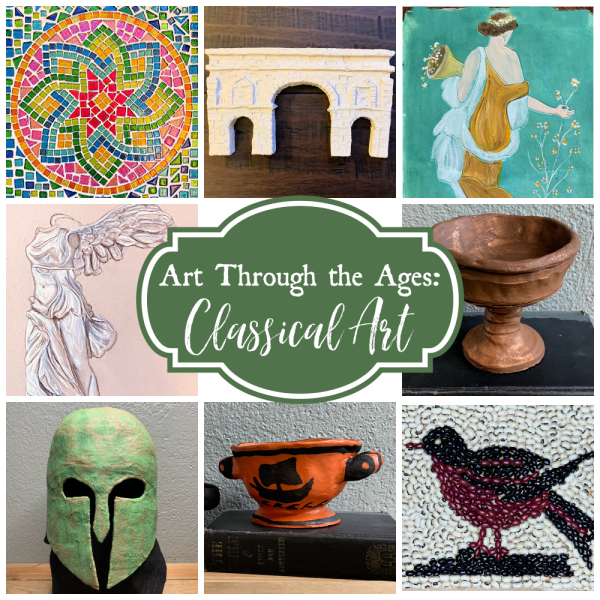
Art Through the Ages makes it possible to connect art with the history your family is already studying.
Connect Art With Literature
Reading aloud is already one of the easiest ways to bring multiple ages together. Art can extend that experience.
Our LiterARTure collection includes 30 literature-inspired art lessons, making it possible to read a book together and then respond creatively through art. Younger and older children can approach the artwork differently while sharing the same literary connection.
Explore Architecture and the World
Architecture is another wonderful multi-age subject because it naturally connects art, history, geography, culture, and engineering.
Through Wonders of the World, families can encounter extraordinary structures such as the Parthenon, Colosseum, Great Wall of China, Notre Dame, Taj Mahal, Machu Picchu, Eiffel Tower, Statue of Liberty, Sydney Opera House, and many others.
A younger child may be fascinated simply by the structure itself. An older child may notice architectural details. A teenager can consider historical context, design, engineering, symbolism, and artistic influence. Everyone encounters the same wonder at a different level.
One Art Lesson, Different Expectations
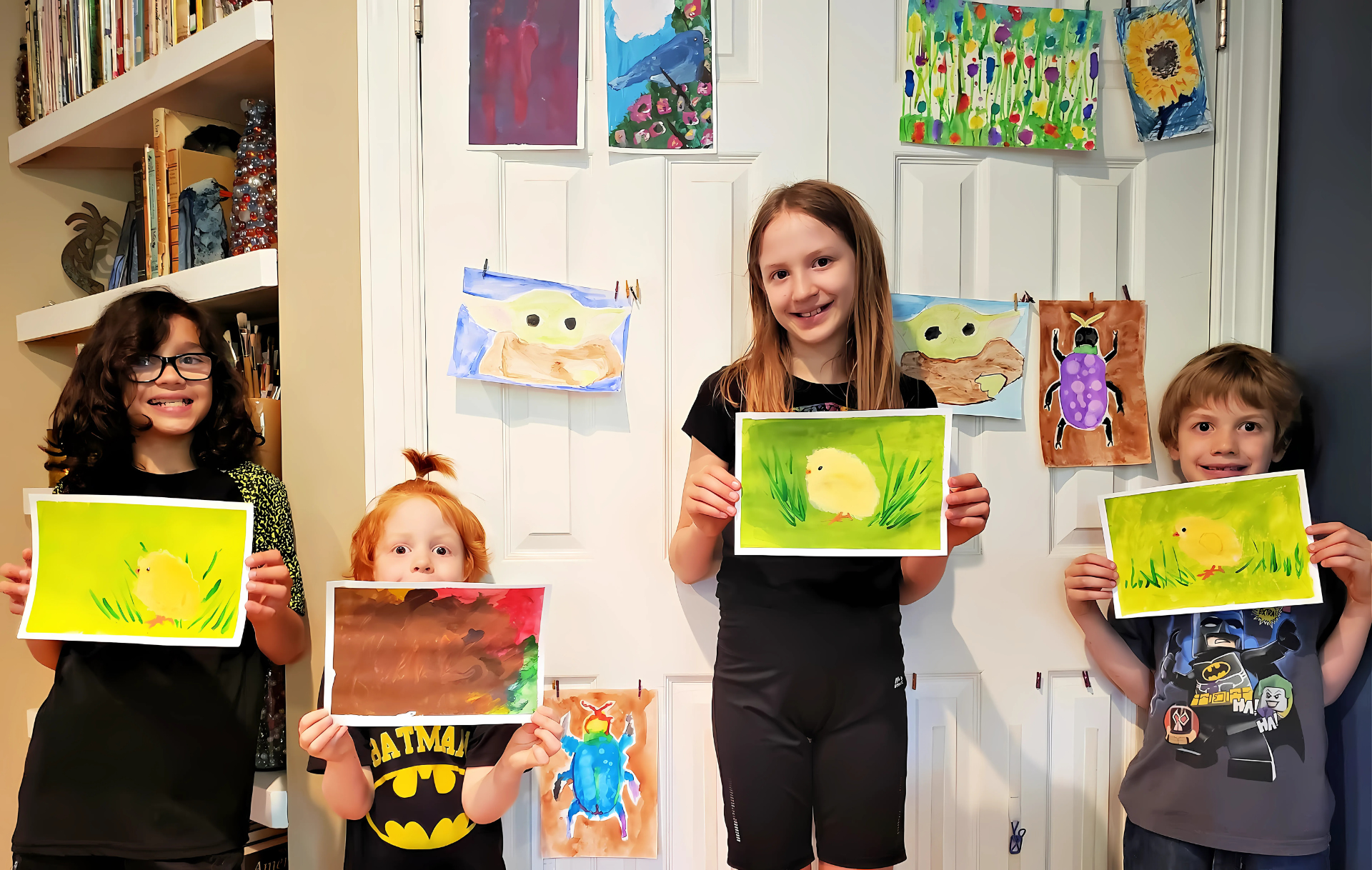
When several ages are working together, one of the easiest things you can change is not the lesson itself but your expectations.
Suppose you're studying Monet and everyone is creating a painting inspired by his work. For your youngest child, success might mean exploring color and paint while enjoying the process. For an older elementary child, you might encourage more careful observation of color and brushwork. For a middle school student, you could begin discussing light, color relationships, composition, and Impressionist techniques. For a teenager, you might expect greater intentionality in color mixing, value, composition, and technique.
Same artist. Same table. Same general experience. Different expectations.
That's one of the simplest ways to make multi-age art work.
Let Older Children Work Independently
Teaching multiple ages gets considerably easier when you stop assuming you have to personally supervise every lesson. Older students can increasingly take responsibility for their own art education.
With video instruction, a middle or high school student can watch the demonstration, gather supplies, pause or replay sections as necessary, and work through the lesson at an appropriate pace. That frees you to spend more time helping younger children.
You might have your teen working independently through Drawing 101 while you're doing a mixed-media lesson with your younger children.
You're all doing art at the same time. You're simply not all doing the same course. This is one of my favorite ways to make art manageable in a larger homeschool family.
Create a Family Art Time
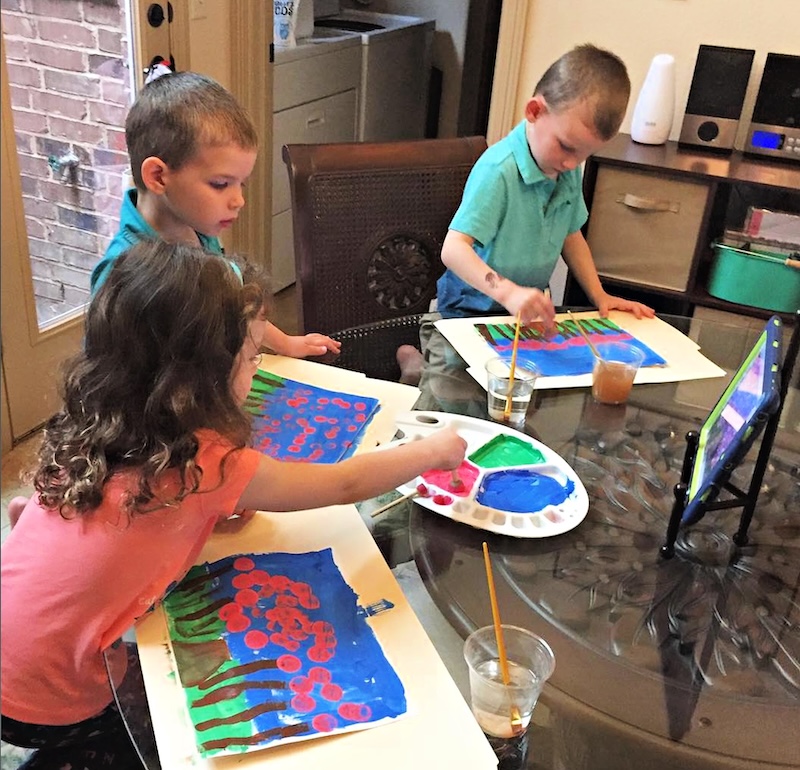
If you want art to actually happen, give it a place in your homeschool rhythm. For many families, that might be one afternoon each week. You could make Friday afternoon your family art time. Gather everyone around the table, pull out the supplies, and let that become a predictable part of your week.
Sometimes everyone might work on the same lesson. Other weeks, different children might work on separate courses. One child could paint while another draws and a teenager continues a more advanced project. The important thing isn't that everyone produces the same thing.
The shared experience is making room for creativity together.
Don't Try to Do Every Course With Every Child
This is worth saying because a large art library can create a new problem: Suddenly you want to do everything. You don't need to.
Your children don't need to complete every art course you own. Think of a large curriculum library as a resource rather than a checklist.
- Choose what fits the season you're in.
- Choose what connects with something else you're studying.
- Choose what interests your children.
- Choose what develops a skill they need.
And let the rest wait.
One of the advantages of having art resources for multiple ages is that you can return to different courses as your children grow.
What If One Child Loves Art and Another Doesn't?
This is very common. You may have one child who would happily draw for three hours and another who would rather be doing almost anything else. They don't need identical art educations.
Give both children a basic exposure to art, artistic skills, and great works of art. But allow the child who loves art to go deeper. That child might complete additional drawing courses, experiment with more media, keep a sketchbook, spend more time painting, or eventually develop a portfolio.
Meanwhile, the less enthusiastic child can still receive a rich and worthwhile art education without art taking over their homeschool. Multiple-age homeschooling doesn't require identical children.
Your art curriculum shouldn't either.
How Masterpiece Society Works for Multiple Ages
This is one of the reasons I created Masterpiece Society the way I did. I didn't want homeschool families to outgrow their art curriculum every year or feel as though they needed an entirely separate program for every child.
Within Masterpiece Society, families can find art instruction spanning young elementary children through teens.
That means one family might have:
- A first grader working through K–2 Mixed Media.
- A fourth grader enjoying The Artful Year, LiterARTure, or Mixing with the Masters.
- A seventh grader exploring Art Through the Ages or Wonders of the World while developing stronger drawing and painting skills.
- A tenth grader working independently through Drawing 101 or Watercolors 101.
And there can still be plenty of times when everyone comes together for an artist study, seasonal lesson, art history project, or creative afternoon.
That's the kind of flexibility I want homeschool families to have.
One Art Library Can Grow With Your Family
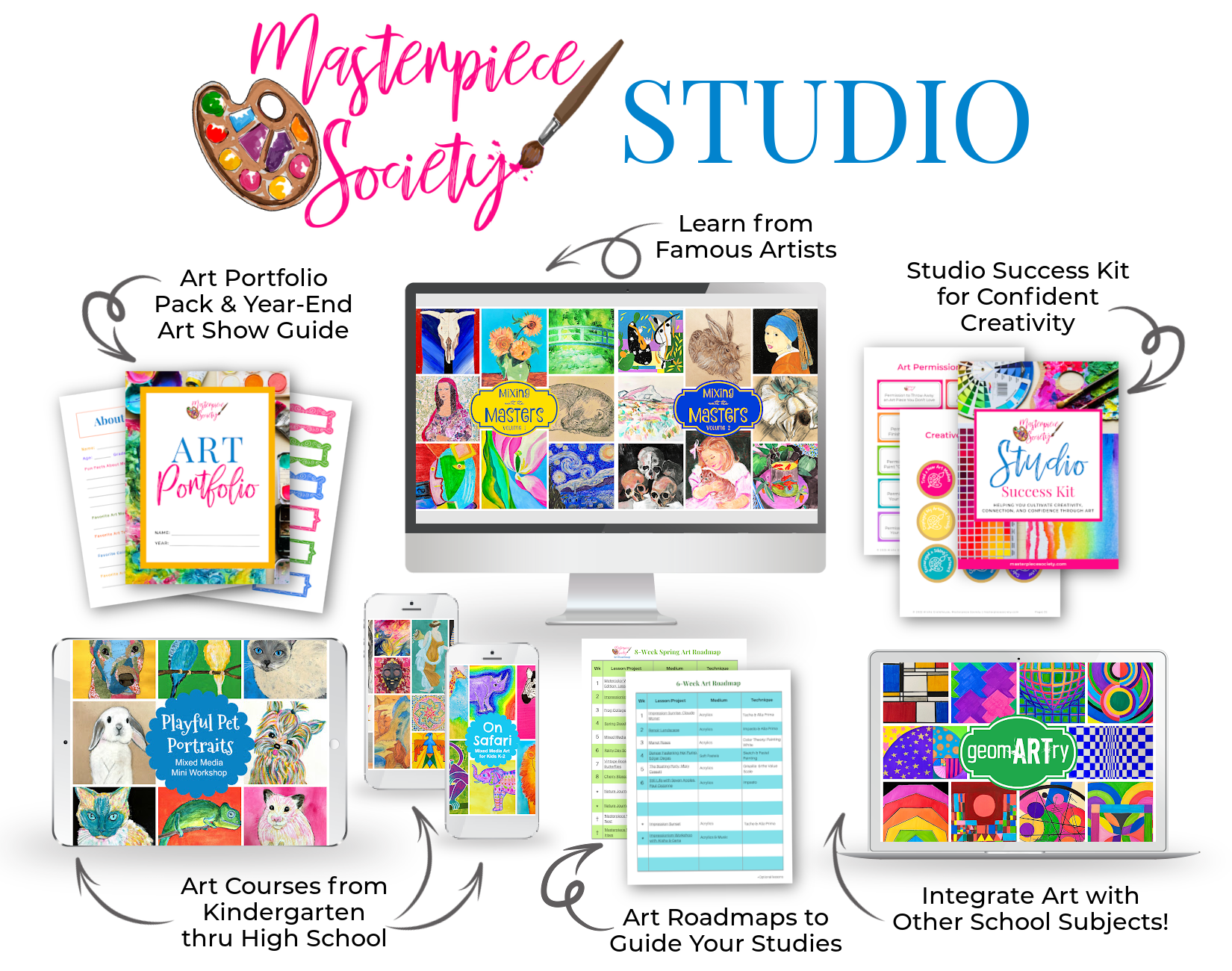
This is where Masterpiece Society Studio becomes especially valuable for families teaching several ages.
Rather than purchasing an entirely separate art program every year for every child, your family has access to a broad library of art instruction covering different ages, subjects, styles, and media.
You can choose what fits each child now and move into other courses as they grow. Younger children can explore. Elementary students can build skills. Middle schoolers can begin going deeper. Teenagers can develop more serious artistic abilities.
And your family can still create together.
👉 Explore Masterpiece Society Studio
A Simple Multiple-Age Homeschool Art Plan
If you're wondering what this could actually look like in your week, keep it simple. Choose one regular art time each week.
On some weeks, everyone does the same family art lesson, artist study, literature-inspired project, or art-history activity. On other weeks, divide naturally by level. Younger children might work on a mixed-media project while older students work on drawing or painting courses.
Let teenagers increasingly work independently.
Then occasionally bring everyone back together for something especially enjoyable—a seasonal project, famous artist study, architecture lesson, or afternoon of painting. You don't need four separate art schedules.
You need a rhythm flexible enough to let children come together when it makes sense and separate when they need something different.
Art Can Be the Subject That Brings Everyone to the Table

Homeschooling multiple ages can sometimes feel like spending your entire day moving from one child to another.
Art gives you an opportunity to do something different. Gather everyone around the table. Put out the paper. Open the paints. Watch a lesson. Look at a masterpiece. Talk about what you notice. Then let everyone create at the level they're ready for.
Your children's artwork won't look the same. Their skills won't develop at exactly the same pace. Their interests may take them in completely different directions. That's not a problem.
That's one of the beautiful things about teaching art in a family. You can create together without requiring everyone to be the same. And with an art curriculum flexible enough to grow with your children, you don't have to choose between family learning and age-appropriate instruction.
You can have both.
Frequently Asked Questions About Art Curriculum for Multiple Ages
Can siblings of different ages use the same homeschool art curriculum?
Often, yes. Many art lessons can be adapted for several ages by changing expectations rather than changing the entire project. Younger children can work more simply while older students use more advanced techniques and greater detail. Older middle and high school students may also benefit from separate skill-based courses.
What age range can do art together?
Elementary-age siblings can often participate in the same art lessons quite easily. Wider age ranges can also enjoy artist studies, art appreciation, art history, architecture, literature-inspired art, and some hands-on projects together. Teens may need additional advanced instruction alongside family art time.
How do I teach art when I have elementary, middle school, and high school students?
Combine students when the subject lends itself to family learning, but separate them when skill level matters. For example, everyone might study the same artist together, while your elementary student completes an age-appropriate project and your teenager works through a more advanced drawing or painting course.
Should my teenager do the same art lessons as younger siblings?
Sometimes, but not exclusively. Teens can enjoy family art experiences while also receiving instruction appropriate to high school, including drawing, perspective, value, composition, color theory, painting techniques, art history, and specialized media.
How often should a homeschool family do art?
For many families, one intentional art time each week is a realistic place to begin. You can alternate between shared family lessons and individual courses depending on your children's ages and needs.
Do I need separate art supplies for every child?
Not necessarily. Many basic supplies—watercolors, acrylic paints, brushes, pastels, pencils, papers, and mixed-media materials—can be shared. Older students may eventually need additional or higher-quality materials for specialized courses.
What is the best homeschool art curriculum for a large family?
Look for a curriculum that offers enough variety and range to accommodate different ages without requiring every child to follow the same sequence. A broad library can be especially useful because younger children, elementary students, middle schoolers, and teens can work at appropriate levels while still sharing some art experiences together.