Looking for a high school art curriculum for your homeschool teen? Build real drawing and painting skills with online, step-by-step art instruction designed for teens.
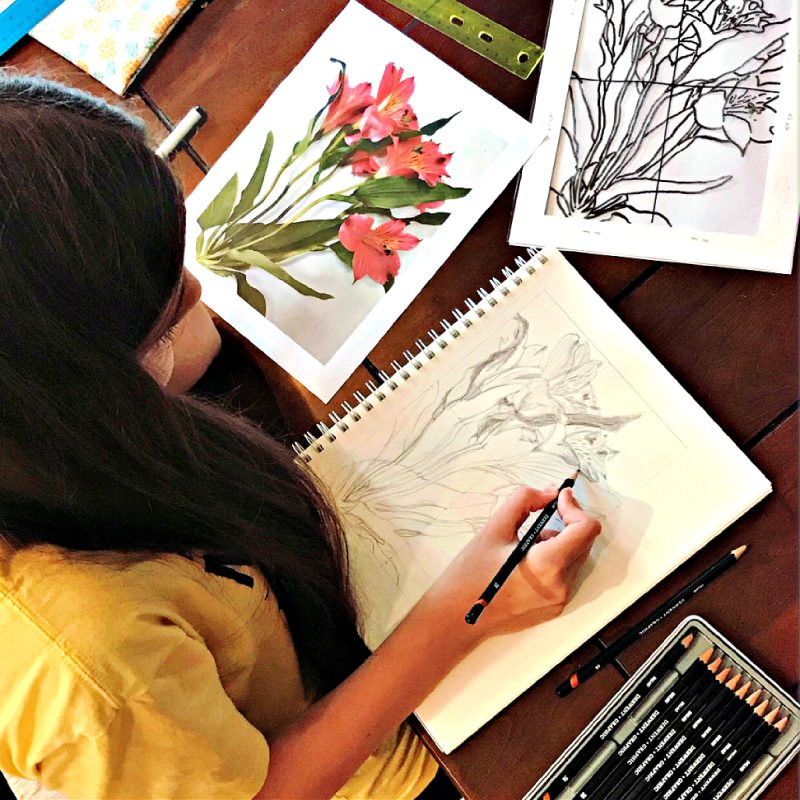
There comes a point when art becomes more than simply making something fun.
Your teen begins to notice why one drawing looks more realistic than another.
They want to understand how to shade a face so that it actually looks three-dimensional. How to mix the exact color they see in their mind. Why watercolor behaves differently from acrylic. How artists create depth, light, texture, movement, and mood.
They don't just want another art project.
They want to be able to express the creative soul within them. The want to be an artist.
And that's exactly where a good high school art curriculum should take them.
At Masterpiece Society, our Art School series was created especially for teens and high school students who are ready to move beyond project-based art and begin developing real foundational art skills.
Whether your teen dreams of pursuing art professionally or simply wants to become a more confident and capable artist, you can give them a rich, skill-building art education right at home.
What Should a High School Art Curriculum Include?
A strong high school art program should go beyond simply giving students something to make.
By the teen years, students are ready to understand the principles behind their artwork.
That means learning foundational skills such as:
- line, shape, and form
- proportion and perspective
- value and shading
- composition
- color theory and color mixing
- observation
- light and shadow
- texture
- brushwork
- artistic style and expression
- proper use of different art materials
Teens should also have opportunities to work with a variety of traditional art media and gradually develop greater control over each one.
Most importantly, they need practice.
Artistic skill isn't something you're simply born with. Like playing an instrument, learning another language, or becoming a strong writer, it develops through instruction, observation, experimentation, and practice.
That's why our high school curriculum is structured differently from many of our younger art courses.
Meet Art School: Our Homeschool Art Curriculum for Teens
Art School is the skill-building foundation of Masterpiece Society's art curriculum for middle and high school students.
Rather than jumping from one unrelated project to another, students work through focused courses designed to help them understand and master the fundamental skills of drawing and painting.
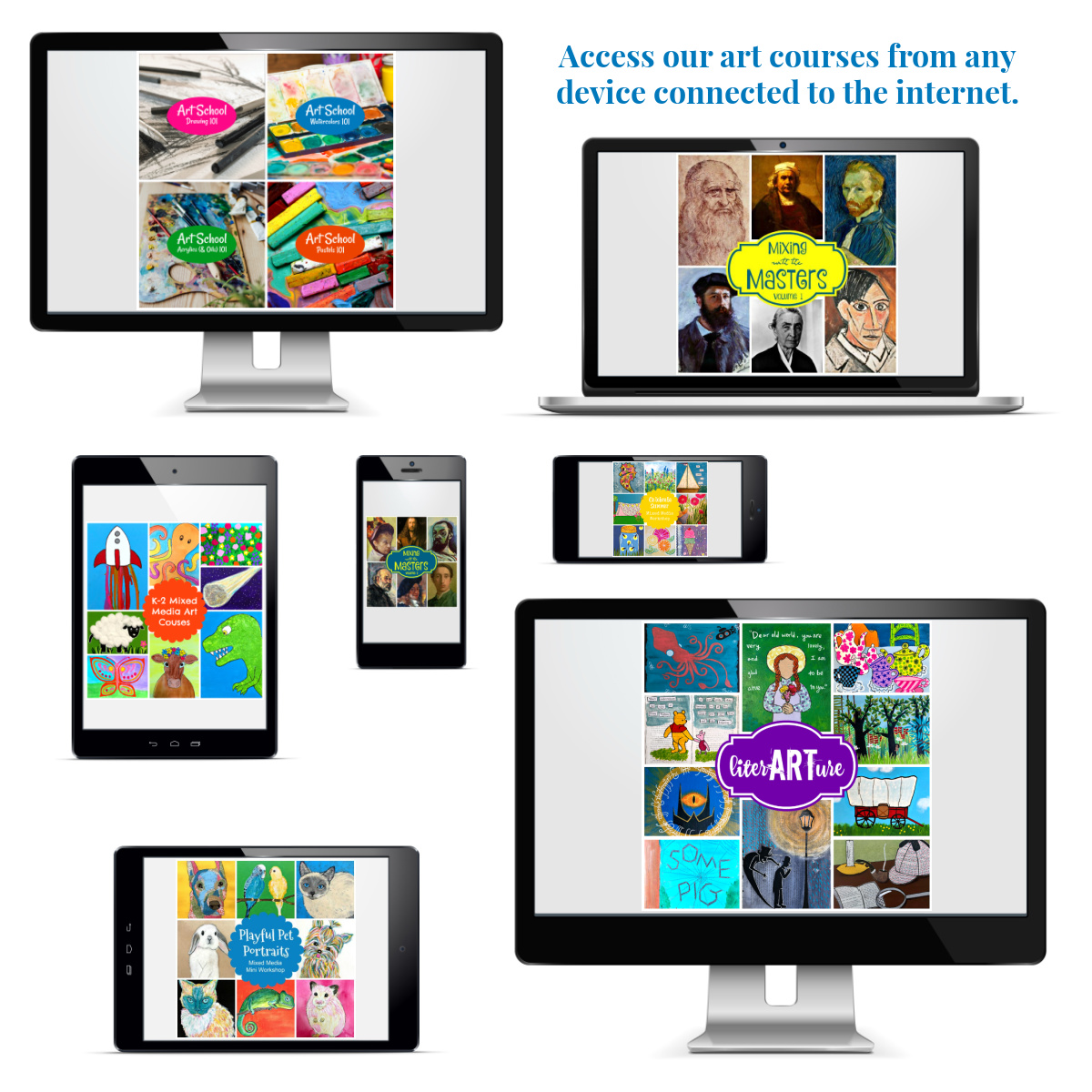
The series currently includes four comprehensive courses:
Drawing 101
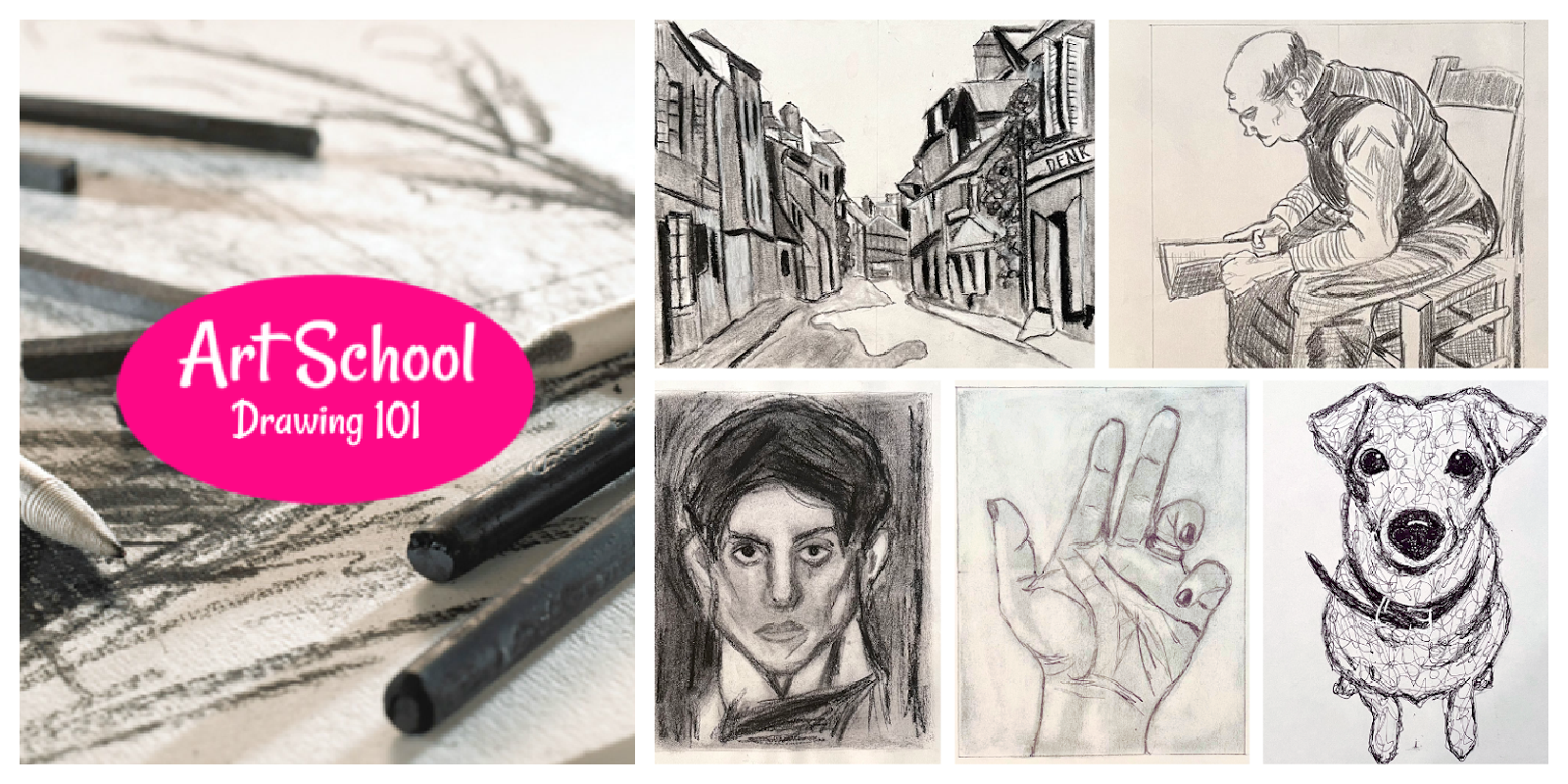
Drawing is the foundation of nearly every form of visual art.
In Drawing 101, students learn to slow down, observe carefully, and translate what they see onto paper.
They explore skills such as line, contour, shape, proportion, perspective, value, light and shadow, form, and portraiture while completing increasingly challenging drawing exercises and finished works.
Students aren't simply following along to create a particular picture.
They're learning how to see like an artist.
And that's a skill they'll carry into every other medium they explore.
Watercolors 101
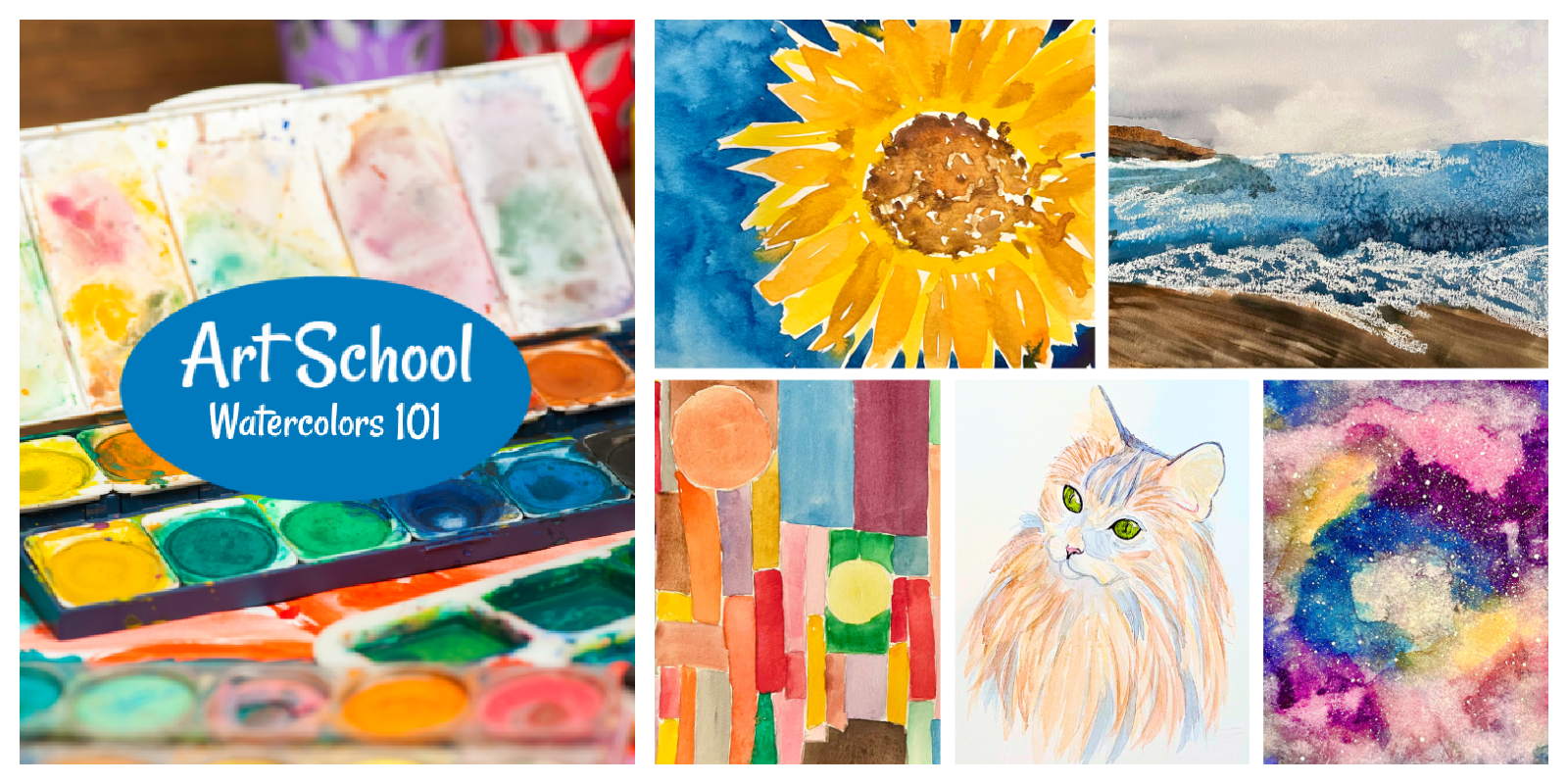
Watercolor has a personality all its own.
It flows. It blooms. It layers. Sometimes it even seems to have a mind of its own.
Watercolors 101 teaches students how to work with the medium rather than fight against it.
Teens explore watercolor materials and techniques while developing greater control over washes, layering, color mixing, brushwork, texture, value, and composition.
As their skills grow, so does their confidence in using watercolor to create artwork that feels uniquely their own.
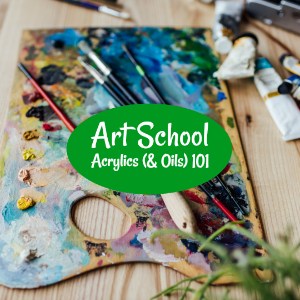
Acrylics & Oils 101
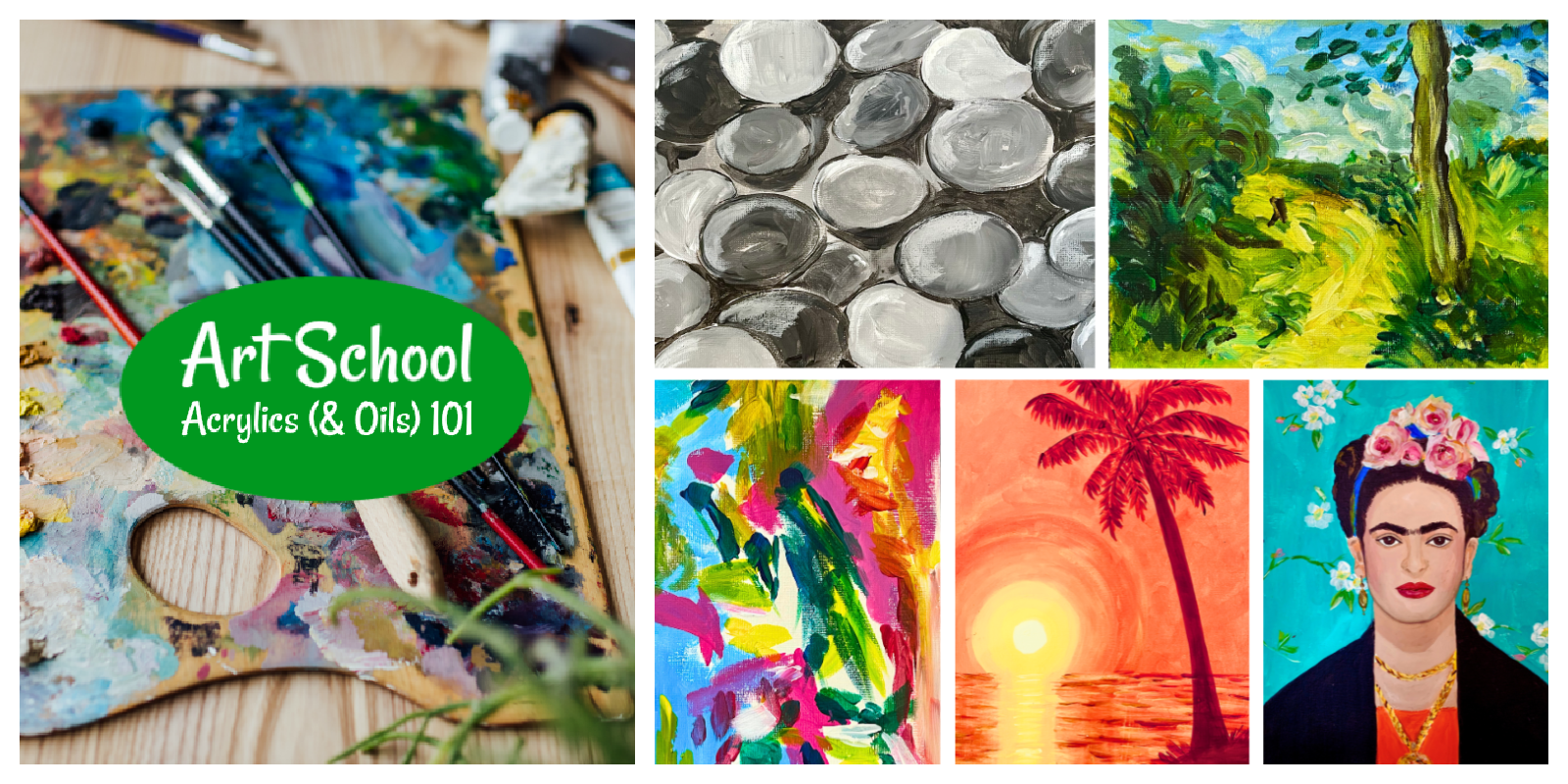
For students ready to explore painting more deeply, Acrylics & Oils 101 introduces the techniques and principles behind two of the most beloved painting mediums.
Students learn about color mixing, value, brushwork, layering, composition, and the characteristics that make acrylic and oil paints different from watercolor and from one another.
Instead of simply copying a finished painting, students begin understanding the decisions painters make along the way.
- What color should I mix?
- Where is the light coming from?
- How can I create depth?
- Which brushstroke will create the effect I want?
Those questions are part of becoming an artist.
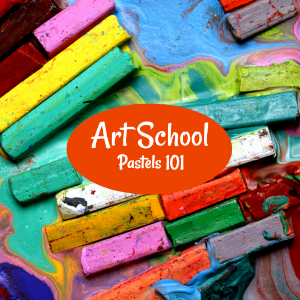
Pastels 101
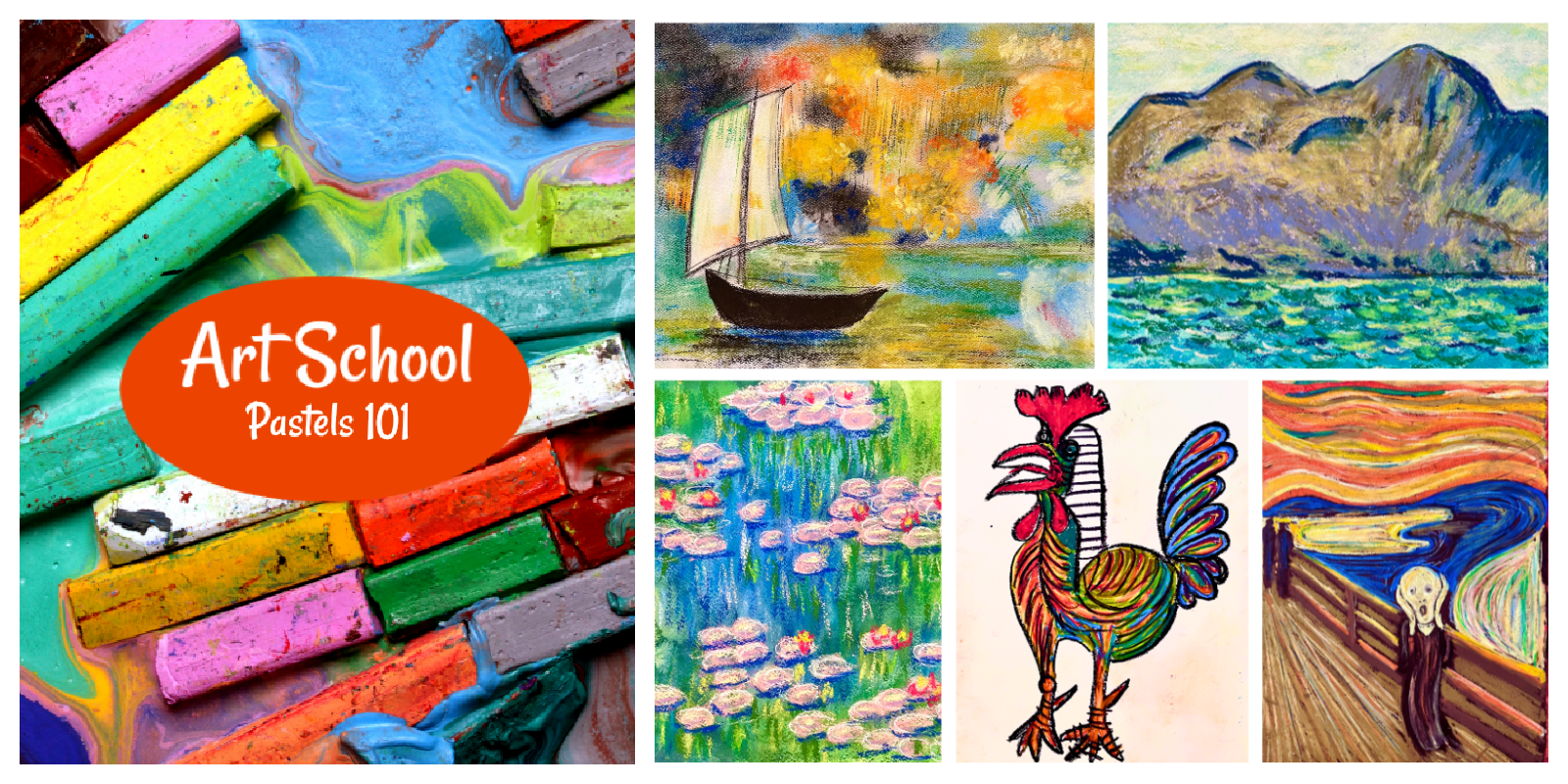
Pastels offer teens another completely different way to explore color, value, texture, and mark-making.
In Pastels 101, students learn techniques for layering, blending, creating texture, developing form, and working with color while discovering the expressive possibilities of the medium.
Because pastels fall somewhere between drawing and painting, they're also a wonderful way for students to put skills from both disciplines into practice.
👉 Check out our Art School series.
A Skill-Based Approach to High School Art
One of the most important differences between art for younger children and art education for teens is the shift toward skill development. There's certainly still room for experimentation, imagination, and creative play. But teens are increasingly capable of intentional practice.
Instead of only asking: "What are we making today?" they begin asking: "How do I get better at this?"
Art School helps answer that question.
Students learn a technique, they practice it, they apply it to artwork, and over time, those individual skills begin building upon one another. Drawing strengthens painting. Understanding value improves portraiture. Color theory improves watercolor. Observation improves everything.
Rather than accumulating a collection of disconnected projects, your teen is gradually building an artist's toolbox.
What If My Teen Is a Beginner?
That's exactly what Art School is designed for.
Your student doesn't need years of previous art instruction before beginning. In fact, one of the benefits of starting with foundational instruction is that teens can learn good artistic habits from the beginning rather than feeling as though they somehow "missed their chance" to become artistic.
A motivated beginner can start with Drawing 101 and build from there. And students who already love art can use the courses to strengthen areas where they've been relying primarily on intuition or self-teaching.
You don't have to decide whether your child is "talented enough" before giving them an art education.
Art is something they can learn.
What If My Teen Is Already a Serious Artist?
Art School can also provide valuable structure for students who are constantly sketching, painting, or creating on their own.
Naturally artistic students often develop certain skills very quickly while unintentionally skipping others. They may draw characters beautifully but struggle with perspective. They may love painting but have never studied value. They may have developed a distinctive style without ever learning traditional drawing foundations. Formal instruction helps fill those gaps. And once those foundational skills become stronger, teens have even more freedom to develop their own artistic voices.
Can Art School Be Used for High School Credit?
For homeschooling families, Art School can form the foundation of a high school visual arts course. Because homeschool graduation requirements vary by state and because parents ultimately determine how coursework is documented within their homeschool, you'll want to check the requirements that apply to your family. Generally, however, high school credit is based on a combination of completed coursework and/or instructional hours.
Parents can document:
- video instruction
- lesson work
- practice exercises
- completed artwork
- sketchbook work
- independent practice
- artist studies or art history
- museum visits
- additional creative projects
Keep samples or photographs of your teen's completed artwork throughout the year. Not only does this provide a record of coursework, but it also creates a wonderful visual record of their artistic growth.
For students considering an art-related college program, those pieces may also become the beginning of a future portfolio.
How Much Art Should a High School Student Do?
There isn't one perfect schedule. That's one of the beauties of homeschooling. A teen might work on art: 2–3 times per week for shorter sessions or once or twice per week for longer studio sessions.
A student who simply needs a fine arts credit will naturally spend less time than a teen who dreams of attending art school or pursuing a creative career.
The important thing is consistency.
I'd much rather see a student spend a little time drawing and painting every week than attempt to cram an entire art course into a few frantic weeks at the end of the semester.
Artistic growth happens through repeated practice over time.
Do I Need to Know How to Teach Art?
Absolutely not. And for many homeschool parents, that's the biggest relief of all.
You don't need to understand perspective. You don't need to know how to paint. You don't have to remember the difference between a highlight, midtone, core shadow, and reflected light.
That's my job.
Your role can simply be to provide the materials, protect some time in your homeschool schedule, encourage your teen, and give them room to practice. The video lessons provide the actual art instruction.
That means your teenager can increasingly work independently—which is exactly what many families want from a high school homeschool curriculum.
What Art Supplies Will My Teen Need?
Supplies depend upon the Art School course your student is taking. A drawing course will obviously require a very different set of materials than watercolor or acrylic painting.
But you don't need an enormous professional studio to begin.
Start with the materials required for the course your teen is currently studying and build your collection gradually.
I'd much rather see a student become comfortable using a thoughtfully chosen collection of basic art supplies than own an enormous cabinet of materials they don't know how to use.
Art Education Is About More Than a High School Credit
It's easy to look at the high school years and see a collection of boxes that need to be checked.
- Math
- Science
- English
- History
- Fine Arts
- Done
But art offers our teens something that's increasingly rare: the opportunity to slow down and really look. To wrestle with something that doesn't have one correct answer. To make mistakes that can become part of the finished piece. To develop patience. To solve visual problems. To make something that didn't exist before.
And perhaps most importantly, to discover that creativity isn't reserved for a gifted few. It's something that can be cultivated.
Whether your teen eventually becomes an illustrator, architect, designer, photographer, filmmaker, entrepreneur, engineer, homemaker—or never pursues an art-related career at all—the ability to observe, imagine, experiment, and create will continue serving them.
👉 Check out our Art School series.
Build a Richer High School Art Education
Drawing and painting skills are an important part of a high school art education—but they aren't the whole story. Once teens begin developing those foundational skills, they can apply them in all kinds of different ways. They can study the artists who shaped art history. Explore art from ancient civilizations through the modern era. Combine art with architecture, history, geometry, or nature study. Experiment with abstraction and new ways of seeing. And discover the artists, subjects, mediums, and styles that capture their own interests.
That's why Masterpiece Society offers much more for teens than our foundational Art School courses.
You can use these courses alongside Art School to create a rich, varied homeschool art education—or simply follow your teen's interests and see where they lead.
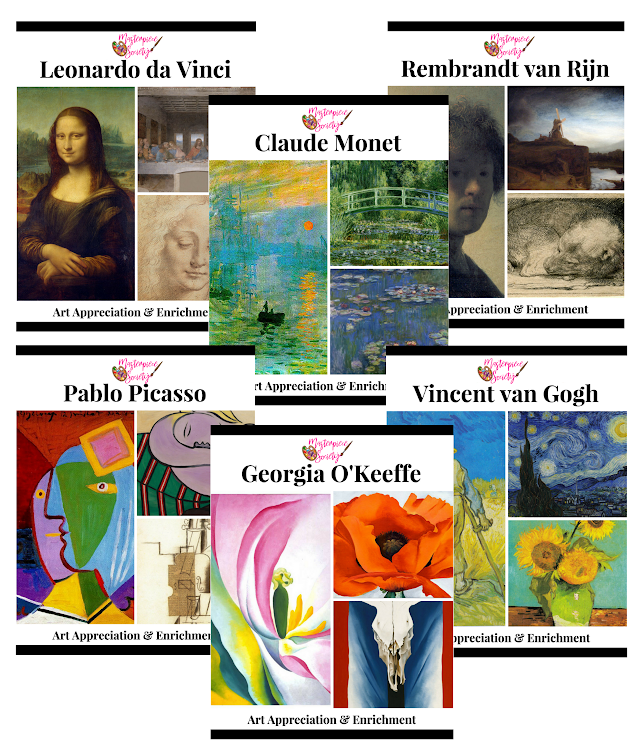
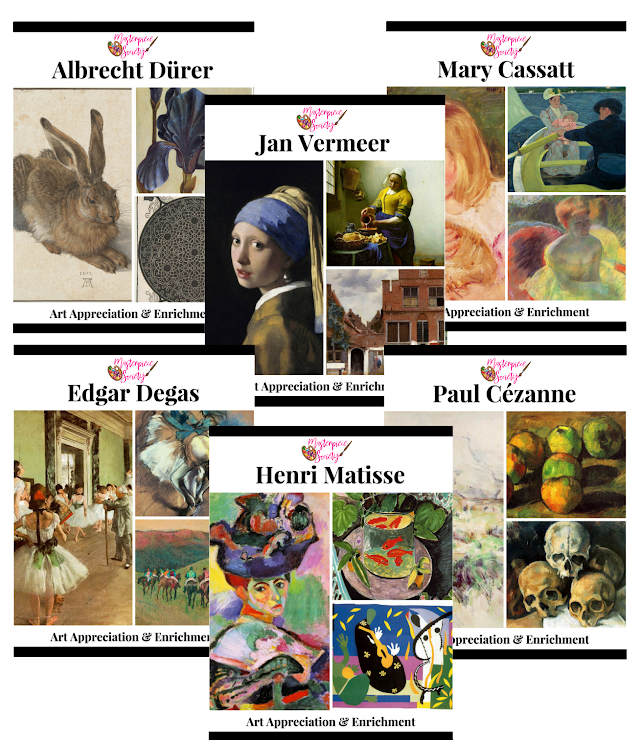
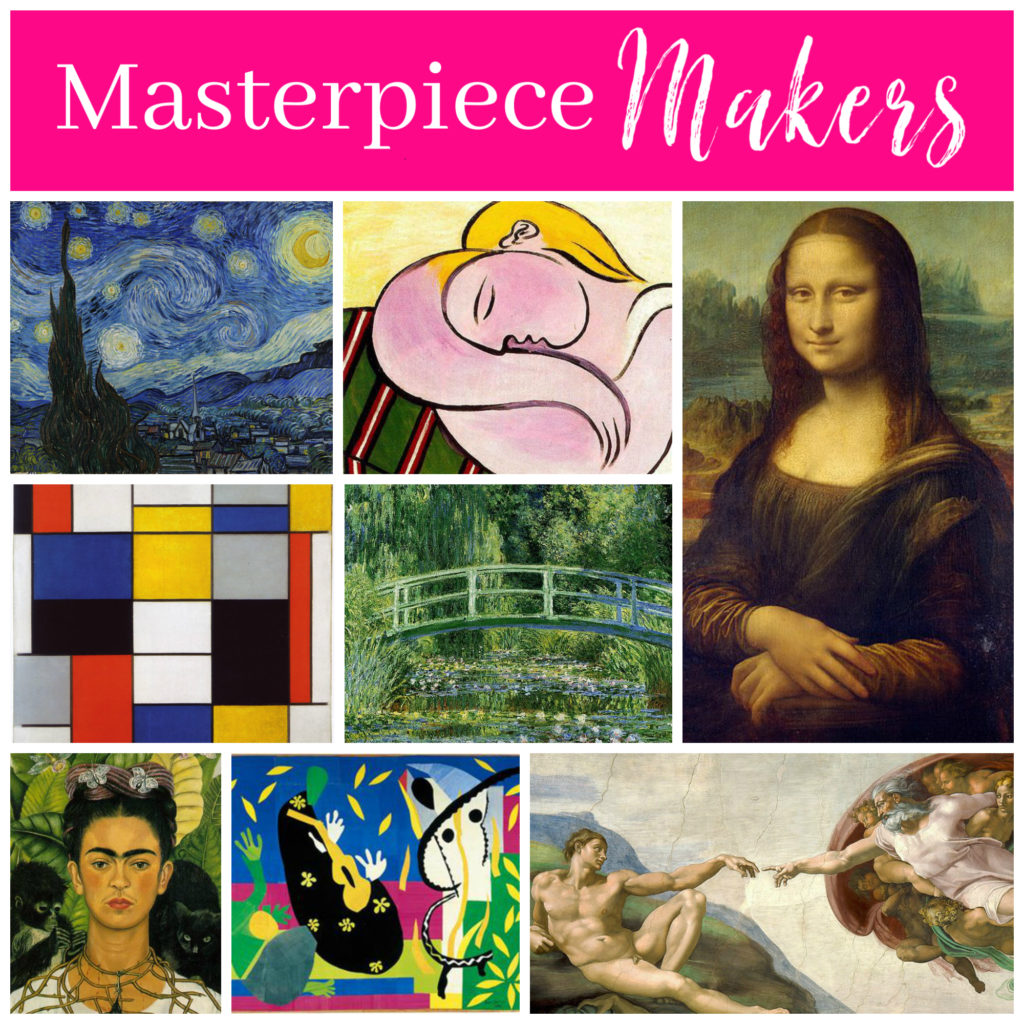
Mixing with the Masters
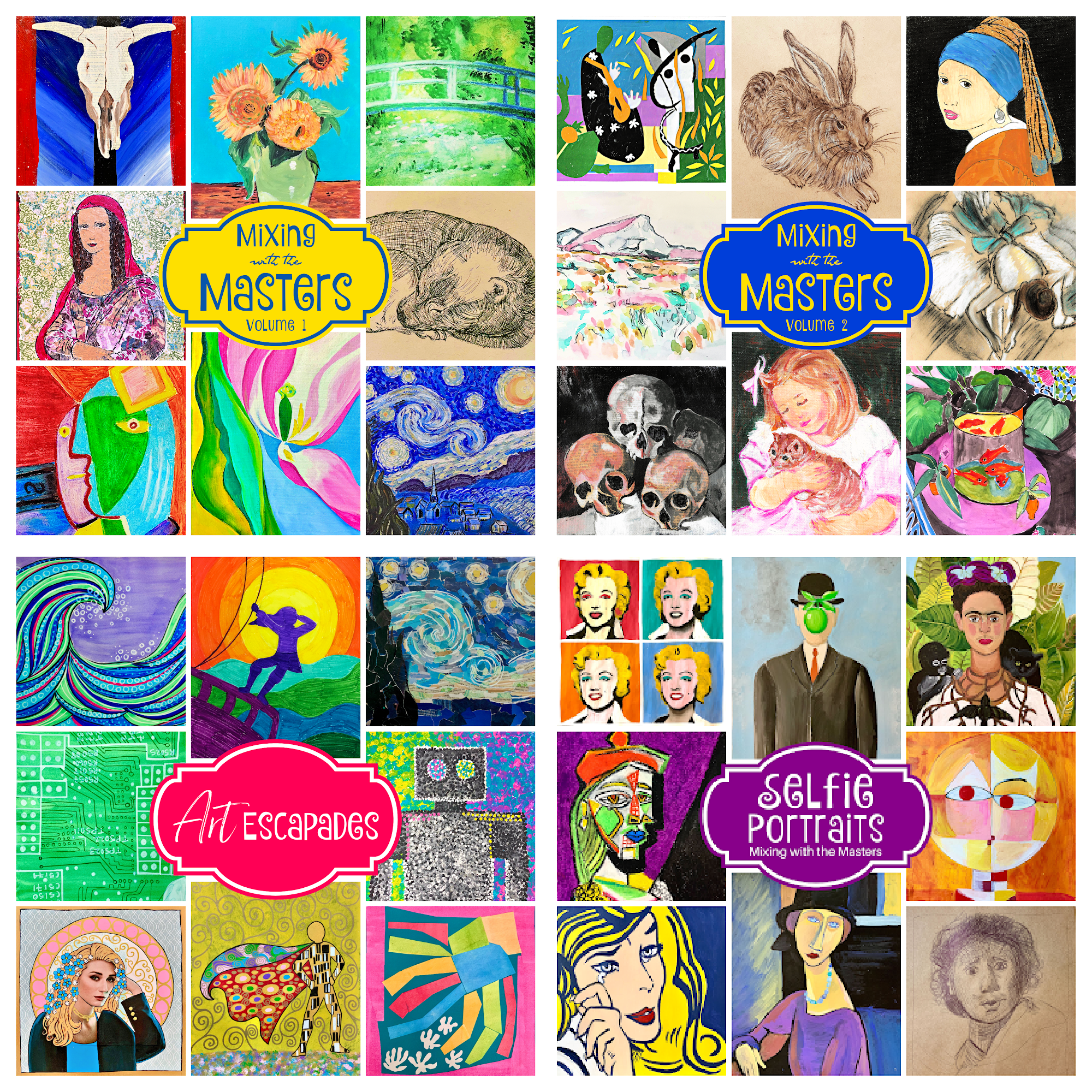
One of the best ways to learn about art is to spend time with great artists. In our Mixing with the Masters series of courses, students encounter famous artists, study their work, explore some of the techniques and ideas that made their art distinctive, and then put those discoveries into practice through their own artwork.
The goal isn't simply to copy a masterpiece. It's to ask: What can we learn from this artist? And, How can we have FUN with this artist?
Students might explore an artist's use of color, brushwork, line, shape, composition, subject matter, or style—and then experiment with those ideas themselves. Or create a piece inspired by the artist, but completely "mixed" up with different mediums. This allows art appreciation and hands-on art instruction to happen together.
👉 Check out our Mixing with the Masters series.
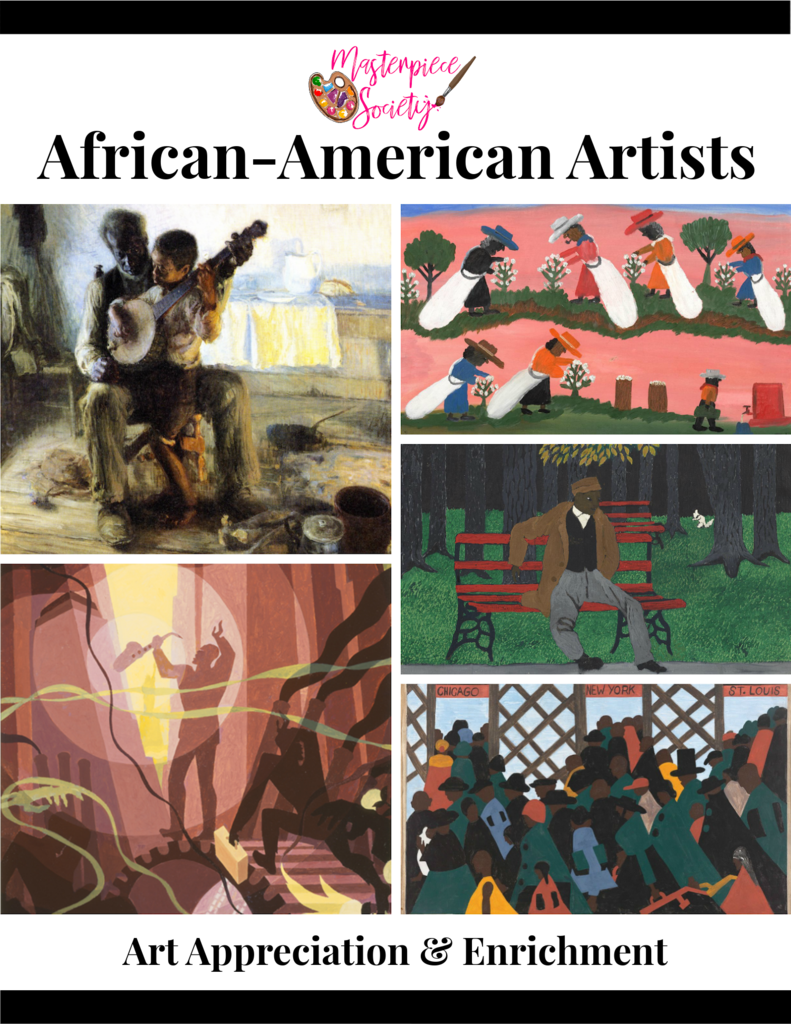
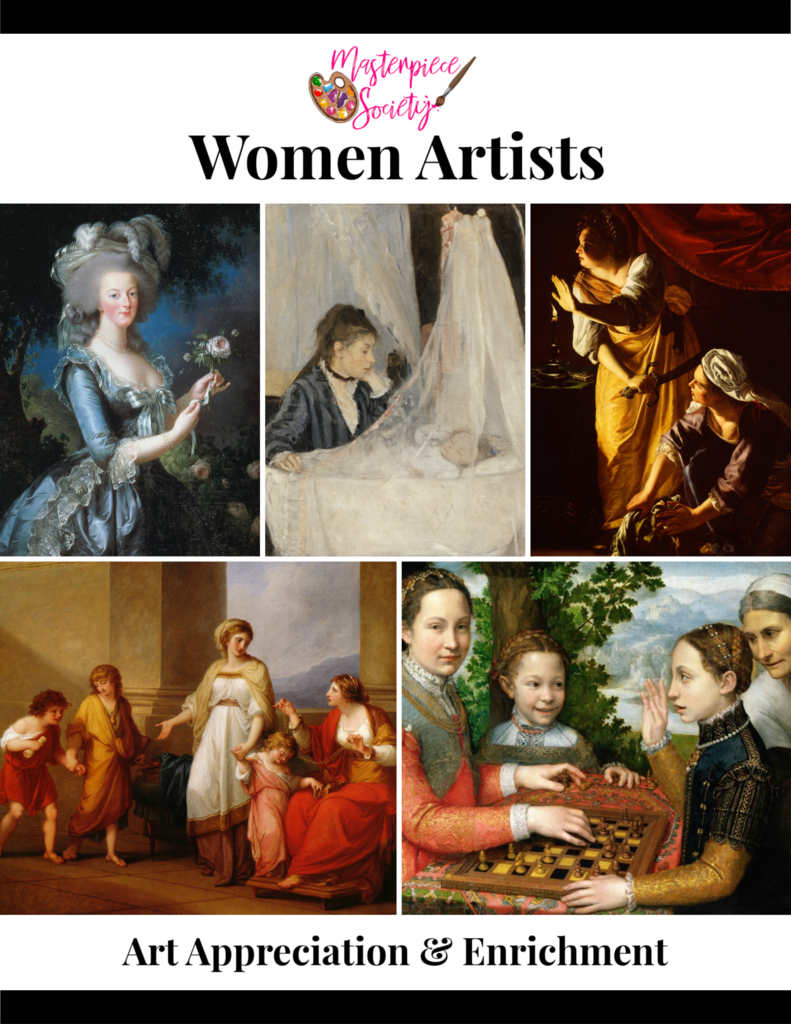
Art Through the Ages
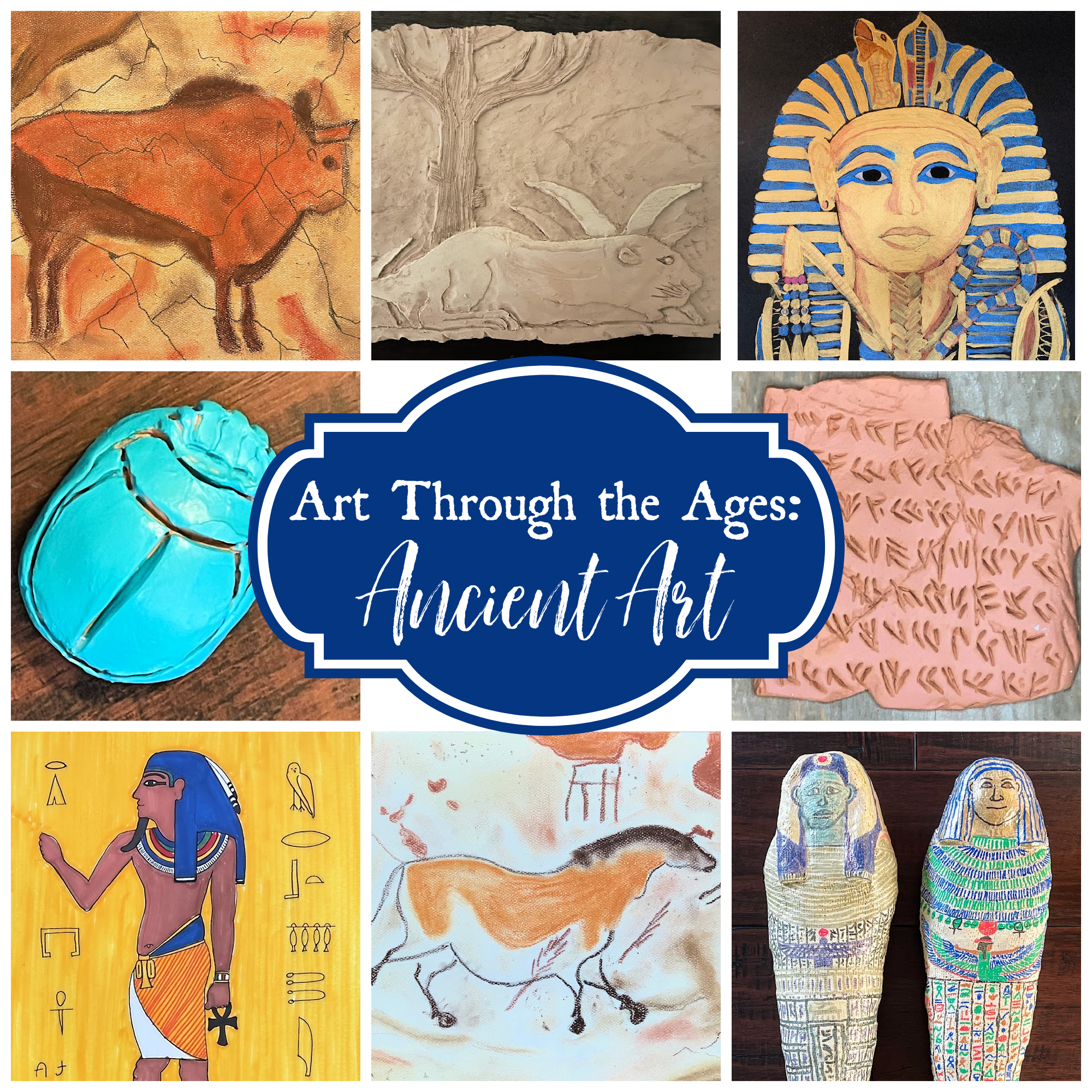
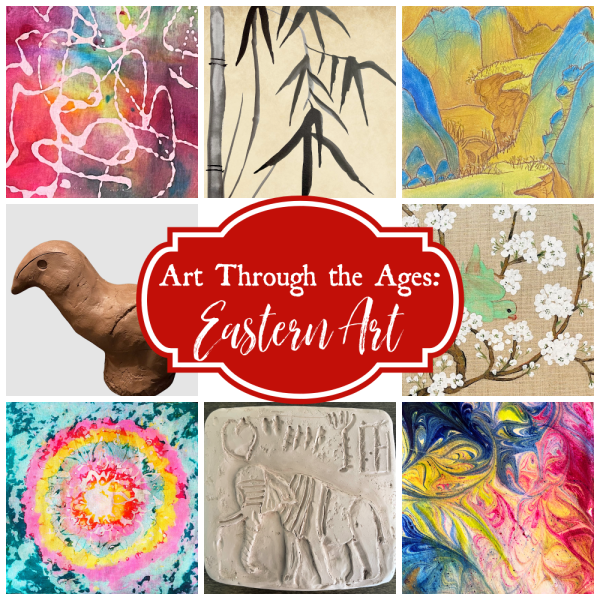
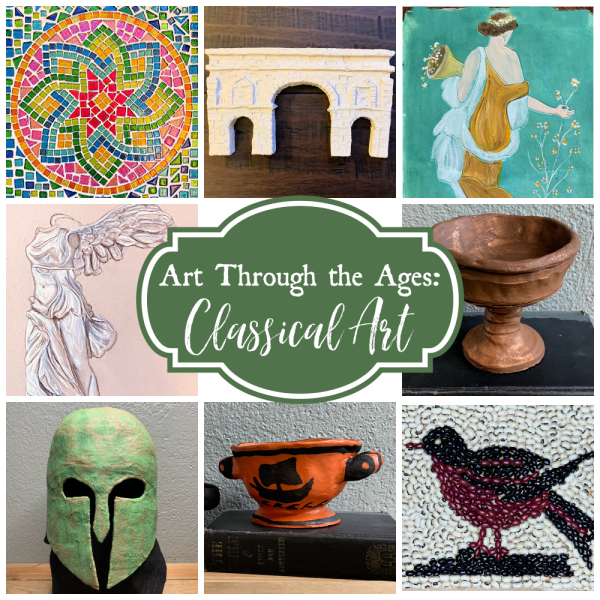

Art makes much more sense when students understand the world in which it was created. Art Through the Ages allows teens to explore art within its historical context, discovering how art has changed across cultures, civilizations, movements, and periods of history.
Rather than treating art history as a collection of names and dates to memorize, students can begin making connections between art and the people who created it.
- What did they value?
- What stories were they telling?
- What materials did they have available?
- How did religion, culture, technology, politics, and everyday life influence what they created?
- And how did one generation of artists influence the next?
It's a wonderful way to combine art appreciation, art history, and hands-on creativity within your high school art studies.
👉 Check out our Art Through the Ages series.
Wonders of the World
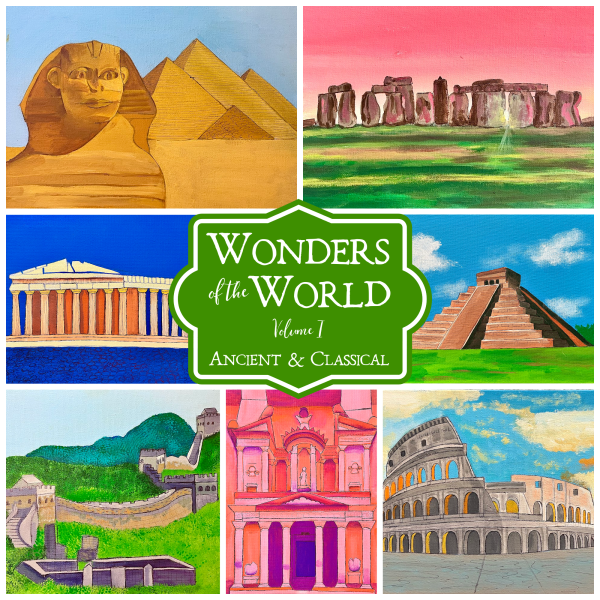
Art doesn't exist in isolation from architecture, culture, geography, and history. Our Wonders of the World series gives students the opportunity to explore some of the world's most remarkable landmarks and architectural achievements while creating art inspired by what they discover.
Across the series, students encounter places ranging from the ancient world to the modern era—including the Parthenon, Colosseum, Great Wall of China, Notre Dame, Taj Mahal, Machu Picchu, Eiffel Tower, Statue of Liberty, Sydney Opera House, and many more.
It's an especially fun way to connect art, architecture, history, culture, and geography. For teens who love interdisciplinary learning, Wonders of the World can add an entirely different dimension to their high school art studies.
👉 Check out our first installment of Wonders of the World.
GeomARTry
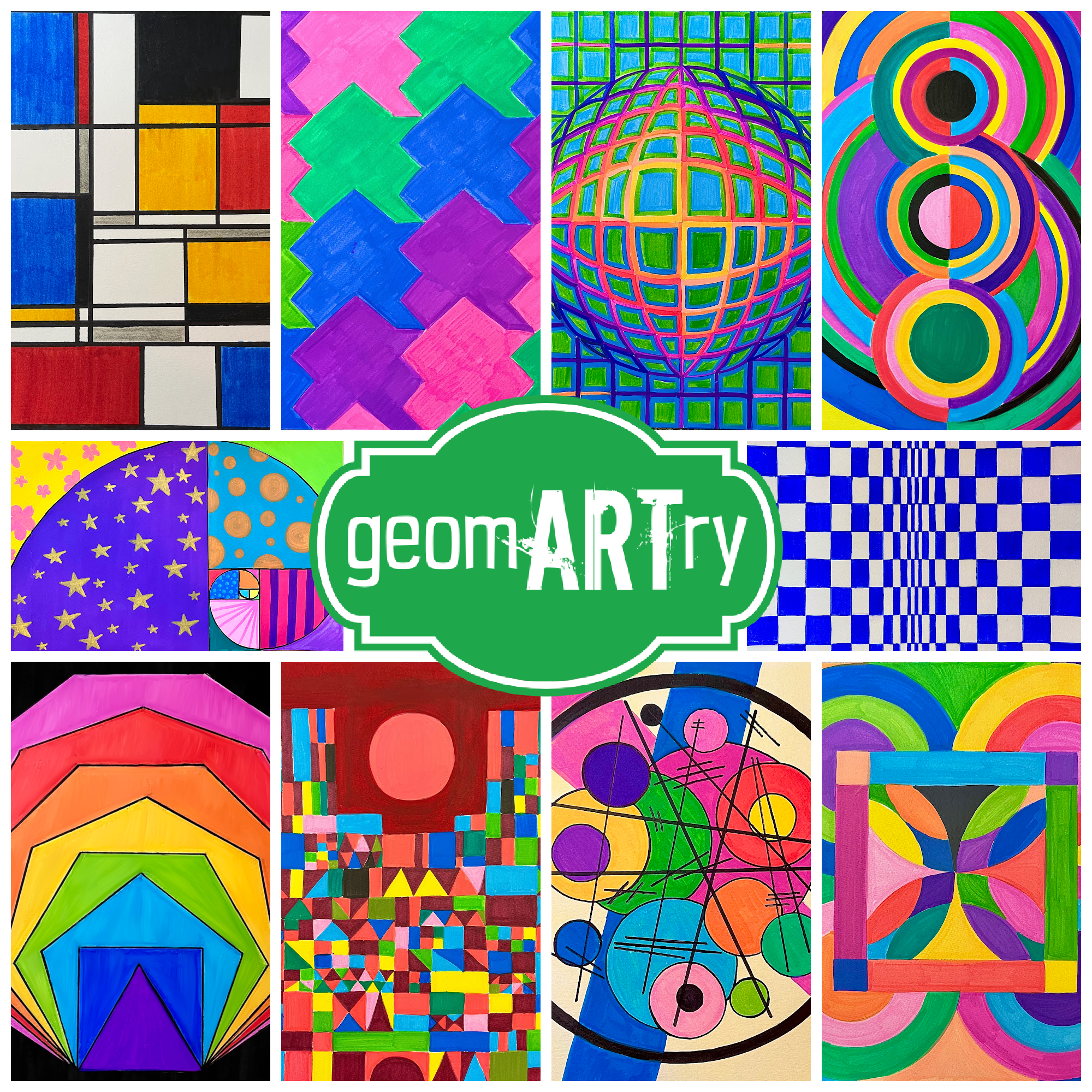
What happens when mathematics and modern art meet? You get GeomARTry.
This high-school-level course explores the fascinating connections between geometry and modern art through artists such as Mondrian, Kandinsky, Escher, Vasarely, Riley, Klee, Delaunay, Braque, and others.
Students can encounter concepts involving shape, pattern, symmetry, perspective, optical effects, geometric form, and spatial relationships while seeing how artists have used mathematical ideas in remarkably creative ways.
It's an especially interesting option for students who don't naturally think of themselves as "art kids"—or for students who enjoy discovering the unexpected places where different subjects overlap.
👉 Check out GeomARTry here.
Nature Journaling
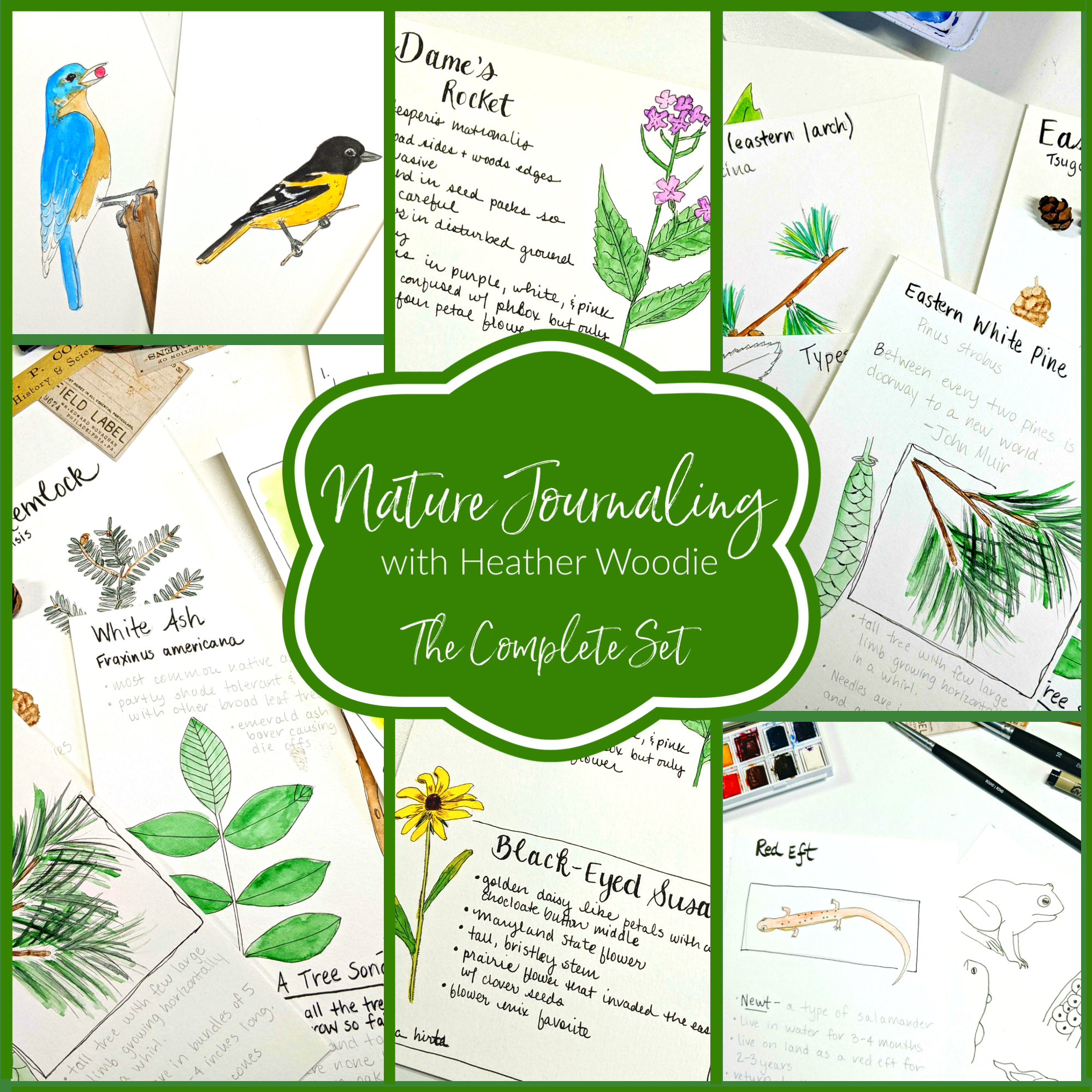
For teens who enjoy both art and the natural world, Nature Journaling provides an opportunity to take their art education outside.
Students learn to slow down and really observe what they're seeing—the structure of a flower, the shape and markings of a bird, the texture of bark, or the subtle variations of color within a single leaf.
As they sketch and paint from nature, they're also practicing foundational art skills such as observation, proportion, line, shape, color, value, and composition. Nature journaling isn't about producing perfect botanical illustrations. It's about learning to look closely and record what you discover.
👉 Check out our Nature Journaling series.
So What Should My Teen Take?
With all of these possibilities, you might be wondering where to begin. You don't need to do everything.
- If your teen needs a strong foundational art education, begin with Art School, particularly Drawing 101.
- If your teen loves art history and famous artists, add our Mixing with the Masters series or the Art Through the Ages series.
- If your teen loves nature and observation, explore Nature Journaling.
- If your teen enjoys history, architecture, geography, and world cultures, try Wonders of the World or Art Through the Ages.
- If you want to connect art and mathematics, choose GeomARTry.
- If your teen is drawn toward color, experimentation, and contemporary artistic expression, explore our Mixing with the Masters modern and abstract art courses or GeomARTry.
Or mix and match. That's one of the advantages of homeschooling. Your teenager's art education doesn't have to look exactly like anyone else's.
One Possible High School Art Path
If you want more structure, you could even build a multi-year art education using Masterpiece Society courses.
Year One: Exploration & Play
Work through all four of the Mixing with the Masters courses and/or GeomARTry so your teen can see how other artists have approached color, composition, and technique. Each of these courses will help them develop an appreciation for the great master artists, plus have fun experimenting with multiple art mediums.
Year Two: Art in Context
Explore Art Through the Ages and Wonders of the World, connecting art with history, architecture, culture, and the larger human story. They will experiment beyond drawing and painting with mosaics, clay sculpture, soft/plaster sculpture, relief, batik, marbling, calligraphy, mask making, and more! Or let your teen branch out through Nature Journaling.
Year Three: Foundational Skills
Focus on Drawing 101 and begin developing observation, proportion, value, form, perspective, and composition.
Add selected artist studies or art appreciation throughout the year.
Year Four: Color & Painting
Continue with Watercolors 101, Acrylics & Oils 101, and/or Pastels 101, depending on your student's interests.
A student who is especially serious about art can also begin selecting finished pieces from these years for a portfolio.
This isn't a required sequence. Think of it as an example of just how much depth is possible when art becomes more than a single elective squeezed into one semester.
Create a High School Art Education That Fits Your Teen
Some teenagers want to master realistic drawing...Some want to paint...Some are fascinated by art history...Some love architecture...Some want to fill nature journals...Some fall in love with Van Gogh, Monet, or Kandinsky...And some want to throw all the rules out and make enormous abstract paintings.
There's room for all of them.
Start with strong foundations. Introduce them to excellent art. Give them opportunities to experiment with different mediums, subjects, artists, and styles. Then pay attention to what captures their imagination.
Because the goal of a high school art curriculum isn't simply to complete an elective.
It's to give teens the skills, knowledge, experiences, and confidence they need to keep creating long after the course is finished.
Or, if you'd like access to everything we've talked about on this page, along with our larger library of homeschool art courses, check out the Masterpiece Society Studio:
Frequently Asked Questions About Homeschool Art for Teens
What is the best art curriculum for a homeschooled high school student?
Look for a curriculum that teaches foundational art skills rather than relying exclusively on craft projects or follow-along tutorials. Drawing, value, proportion, perspective, color theory, composition, and experience with several art media give teens a strong visual arts foundation.
Can a beginner use a high school art curriculum?
Absolutely. High school-level art doesn't mean a student must already be an accomplished artist. A good introductory program should teach foundational concepts from the beginning while allowing students to progress into more challenging work.
Can homeschool art count as a high school elective?
Art is commonly included as a high school fine arts or elective course. Requirements vary, so homeschool families should follow their state's requirements and their own graduation plan when assigning and documenting credit.
Can teens learn art online?
Yes. Video-based instruction works particularly well for visual art because students can watch techniques being demonstrated, pause when necessary, replay difficult sections, and work through projects at their own pace.
What art course should my teen take first?
For most students, I recommend beginning with Drawing 101. Drawing develops observation, proportion, value, form, and other skills that transfer beautifully into watercolor, acrylics, oils, pastels, and nearly every other visual art medium.
Is Masterpiece Society Art School only for high school students?
Art School was designed with older students in mind, particularly middle school and high school students who are ready for more focused, skill-based instruction. We have lots of moms who go through the Art School courses with (or slightly ahead of) their teens so that they can learn to draw and paint as well! Younger students with strong interest and patience may also enjoy the courses, but our other Masterpiece Society programs are generally a better starting point for younger artists. And