
Online Art School for Teens
Build Real Art Skills. Grow in Confidence. Become the Artist You Want to Be.
Your teen loves art.
Maybe there's always a sketchbook nearby. Maybe they're constantly drawing characters, painting, experimenting with new materials, or watching art tutorials online.
Or perhaps they're interested in art but aren't quite sure where to begin.
Either way, they've reached the point where they're ready for more than another fun art project.
They're ready to learn real art skills.
Masterpiece Society's Art School is a series of comprehensive online art courses created especially for teens and high school students who want to develop strong foundational skills in drawing, watercolor, acrylics, oils, and pastels.
No previous experience required. No artistic parent required. 😉
Just excellent instruction, plenty of practice, and the freedom to grow as an artist at your own pace.

Photo courtesy of Jen Biggs
"Learn the rules like a pro
so you can break them like an artist."
~ Pablo Picasso
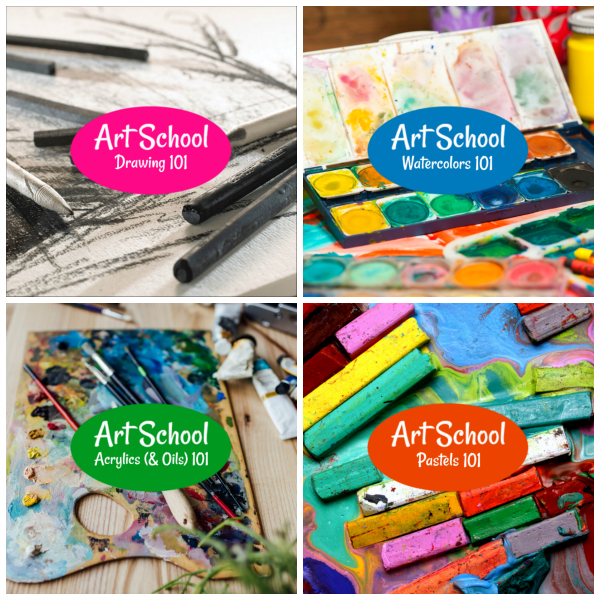
Art School is a four-course series that will give your kids and teens a firm foundation in art techniques, tools and classical media.
Understanding the very basics of art will give them a springboard from which their creativity will be able to flourish and thrive!
Real Art Instruction for Teens
There are thousands of art tutorials online. But there's a big difference between learning how to make one particular picture and learning the skills that allow you to create artwork of your own.
That's why I created Art School.
Rather than simply saying: "Watch me and copy what I do," I want students to understand: Why does this work? Why does that shadow make an object suddenly appear three-dimensional? Why do those colors work together? How do you make something look closer or farther away? How do you capture accurate proportions? How do different brushes create different effects? How do you take what you're seeing and translate it onto paper or canvas?
These are the foundational skills artists use again and again. And once teens begin understanding them, something wonderful happens: They don't need someone else to tell them exactly what to create. They have the skills to begin making those decisions for themselves.
Meet the Art School Series
Art School is designed to give teens a strong foundation across four major areas of traditional art. Students can begin with one course or work their way through the complete series.
Drawing 101: Learn to See Like an Artist
If you're wondering where your teen should begin, this is it. Drawing is the foundation of nearly every form of visual art. In Drawing 101, students develop the observation and technical skills they need to draw what they actually see—not simply what they think something looks like.
We will learn various techniques by copying master drawings by: Henri Matisse, Vincent van Gogh, John Singer Sargent, Claude Monet, and Pablo Picasso.

In this course we'll explore dry and wet drawing media: Graphite, Charcoal, and Pen & Ink
We'll experiment with the following techniques:
Learning to "See" • Hatching • Cross-Hatching
Double Cross-Hatching • Scribble Drawing
Continuous Line Drawing • Contour Drawing
Blind Contour Drawing • Directional Line
Line & Wash • Brush Drawing • Gesture Drawing
The Grid Method • The Shape Method
Negative Space • Proportion • And more!
Students practice these concepts through exercises, studies, and drawings that gradually become more challenging as their skills develop.
By the end of the course, they'll have much more than a stack of drawings. They'll have a stronger understanding of how artists see and represent the world around them.
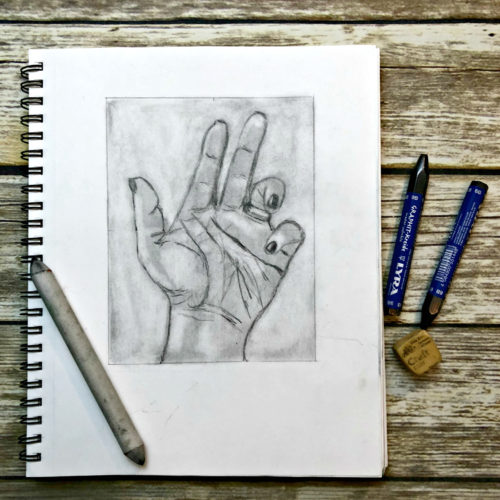
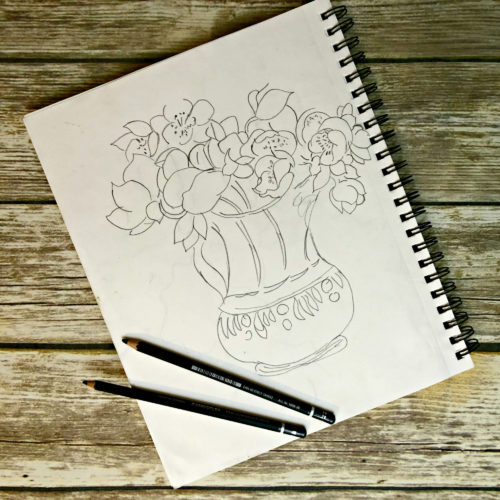
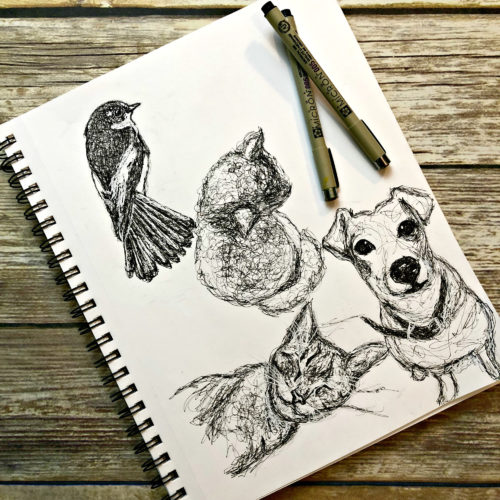
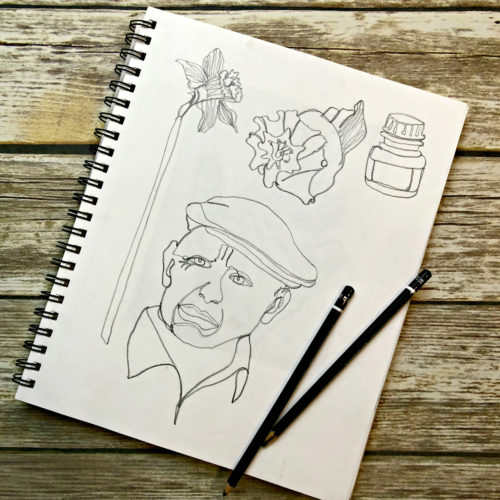
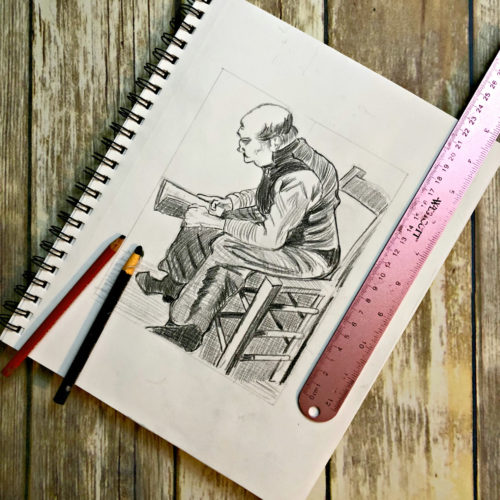
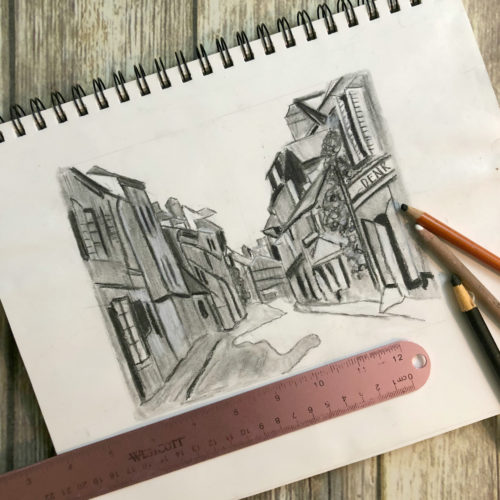
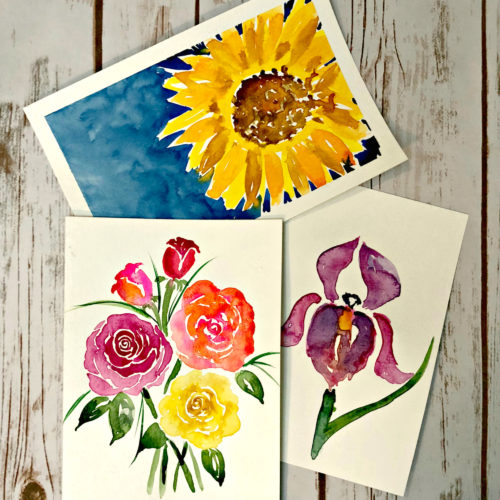
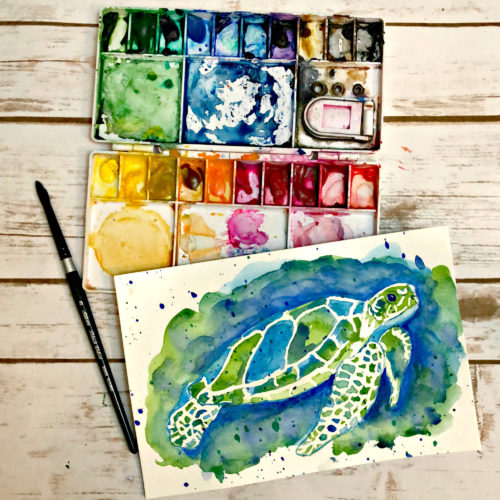
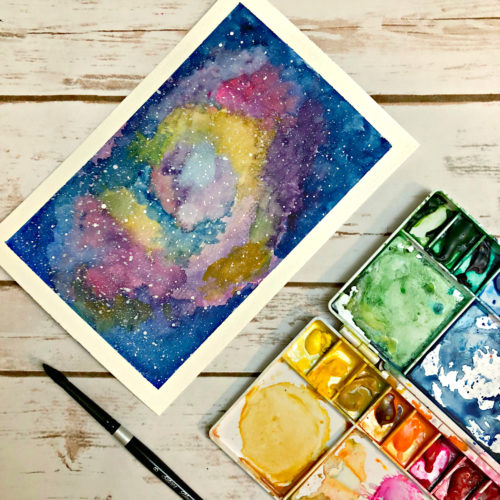
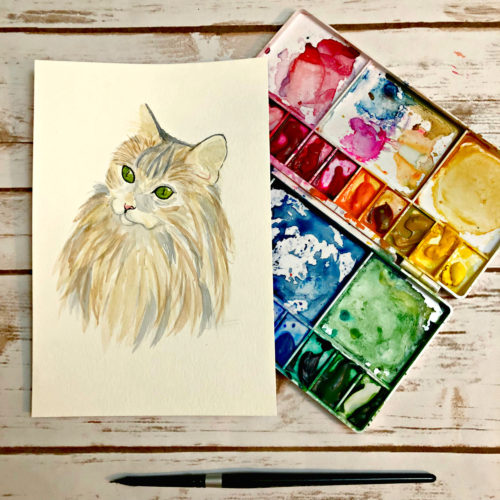
Watercolors 101: Learn to Work With Watercolor—Not Against It
Watercolor can be magical. It is an intricate dance of adding just the right amount of pigment with just the right amount of water. It can also be incredibly frustrating when you don't understand how it behaves. Watercolors 101 helps teens understand the unique characteristics of watercolor so they can begin painting with greater confidence and control.
We will learn various techniques by copying master paintings by: Paul Cézanne, Paul Klee, Andrew Wyeth, J.M.W. Turner, Winslow Homer, and Georgia O’Keeffe.
In this course we’ll explore:
Watercolors and Gouache
We’ll experiment with the following techniques:
Color Mixing • Flat Wash • Gradated Wash Variegated Wash • Wet-on-Dry • Wet-on-Wet Brushwork • Lifting Out • Masking • Texturing • Wax Resist • Line & Wash • Backruns • And more!
Rather than trying to force watercolor to behave like another painting medium, students learn how to take advantage of the beautiful qualities that make watercolor unique.

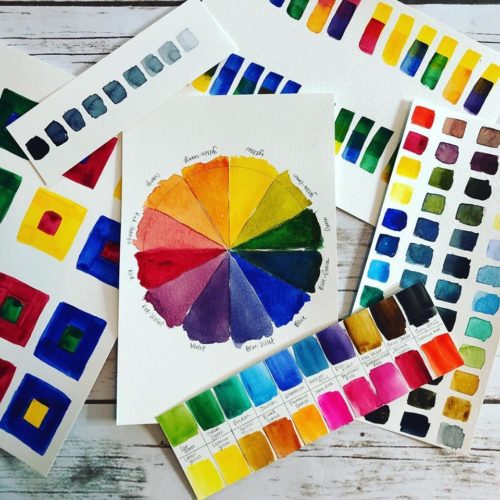
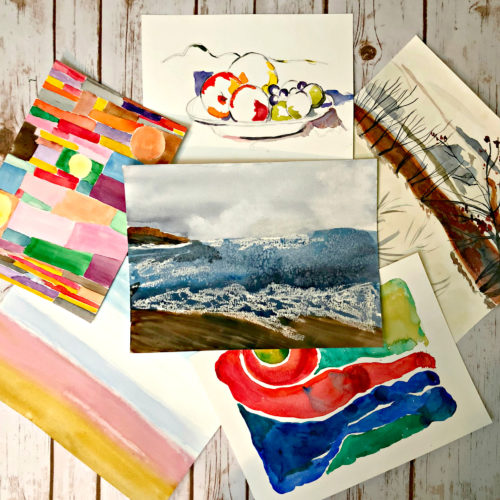
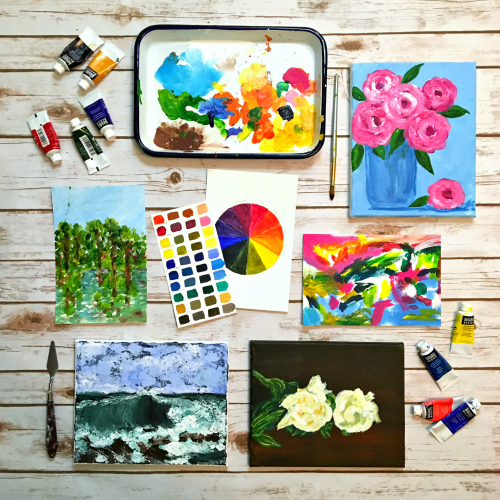
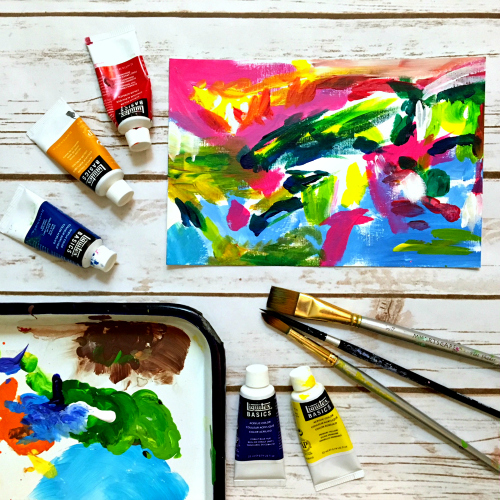
Acrylics (& Oils) 101: Discover the Art of Painting
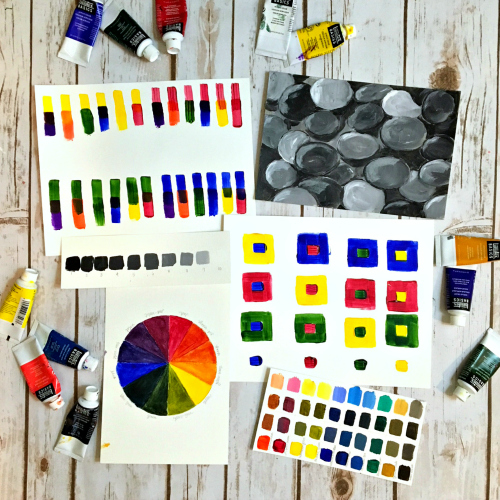
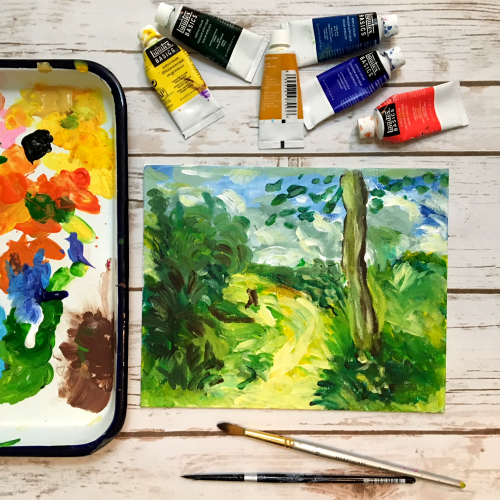
There's something exciting about moving from drawing into paint. Suddenly students aren't simply thinking about line and value. They're thinking about color, temperature, brushwork, layers, edges, texture, light, and how all of those things work together. In Acrylics & Oils 101, teens learn foundational painting skills while exploring two of the world's most popular painting mediums.
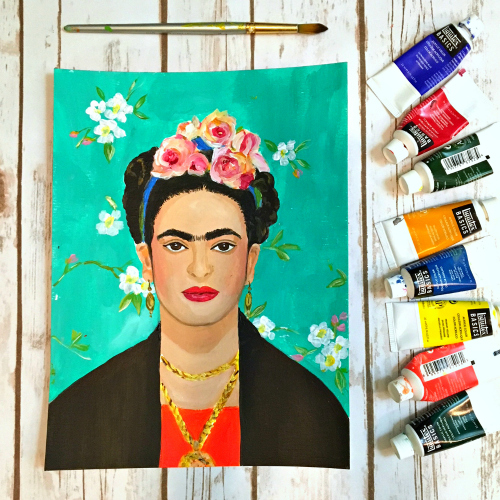
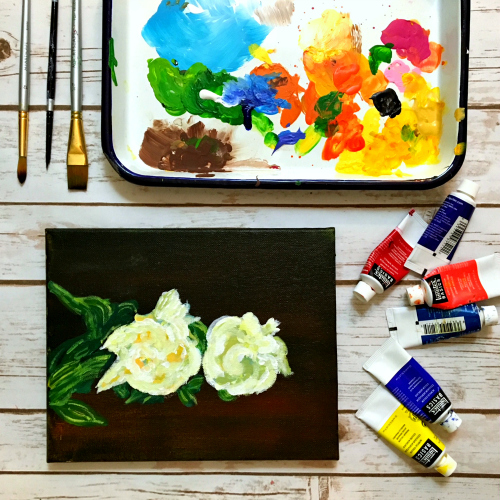
We will learn several techniques by copying master paintings by: John Singer Sargent, Édouard Manet, J.M.W. Turner, Pierre-Auguste Renoir, Willem de Kooning, Paul Cézanne, Gustave Courbet, and Frida Kahlo.

In this course we’ll explore:
Acrylics and Oils
We’ll experiment with the following techniques:
Paint Mixing • Monochrome Colors • Analogous Colors • Color Relationships • Alla Prima Underdrawings & Underpaintings • Tinted Grounds Brushwork • Impasto • Palette Knife • Painting Glazing • Broken Color • Scumbling • Sgraffito Tonking • And more!
Along the way, students begin learning something even more important:
how to make artistic decisions.
Instead of simply asking, "What do I paint next?" they'll begin asking: What color do I need? Is this area lighter or darker? Is this edge hard or soft? What kind of brushstroke will create the effect I want? Those are the questions painters ask.
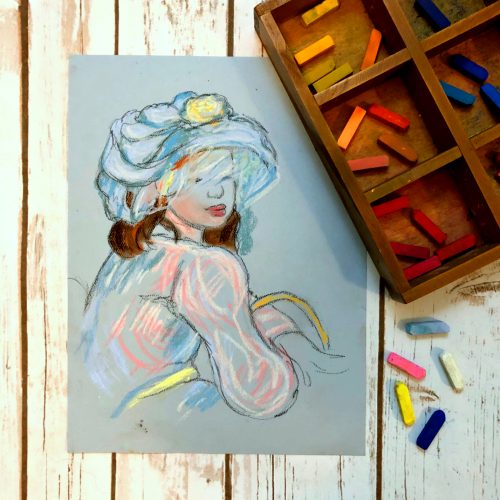
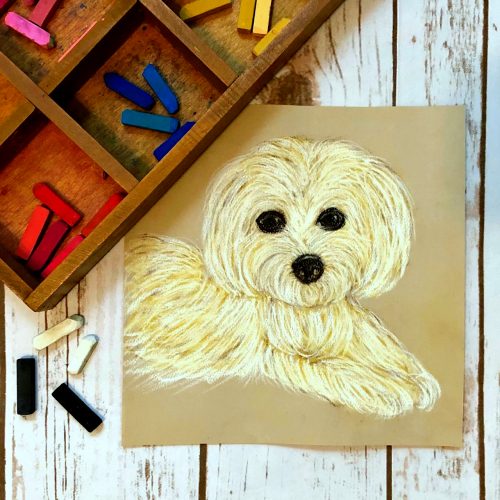
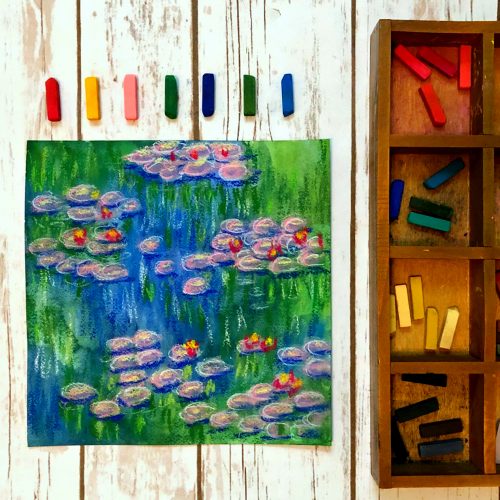
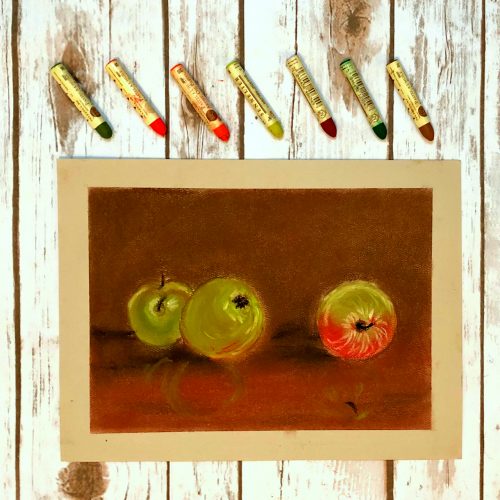
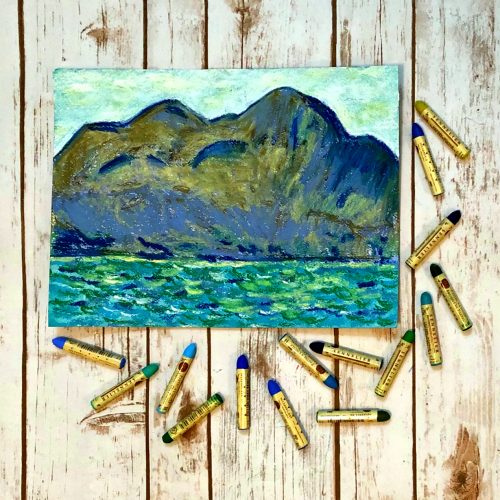
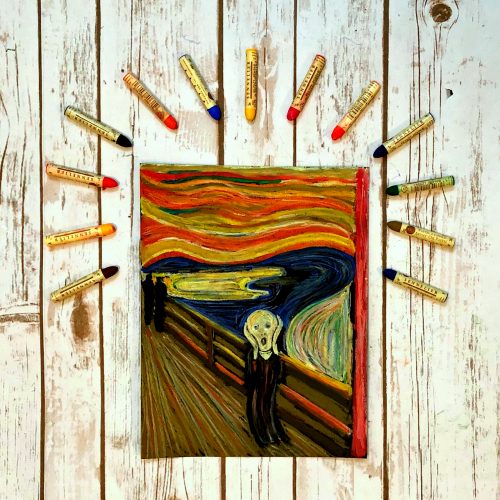
Pastels 101: Draw with Color; Paint without a Brush
Pastels occupy a wonderful space somewhere between drawing and painting. Students can create delicate lines, bold strokes, beautiful layers, rich colors, soft blends, and incredible textures—all with the same medium. That makes pastel an especially valuable addition to a young artist's education.
We will learn several techniques by copying master paintings by: Edgar Degas, Édouard Manet, Edvard Munch, Pierre-Auguste Renoir, Berthe Morisot, Frederick Childe Hassam, Odilon Redon, and Pablo Picasso.
In this course we’ll explore:
Soft Pastels, Hard Pastels, & Oil Pastels
We’ll experiment with the following techniques:
Line Strokes • Side Strokes • Mixing Mediums Blending • Feathering • Scumbling • Broken Color Underdrawing • Underpainting • Charcoal & Pastel Building Up • Sgraffito • And more!
Students can apply skills they've already developed in drawing and painting while discovering an entirely new way to create.

Not Just Projects—Progress.
One of the most important ideas behind Art School is simple: Artistic skill can be learned. Some students seem naturally artistic from the time they're very young. Others don't. That doesn't determine what kind of artist they can become.
Artists develop through observation, instruction, experimentation, mistakes, practice, and lots and lots of making art.
That's why Art School isn't built around creating a collection of disconnected projects. Skills build upon one another. Understanding proportion makes drawings stronger. Understanding drawing makes paintings stronger. Understanding value makes color stronger. Understanding color makes watercolor stronger. Understanding observation makes everything stronger.
Over time, teens begin accumulating an artist's toolbox they can use regardless of what they decide to create next.
Designed for Teens Who Are Ready for More
Art School was created especially for middle school and high school students who are ready for more focused art instruction. That doesn't mean they have to be serious, advanced artists. It means they're ready to move beyond elementary art projects and begin understanding the why behind what they're creating. It can work beautifully for...
- The Beginning Artist: Your teen has always wanted to learn art but isn't sure where to begin. Start with Drawing 101 and build from there.
- The Constant Sketcher: There are drawings everywhere. In notebooks. On homework. On scraps of paper. Probably on things that weren't intended to be drawing surfaces. Art School can help turn all that enthusiasm into stronger technical skills.
- The Self-Taught Artist: Your teen has learned through experimentation, books, YouTube, or other tutorials but has gaps in foundational skills. Art School provides structure and helps fill them in.
- The Future Creative: Your teen may be considering illustration, animation, graphic design, architecture, photography, fine art, fashion, filmmaking, or another creative career. A strong foundation in traditional art skills provides an excellent place to begin.
- The Homeschooler Who Needs an Art Credit: Your teen isn't planning to become a professional artist. They simply need a meaningful high school fine arts course that doesn't feel like busywork. That works too.
Your Teen Can Learn Independently
You do not need to know how to teach art. You don't need to understand perspective. You don't have to demonstrate shading. You don't have to explain color theory. And you definitely don't have to stand over your teenager while they paint.
I'll teach the art.
The step-by-step video format allows students to watch techniques being demonstrated, pause when they need more time, rewind difficult sections, and work through the courses at their own pace. That makes Art School especially well suited to independent homeschool learning.
Your job?
Help provide the materials. Make room in the schedule. Admire their creations. And encourage them to keep going.
A Flexible Art Curriculum for Your Homeschool
One of the things I love about homeschooling is that education doesn't have to happen according to someone else's bell schedule. Art School can adapt to your family. Your teen might complete: Two or three shorter art sessions each week or one or two longer studio sessions.
A student who loves art may spend hours working on a lesson, practicing independently, filling sketchbooks, and experimenting with techniques. Another student may simply work steadily through the curriculum as part of a well-rounded high school education. Both are perfectly valid. There isn't one "right" way to be an art student.
Can We Use Art School for High School Credit?
Yes, Art School can form the foundation of a homeschool high school visual arts course. Because homeschool graduation requirements vary, you'll want to follow the requirements for your state and your family's homeschool program when determining and documenting high school credit.
Depending on how you structure the course, your teen's art education might include:
- Art School video lessons
- Lesson exercises
- Completed artwork
- Sketchbook practice
- Independent drawing or painting
- Artist studies
- Art appreciation or art history
- Museum or gallery visits
- Creating an art portfolio
- Additional creative projects
Keep completed work or photographs of larger pieces as part of your student's homeschool records. By the end of the year, you'll also have something much more interesting than a test score: a visual record of how much your teen has grown as an artist.
Start With Drawing
Not sure which course to choose first? I recommend Drawing 101. Even if your teen's ultimate goal is watercolor, oil painting, illustration, or another visual art form, drawing develops essential skills that transfer into nearly everything else.
- Observation.
- Proportion.
- Value.
- Form.
- Composition.
- Light and shadow.
These are foundational artistic concepts. Once your teen begins seeing these things differently, they'll start bringing that understanding into everything they create.
A Natural Art School Progression:
Drawing 101 Learn observation, proportion, value, form, and foundational drawing skills.
↓
Watercolors 101 Apply those skills while learning color, brushwork, washes, layering, and watercolor techniques.
↓
Acrylics & Oils 101 Go deeper into painting, color mixing, value, brushwork, layering, and composition.
↓
Pastels 101 Combine drawing and painting skills through color, texture, layering, and expressive mark-making.
Students don't have to follow this exact sequence. But for a teen beginning a more serious study of art, it's an excellent pathway.
Art School: Drawing 101

Art School: Watercolors 101
Art School: Acrylics (& Oils) 101
Art School: Pastels 101
Art School: Complete Set (Purchase all 4 and get a discount!)
From Learning Techniques to Finding Their Own Style
There's a funny thing about artistic style. Young artists often desperately want to find theirs.
"How do I develop my style?"
But style isn't usually something an artist needs to force. It emerges. As students learn foundational skills, they're also discovering what they love.
- Loose brushstrokes or careful detail?
- Bold color or quiet neutrals?
- Realism or abstraction?
- Drawing or painting?
- Portraits or landscapes?
- Watercolor or oils?
Eventually, preferences begin appearing. Certain marks feel natural. Certain subjects keep showing up. Certain colors become favorites.
Technique gives students the ability to create. Practice gives them the freedom to discover how they want to create.
That's where artistic voice begins.
What Happens After Art School?
Art School gives teens a strong foundation. But it certainly doesn't have to be the end of their creative education.
Students who want to keep exploring can continue inside Masterpiece Society Studio, where they'll find an extensive library of art instruction across different styles, subjects, techniques, artists, and media.
Teens can...
- Explore art history.
- Study famous artists.
- Experiment with mixed media.
- Try nature journaling.
- Explore modern and abstract art.
- Work through themed art courses.
- Practice techniques they've learned in Art School in completely different ways.
- And simply keep creating.
Because ultimately, that's the goal. Not merely to finish an art curriculum.
To become someone who knows how to create.
Art School FAQs
What ages is Art School for?
Art School was designed primarily for middle school and high school students who are ready for more focused, skill-based art instruction. Many moms have taken it for themselves or alongside their teens. Some motivated younger students may certainly enjoy it as well.
Does my teen need previous art experience?
No. Beginners are welcome. Drawing 101 is an excellent starting point for students without previous formal art instruction.
My teen is already a good artist. Is Art School too basic?
Not necessarily. Self-taught artists often have strong skills in particular areas while having gaps in others. Foundational study can strengthen proportion, perspective, value, composition, color theory, and other skills that help talented students progress further.
Does my teen have to take all four courses?
No. Students can take individual Art School courses according to their interests, or work through the entire series for a broader art education.
Which Art School course should we start with?
For most students, I recommend Drawing 101 because drawing teaches observation, proportion, value, form, and other foundational skills that transfer into painting and other visual arts.
Is Art School self-paced?
Yes. Students can pause lessons, replay demonstrations, spend additional time practicing a technique, and progress according to their own schedule.
Does the parent need art experience?
Not at all. The video lessons provide the instruction and demonstrations so parents don't need to teach the artistic techniques themselves.
Can Art School be used as homeschool curriculum?
Yes. Art School is particularly well suited to homeschool students because it provides structured instruction while allowing families to determine their own schedule and pace.
Can Art School count for high school art credit?
Art School can provide the instructional foundation for a homeschool high school art course. Since homeschool graduation and credit requirements vary, parents should follow their state's requirements when determining and documenting credit.
What supplies will we need?
Each Art School course has its own supply requirements based on the medium being taught. You can begin with the materials needed for your teen's first course rather than purchasing supplies for the entire series at once.
Give Your Teen the Skills to Keep Creating
Your teenager doesn't need to be born with some mysterious artistic gift. They don't need an artistic parent. They don't need an expensive private instructor. And they don't need to piece together hundreds of random tutorials hoping they'll eventually add up to an art education.
They need good instruction. They need foundational skills. They need opportunities to practice. And they need someone reminding them that becoming an artist doesn't happen because you magically know how to do everything.
It happens one drawing, one painting, one mistake, one discovery, and one new skill at a time.
That's what Art School is all about.
Ready to begin?
Start with Drawing 101—or explore the complete Art School series and help your teen build an art education they can carry with them for a lifetime.